Viola canina L.
Source: Wikipedia
Synonyms 49
- 174,189 GBIF occurrences
- 9,512 iNaturalist observations
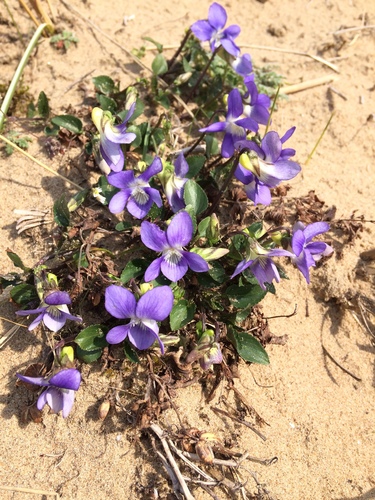
This is a very variable species found scattered throughout Europe and the British Isles (Forey 1991). It is widespread but appears to be declining inland on heaths and now seems most common on sand dunes (Botanical Society of Britain and Ireland 2024).
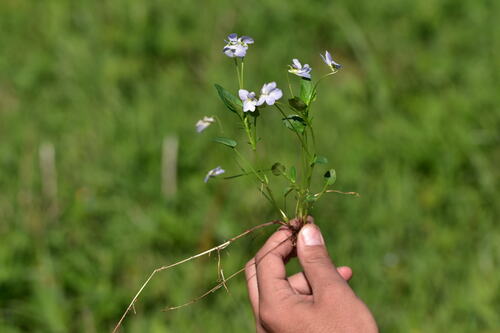
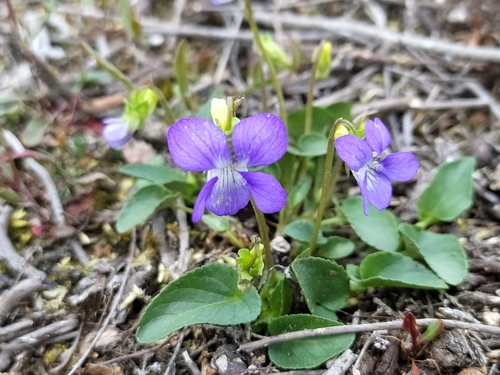
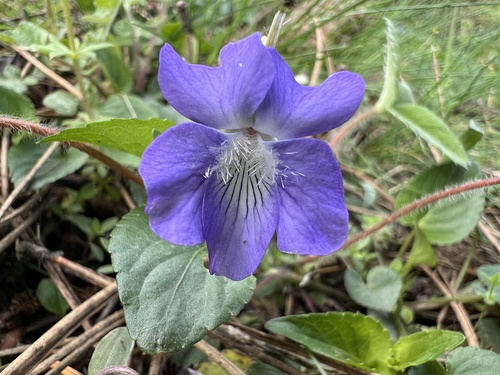
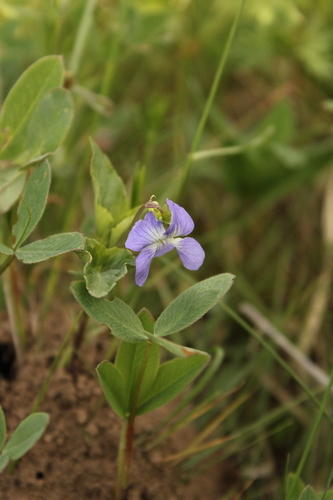
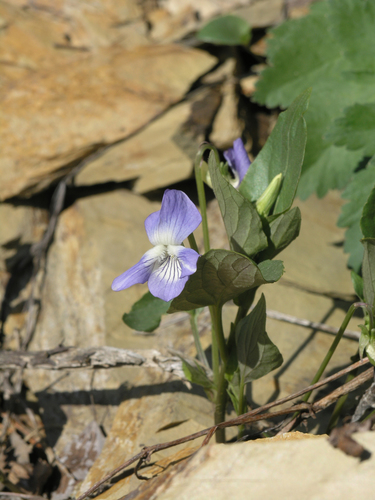
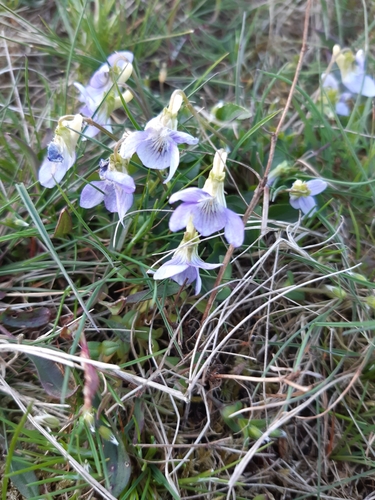
Low to short hairless to slightly hairy perennial found in lowland acid grassland, open woods, grassy heathland, sandy commons, fens, lake shores, coastal dunes and pasture land often growing on acid soil (Blamey and Grey-Wilson 2003, Castroviejo et al. 1993, Preston et al. 2002).Fieldwork over the last ten years indicates that this species is scarce and should be looked for in close-cropped grassland, near the coast, river shingle, and seasonally wet loch margins and short cropped calcareous grassland (Amphlett 2010).
This species is threatened with changes in land use and loss of habitats such as heathland and acid grassland. It is also highly sensitive to nitrogen deposition and its distribution is inhibited by this. Increases in nitrogen deposition on heathland causes a shift in species composition with a reduction in occurrence of stress tolerant forbs and shrubs such as Viola canina. The presence of this species on acid grassland and upland heathland is significantly reduced with increased deposition (Joint Nature Conservation Committee 2011, Henrys et al. 2011).
Conservation and management of heathland and grassland through protection will help protect this species. It is listed as Endangered in the national red list of Luxembourg (Colling 2005), Near Threatened in the Netherlands (van der Meijden et al. 2000), Switzerland (Moser et al. 2002) and the United Kingdom (Cheffings and Farrell 2005), but is considered Least Concern in Denmark (NERI 2007, Aarhus Universitet 2019) and Norway (Artsdatabanken 2024).The species is represented by three germplasm accessions held at European institutions (EURISCO 2024) and is included in the living collection of at least 28 botanical gardens (BGCI 2024). It occurs in many protected areas, including Natura 2000 sites (UNEP-WCMC and IUCN 2024, GBIF.org 2024).
European regional assessment: Least Concern (LC) EU 27 regional assessment: Least Concern (LC)This species is listed as Least Concern as although declining in parts of its range, it is still widespread and found in a wide range of habitats.
Gallery