Ulmus glabra Huds.
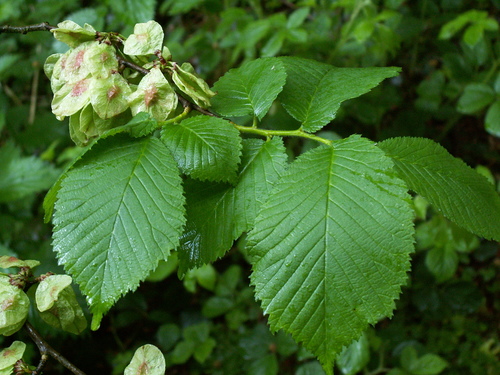
Source: Wikipedia
Synonyms 47
- 401,870 GBIF occurrences
- 25,080 iNaturalist observations
Within Europe, Ulmus glabra populations are declining. This is known from country assessments from Norway, Spain and Sweden and from Gibbs (1978) who estimated that 10–40% of European Elms have been lost due to DED. In Norway the U. glabra population has estimated to have decreased by 10% in the last 30 years (Norsk Red List). In Sweden the population is expected to decline by 90% by 2025 due to DED (ArtDatabanken 2017). The Iberian Peninsula is also severely effected by the disease, in central Spain the population is almost extinct and in Valencia only 200 individuals still exist (Martínez García et al. 2009). Population figures are not known for other countries in Europe and requires further research.Within the species Asian distribution population is not known and more information is required. Data on past, present and future decline of these populations is also unknown and requires research.
Ulmus glabra can grow to heights of 30 m and have a long lifespan (Woodland Trust 2016). This species prefers moist, nutritious soils and is frequently found alongside water courses. It was a key part of European forests, where it grew in association with poplars (Populus spp.), willows (Salix spp.) and alders (Alnus spp.) (ArtDataBanken 2016). Ulmus glabra provides an important home and refuge for many fauna including moths and caterpillars.
This species has historically been threatened by DED (Ophistoma ulmi) and is still currently threatened by the disease strain Ophistoma novo-ulmi (Brasier 2001). The disease is spread by elm park beetles and U. glabra lacks resistance. This has caused severe loss in numbers of U. glabra where the disease has reached. Loss due to this pathogen have been recorded across Europe including; Norway, Sweden and Finland. The impact of this threat across the species entire distribution is unknown.In Norway the species is threatened by competition from Acer pseduoplantanus and also from damage caused by deer populations (Biodiveristy Information 2015). It has been noted that the latter can prevent the growth of new seedlings. In Finland the species is threatened by habitat loss due to urbanisation and change is tree species composition (Rassi et al. 2010). There is also the threat of hybridisation with Ulmus pumila. Threats from the rest of the species range have not yet been documented but it is likely to be affected by habitat loss throughout its range.
Ulmus glabra is recorded in 91 global ex situ collections (BGCI 2017). Many country level assessments for this species have been carried out, where it has been classified as follows:
- Critically Endangered in Sweden (ArtDataBanken 2017)
- Vulnerable in Albania (MEA 2013)
- Vulnerable in Finland (Rassi et al. 2010)
- Near threatened in Norway (Biodiversity Information 2015)
- Least Concern in Switzerland (Moser et al. 2002)
- Least Concern in Estonia (Lilleleht 2008)
The species has also been assessed on regional scale as follows
- Endangered in Andalucia
- Vulnerable in Valencia (Aguilella and Laguna 2015)
- Vulnerable (A2be+3be+4be) in Europe
The European Forest Genetic Resources Program has published guidelines to conserve this species genetic diversity. It is protected in Madrid, Valencia, Castilla la Mancha and Murcia within Spain (Anthos 2016). There is a research need to understand the impact of DED on the species within its Asian range. Currently many conservation efforts are underway such as the selection of 'phenotypically remarkable' species across Europe which should be preserved (Collin 1999-2001). The species also features within clonal banks, cryopreservation schemes and seed banks in response to the species loss to DED (Collin 1999-2001). The species is also a priority species in European Forest Genetic Resource Program (Collin 2013) and The Noble Wood Network (Collin 1999-2001). It is important that conservation efforts are targeted towards marginal populations which are more at risk and are often more genetically diverse than the rest of the populations. The species is protected in Ulmus glabra and Ulmus laevis woods under the EU habitats directive, Annex 1 code G1. A62 (EUNIS 2017).
Ulmus glabra is an elm tree with a widespread distribution, found all over Europe and into western Asia. The species is considered threatened to varying degrees at the country level and as Vulnerable throughout Europe due to population decline caused by Dutch elm disease (DED) which has led to die back. The population size and effect of the disease is not known throughout the whole species distribution and information is severely lacking for west Asian populations. The species is considered as Data Deficient on a global scale. Information needs to be gathered on Ulmus glabras past, present and future population decline to accurately class this species as threatened across the globe and ensure effective conservation action.
Gallery