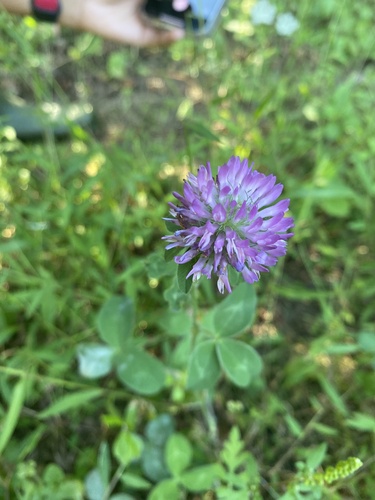
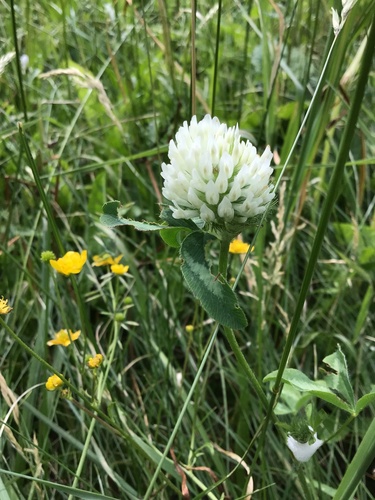
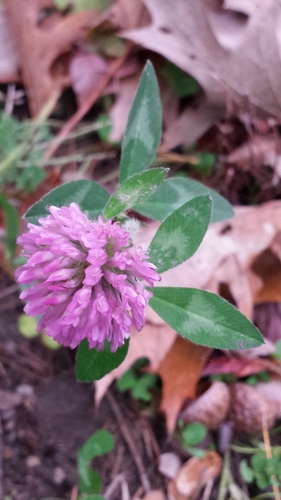
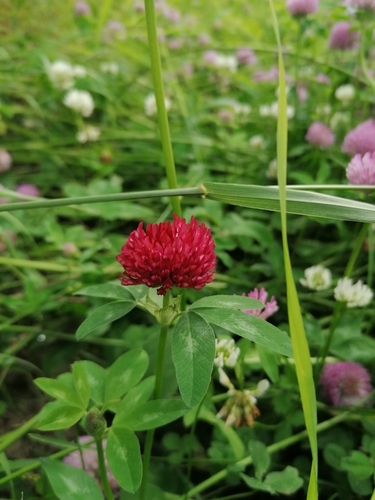
Trifolium pratense L.
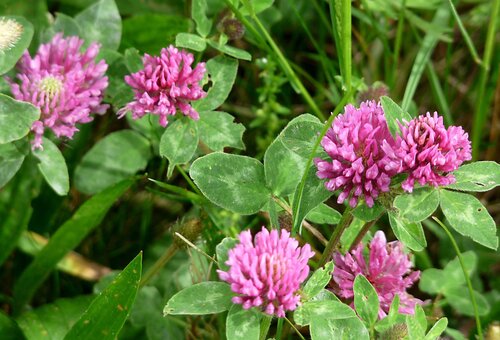
Source: Wikipedia
Synonyms 48
- 1,618,998 GBIF occurrences
- 238,155 iNaturalist observations
The exact population size is unknown, but the species is very common throughout southern Europe. It is found in a variety of habitats and populations are suspected to be stable.In the UK, according to Preston et al. (2002), this species has shown no change in its distribution since the earlier Atlas (Perring and Walters 1962).
Red Clover is widely cultivated in Europe and around the world. In the wild, it grows in a variety of habitats, including glades, grassy plots, meadows, roadsides, and areas near water (Zohary and Heller 1984), but is restricted to humid areas at high altitudes when it is found in warm, dry regions (Lamont et al. 2001). It grows best on well-drained loam soils, although it will grow on wetter soils. It will tolerate annual precipitation of between 310 mm and 1,910 mm, annual mean temperatures between 4.9ºC and 20.3ºC, and soil pH from 4.5 to 8.2 (Duke 1981). It is a perennial legume, and its flowering time is between May and September (Zohary and Heller 1984).In the UK, this species is known to occur from sea level up to 850 m in the Scottish Highlands (Preston et al. 2002). It is found in a wide range of grassland habitats and waste areas, although absent from the most acidic soils (Preston et al. 2002).
There appear to be be no major threats. This species is very common and found in many different habitats so it is not currently threatened.
Red Clover is specifically listed in Annex I of the International Treaty on Plant Genetic Resources for Food and Agriculture as part of the forage legume gene pool, so warrants specific conservation attention (FAO 2009).Ex situ seed samples are available in numerous gene banks with the largest collections being held by the Vavilov Research Institute of Plant Industry, Russia (2,913 accessions), the European Central Crop Database (2,140 accessions), the National Plant Germplasm System in Washington, USA (1,106 accessions), ICARDA (Aleppo, Syria) and University of Aberystwyth (Aberystwyth, UK) gene banks (Lamont et al. 2001). More than 10,000 germplasm accessions of the species are held at European institutions (EURISCO 2023). It is cultivated at more than 100 botanic gardens worldwide (BGCI 2023).In situ the species is likely to be passively conserved in many existing protected areas throughout its range (including Natura 2000 sites) but as its conservation in these sites is not actively monitored, it may be subject to population loss over time from factors such as climate change (UNEP-WCMC and IUCN 2023).
European regional assessment: Least Concern (LC)EU 27 regional assessment: Least Concern (LC)Red Clover (Trifolium pratense) is a very common species, with a large distribution and with no known threats. It is therefore regionally classified in Europe as Least Concern.
Gallery