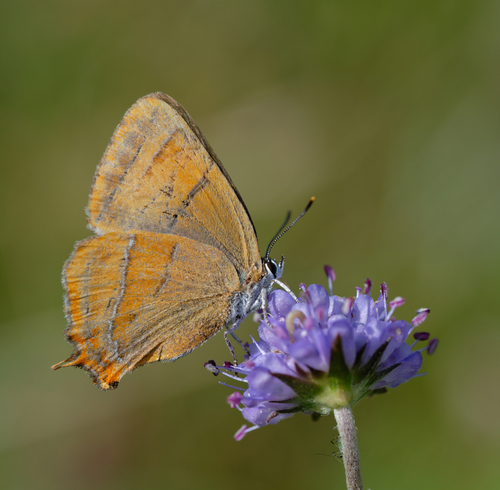
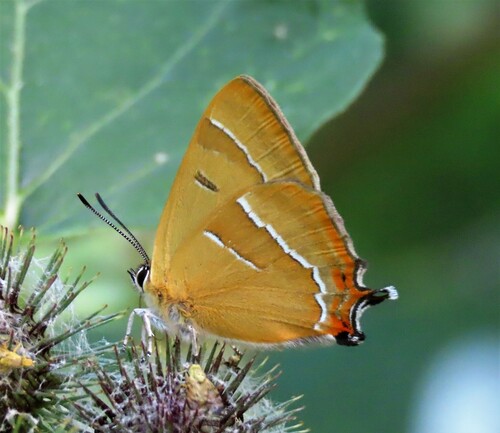
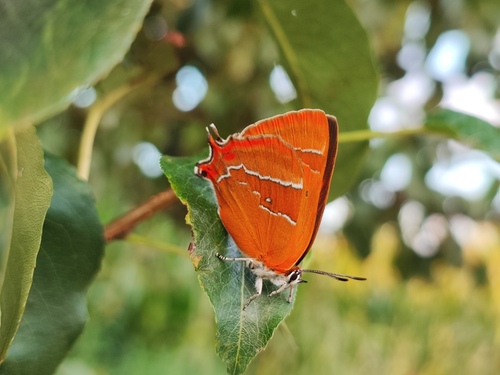
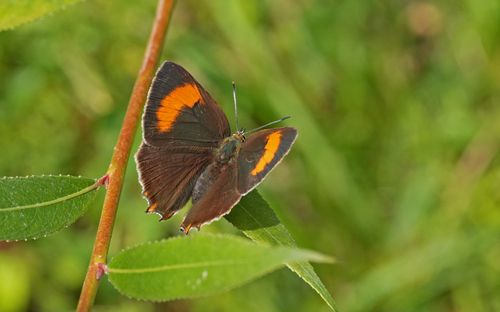
Thecla betulae (Linnaeus, 1758)
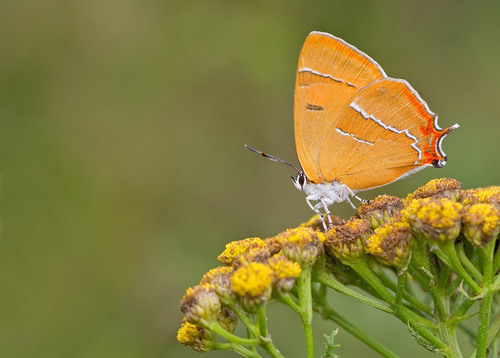
Source: Wikipedia
Synonyms 6
- 95,838 GBIF occurrences
- 5,255 iNaturalist observations
This is a widespread species in its European range, but in some regions, it is very local and restricted to (semi-) natural habitats. Declines in distribution or population have been reported in several countries. It is classed as Endangered in the Netherlands; and Vulnerable in Albania, Denmark and the United Kingdom (Maes et al. 2019). It is also classed as Near Threatened in Austria, Bosnia and Herzegovina, Hungary, Luxembourg, Norway, and Romania.
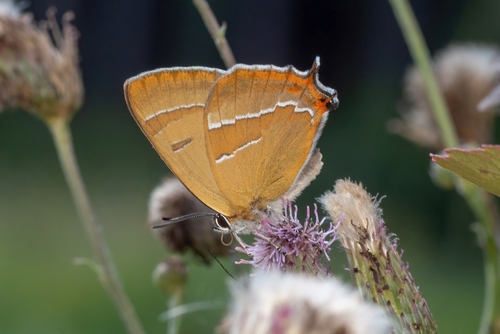
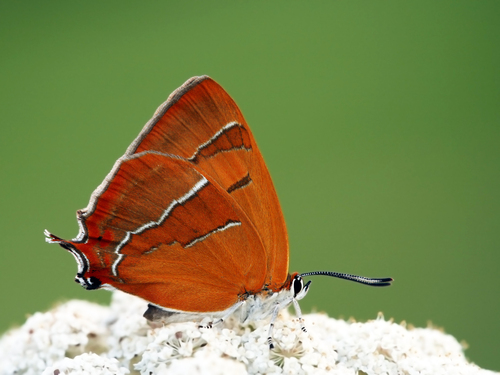
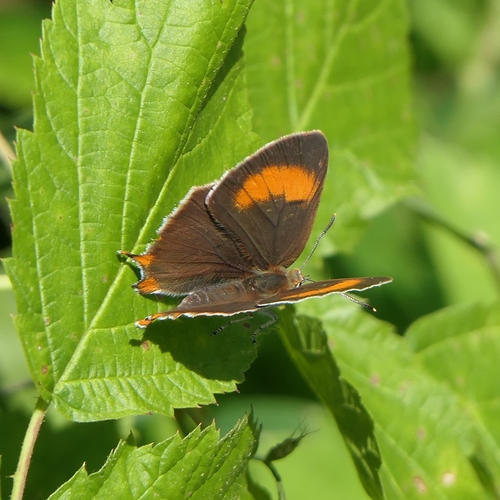
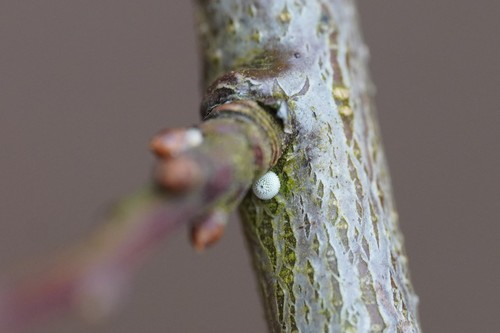
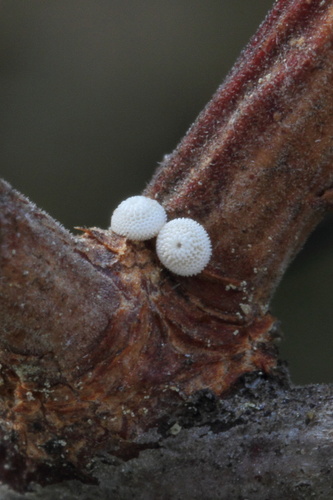
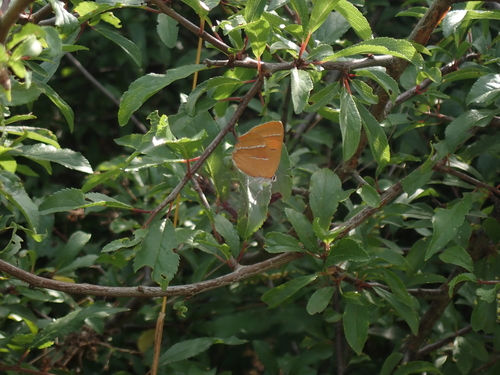
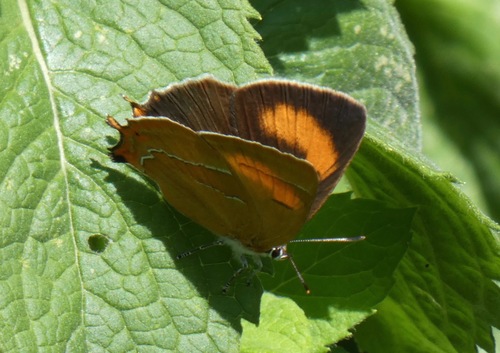
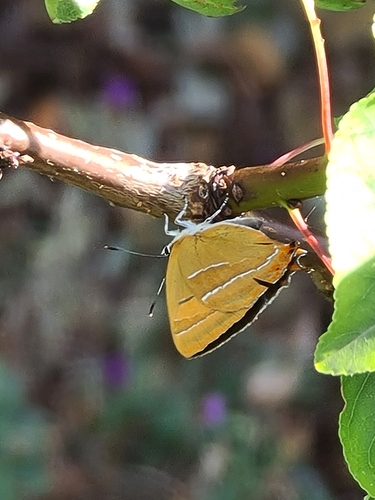
The Brown Hairstreak occurs in scrub, along hedges near deciduous woodland and in parks, but the butterfly is rarely seen. However, the eggs that are laid at the base of the buds of various Prunus species are easy to find. In winter the pearly-white eggs show up on the bare twigs of the shrubs or trees. The egg, thus, hibernates, hatching in spring. The small caterpillar bores its way into a bud, hollowing it out, and later on also eating the leaves of the hostplant. Blackthorn (Prunus spinosa) is often used, but also cultivated species of Prunus, such as plum and cherry trees. The caterpillars pupate in the shrub layer under the tree serving as the hostplant. This butterfly species has one generation a year. Habitats include broad-leaved deciduous forests (29%), tree lines, hedges, small woods, bocage, parkland dehesa (18%), mixed woodland (14%), urban parks and large gardens (12%), heath and scrub (6%), orchards, groves and tree plantations (6%) (van Swaay et al. 2006).
This species is not believed to face major threats at the European level. However, in some parts of Europe, the Brown Hairstreak remains threatened by a lack of suitable woodland (loss of open space), scrub and hedgerow habitat management. Habitat loss and changing habitat quality have also led to increasing habitat fragmentation and isolation of remaining populations and subpopulations.
This species occurs in several protected areas across its range. No specific conservation actions are needed at the European level, but in countries where the species is declining, important habitats should be protected and managed to prevent the loss of woodland open space, scrub and hedgerow breeding sites by maintaining or restoring traditional low-intensity forest management practices, encouraging suckering Blackthorn and trimming and cutting Blackthorn hedgerows on rotation. The effects of conservation actions should be monitored by butterfly monitoring schemes, counting the eggs in winter.
European regional assessment: Least Concern (LC)EU 27 regional assessment: Least Concern (LC)The Brown Hairstreak is listed as Least Concern, as it has been evaluated against all the IUCN criteria and does not meet the thresholds for any category of threat in Europe or the EU 27 region.
Gallery