Taxus baccata L.
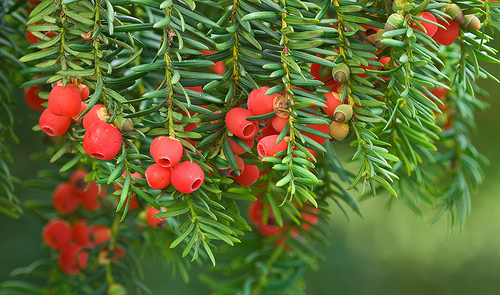
Source: Wikipedia
Synonyms 49
- 312,808 GBIF occurrences
- 41,698 iNaturalist observations
The global population is increasing due to changed woodland management, which has become less intensive in many parts of Europe. In Scandinavia, it may be expected to expand inland from coastal areas if the warming climate trend continues.
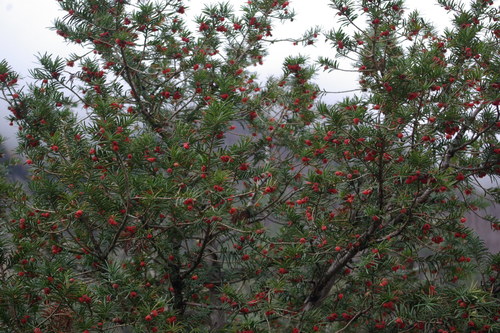
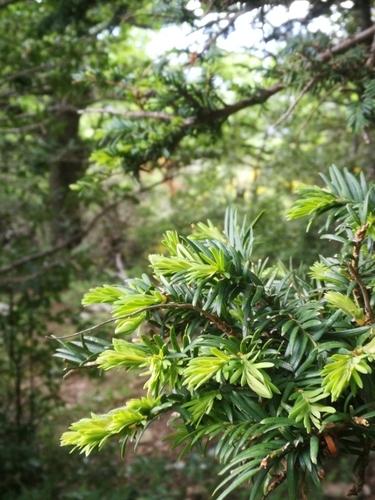
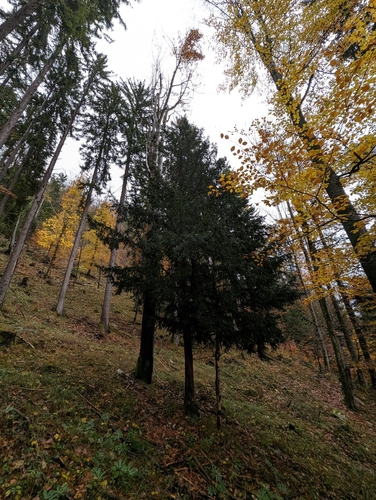
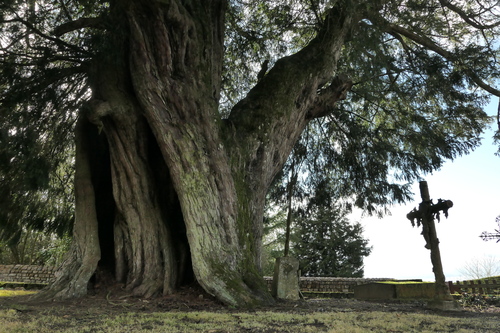
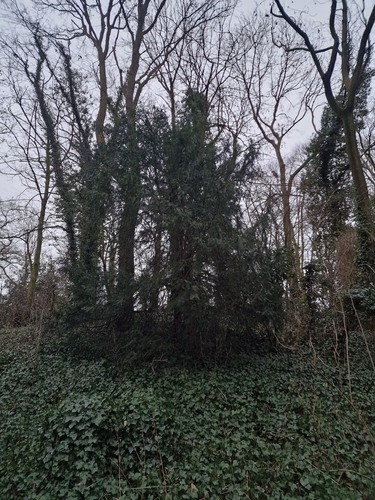
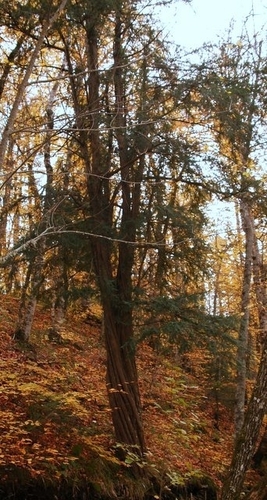
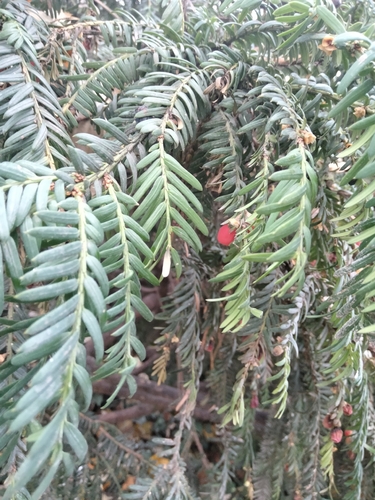
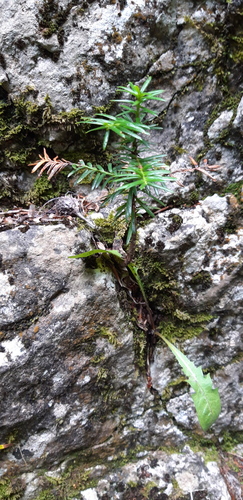
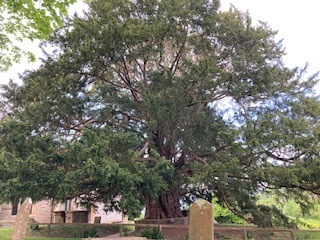
Taxus baccata is capable of growing under (not entirely closed) canopy of beech (Fagus spp.) as well as other deciduous broad-leaved trees, but it will only develop to large trees in more open situations. In Switzerland, the richest area of Central Europe for yew, it forms a yew-beech wood on cool, steep marl slopes in the Jura and the foothills of the Alps up to 1,400 m a.s.l. (Ellenberg 1988). Under the evergreen Common Yew, nothing else will grow. In England, T. baccata is best developed on chalk downs - again on steep slopes - and can form extensive stands outside the beech woods invading down grassland. In much of Europe where the climate is less oceanic it survives better in mixed forests, coniferous as well as mixed broadleaved-conifer forests, again mostly on limestone substrates, and often occupying rocky cliffs and slopes.On acid soils yews perform less well under canopy and usually do not develop beyond a sapling stage in woods. Its northern limits in Scandinavia are determined by its sensitivity to severe frost. Its toxicity (all parts except the red arils around the seeds) prevent browsing by cattle and sheep, but not by rabbits and deer, as these animals have developed a level of immunity to the dangerous alkaloids. Apart from seed germination (dispersed by birds), T. baccata readily regenerates from stumps and roots (suckers); ancient hollow trees may rejuvenate constantly in this way. When planted, e.g. in churchyards and cemeteries, soil pH seems unimportant; some of the largest and presumably oldest specimen trees in NW Europe, in particular Brittany (France) and the British Isles, are known from such locations and were planted probably since Celtic times
Although in past centuries Yew has been 'persecuted' in much of Europe and it had become rare in many areas, with the changes in woodland management and use since the nineteenth century the species has made a remarkable comeback and is not in danger of extinction in the wild.
Common Yew is present in numerous protected areas throughout its range. In Europe, several yew dominated communities are covered under the EU Habitats Directive. Additionally there are many societies in various countries devoted to yew conservation, especially older trees.
European regional assessment: Least Concern (LC)EU28 regional assessment: Least Concern (LC)The Common Yew (Taxus baccata) has a very extensive range throughout Europe. Exploitation and attempts at eradication are no longer current. Cultivated rather than wild populations are exploited for chemical compounds to produce Taxol® unlike the situation with other yew species and expansion has been observed in many woodlands in recent decades. The species is considered Least Concern.
Gallery