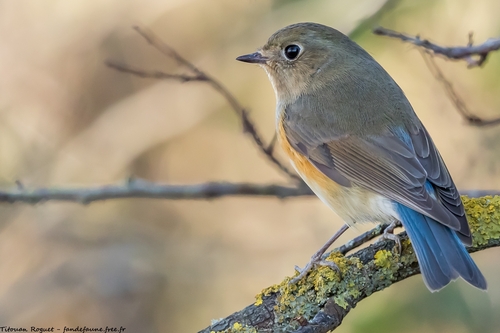
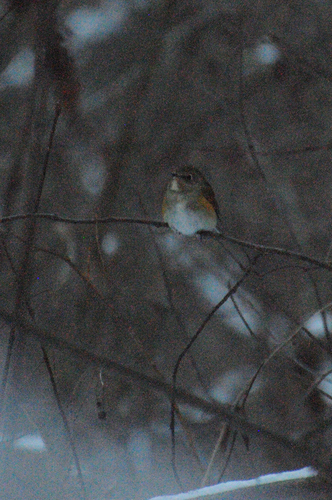
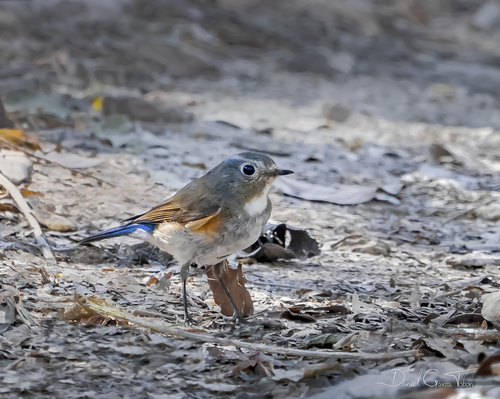
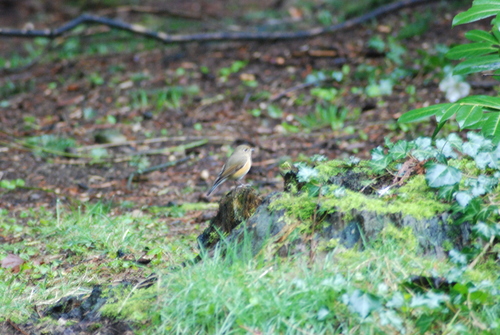
Tarsiger cyanurus (Pallas, 1773)
Source: Wikipedia
- 72,730 GBIF occurrences
- 6,162 iNaturalist observations
In Europe, the total population size is estimated at 480,000-890,000 mature individuals (BirdLife International 2021). Europe comprises c. 5% of the species' global range, so a very preliminary estimate of the global population size is c. 9,000,000-18,000,000 mature individuals, although further validation is desirable.
This species breeds in Siberian taiga forest, with a preference for old-growth mossy moist spruce (Picea) tracts with fallen trees and sparse undergrowth, often on hilly slopes, but also pine (Pinus) and mixed forests with birch (Betula) and rhododendron. Breeding occurs from May to August in Russia and May to July in Mongolia and China, from the end of June to mid-August in North Korea and from May to August in Japan. It lays three to seven eggs. The nest is a cup of grass, moss, ferns, twigs and roots, which is lined with hair, feathers, fine grass and sometimes pine needles. It is set in the hollow of a tree, among tree roots, under a rotten log or in a hole in a bank or steep slope. The diet is not well studied but is thought to be mostly invertebrates, especially insects as well as fruits and seeds when it is not breeding. The nominate race is migratory throughout virtually all of its range, though some remain all year in Japan (Collar and de Juana 2015).
Conservation Actions UnderwayCMS Appendix II. Bern Convention Appendix II. There are currently no known conservation measures for this species within Europe.Conservation Actions ProposedNo conservation measures are currently needed for this species within the European part of its range.
This species has an extremely large range, and hence does not approach the thresholds for Vulnerable under the range size criterion (extent of occurrence under 20,000 km² combined with a declining or fluctuating range size, habitat extent/quality, or population size and a small number of locations or severe fragmentation). The global population size is estimated to be extremely large and does not approach the thresholds for Vulnerable under the population size criterion (under 10,000 mature individuals with a continuing decline estimated to be over 10% in ten years or three generations, or with a specified population structure). The population trend is not known, but the population is not believed to be decreasing sufficiently rapidly to approach the thresholds under the population trend criterion (over 30% decline over ten years or three generations). For these reasons the species is evaluated as Least Concern.
Gallery