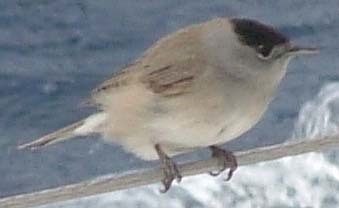
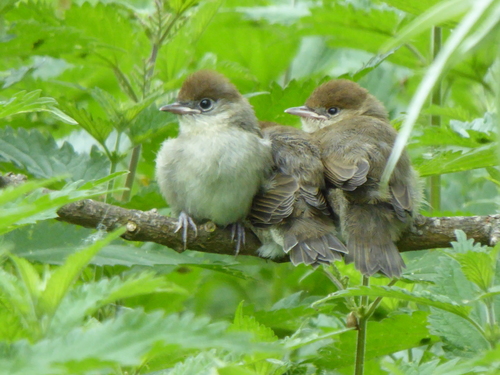
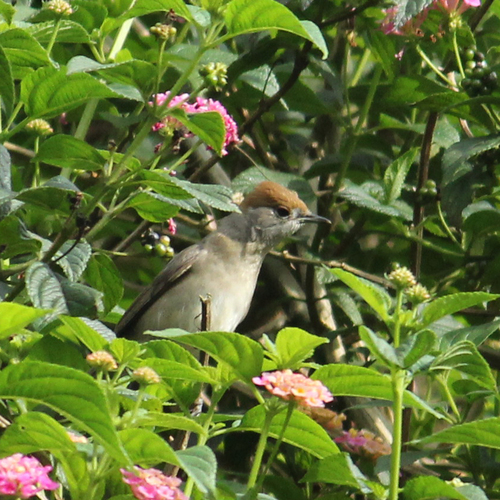
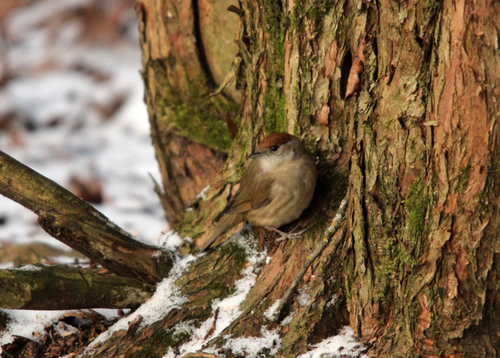
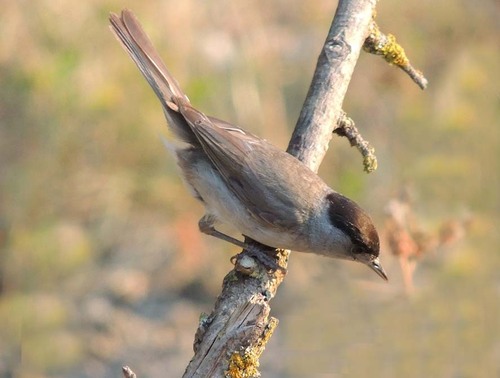
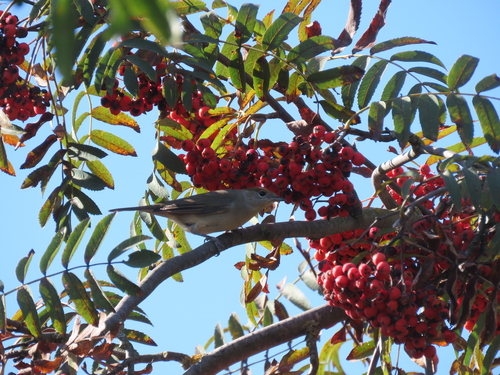
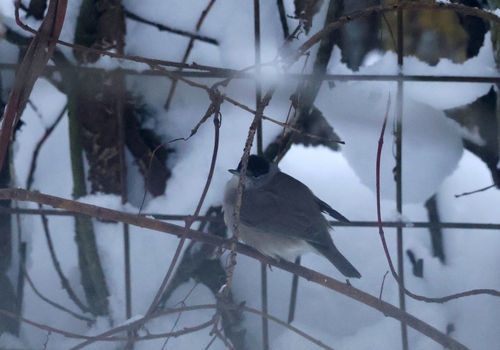
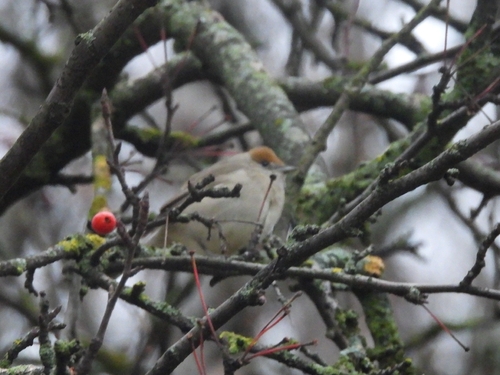
Sylvia atricapilla (Linnaeus, 1758)
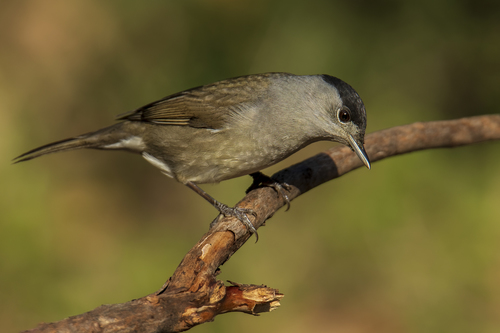
Source: Wikipedia
Synonyms 2
- 6,469,790 GBIF occurrences
- 72,187 iNaturalist observations
In Europe, the total population size is estimated at 88,400,000-138,000,000 mature individuals (BirdLife International 2021). Europe comprises c. 95% of the species' global range, so the global population size has been estimated at 93,000,000-145,000,000 mature individuals.
This species breeds in almost any kind of forested area. It prefers broadleaf deciduous forest and mixed woodland, either mature or more open and with denser understorey. In addition it occupies riparian forest, parks and gardens with trees, fruit-tree plantations, orchards, and evergreen woodland. In the winter, it uses more with bushy areas rich in berries and other fruits, such as maquis and garrigue, olive groves, urban gardens and palm plantations. In Africa it is found in a large spectrum of habitats from lowland savanna rich in fruit trees to mangroves, riverside woodland and montane scrub and forest. Availability of fruit influences seasonal variation in habitat occupation. Breeding mainly occurs from mid-April to August and it lays two to seven eggs. The nest is a finely structured cup with rather thin walls and bottom, made of grasses and herbs and some twigs and rootlets and lined with finer grass, hair and roots. It is normally built low in broadleaf deciduous vegetation, especially in dense foliage of a shrub or bush or the branches of a small tree but also in tall herbaceous vegetation. The diet consists chiefly of insects in the breeding season and mainly fruit the rest of the year. On Atlantic and Mediterranean islands the species is sedentary, in the Mediterranean Basin and in parts of western Europe it is partially migratory and it is a long-distance migrant in northern and eastern parts of its range (Aymí et al. 2013).
In England, browsing deer (Cervidae) in young woodland can adversely alter habitat quality for understorey-dependent species such as this warbler (Holt et al. 2013). The species is trapped in some parts of its range.
Conservation Actions UnderwayCMS Appendix II. Bern Convention Appendix II. There are currently no known conservation measures for this species within Europe.Conservation Actions ProposedNo conservation measures are currently needed for this species within its European range.
This species has an extremely large range, and hence does not approach the thresholds for Vulnerable under the range size criterion (extent of occurrence under 20,000 km² combined with a declining or fluctuating range size, habitat extent/quality, or population size and a small number of locations or severe fragmentation). The population size is extremely large, and hence does not approach the thresholds for Vulnerable under the population size criterion (under 10,000 mature individuals with a continuing decline estimated to be over 10% in ten years or three generations, or with a specified population structure). The population trend appears to be increasing, and hence the species does not approach the thresholds for Vulnerable under the population trend criterion (over 30% decline over ten years or three generations). For these reasons the species is evaluated as Least Concern.
Gallery