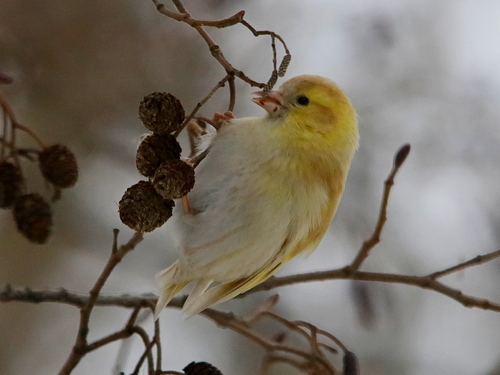
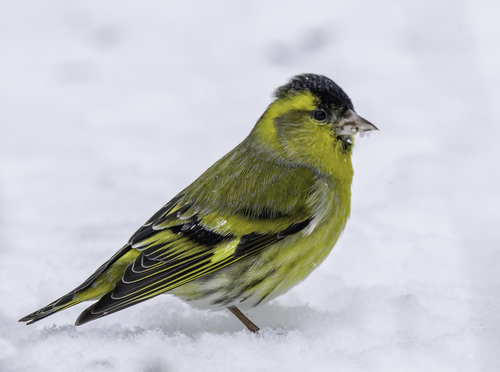
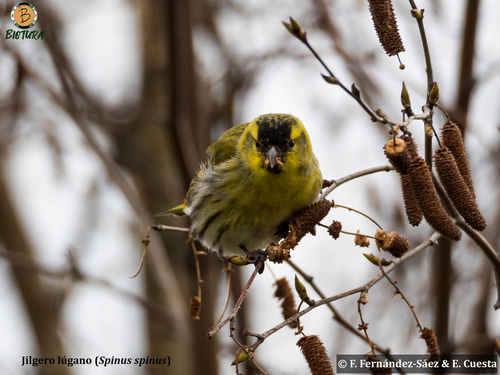
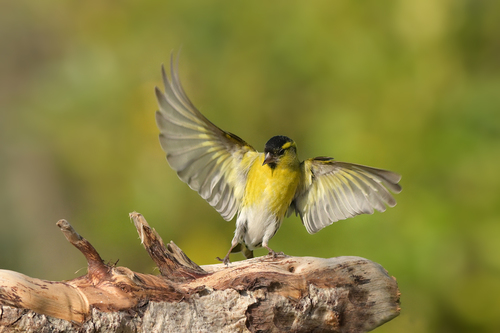
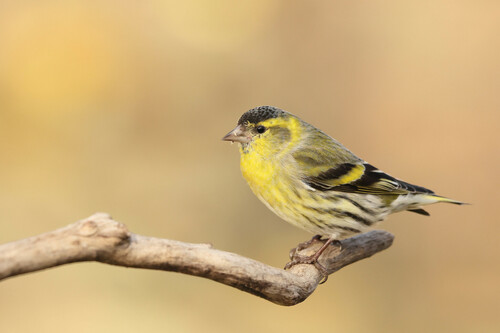
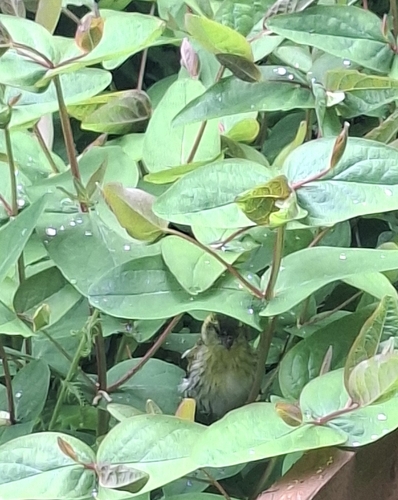
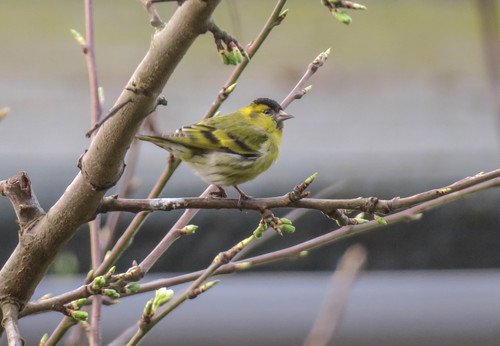
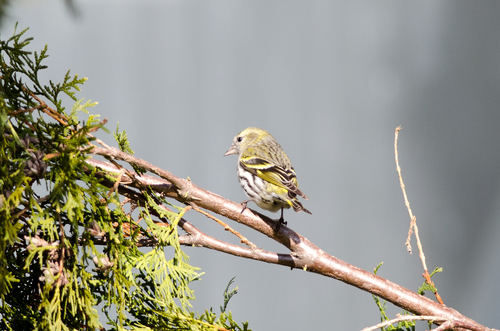
Spinus spinus (Linnaeus, 1758)
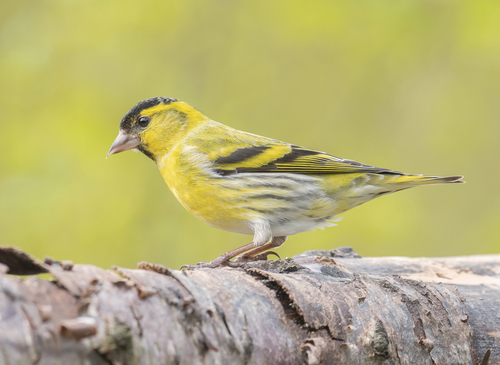
Source: Wikipedia
Synonyms 1
- 3,187,995 GBIF occurrences
- 40,796 iNaturalist observations
In Europe, the total population size is estimated at 13,700,000-25,800,000 mature individuals, with 6,880,000-12,900,000 breeding pairs (BirdLife International 2021), and comprises approximately 55% of the species' global range, so a very preliminary estimate of the global population size is between 24,900,000-46,900,000 mature individuals, although further validation of this estimate is desirable. The species' population in Europe is considered to have remained relatively stable over three generations (10 years) (BirdLife International 2021). As this region holds the majority of the species' global range, the global population size is considered to be stable over three generations. This species is considered to have a medium dependency on forest habitat, which is estimated to be declining at a slow rate within its mapped range (Global Forest Watch 2024).
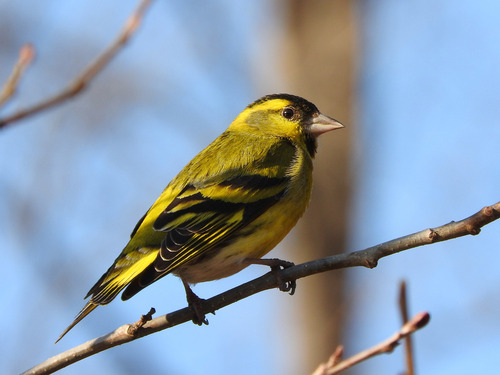
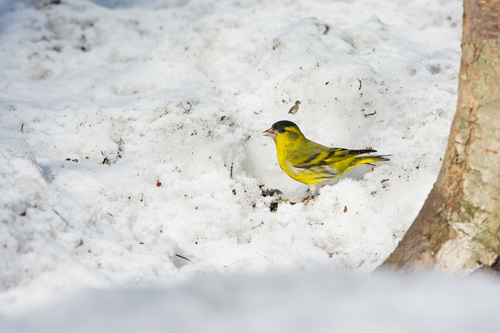
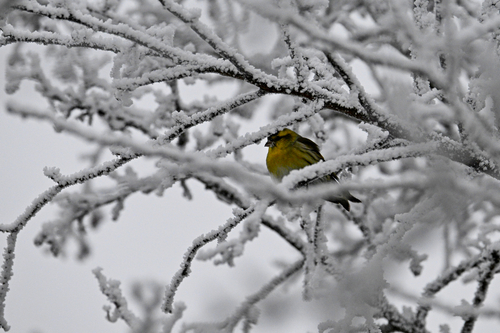
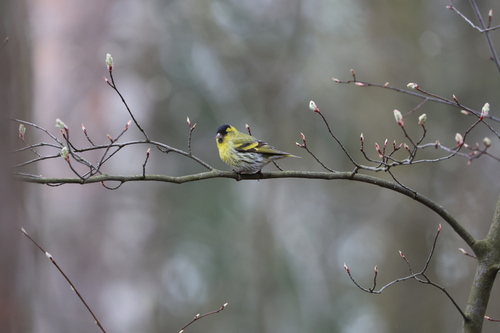
This species breeds in boreal and temperate lowland, submontane and montane conifer forests, mainly spruce (Picea), and in fairly open mixed deciduous and conifer forests, including fir (Abies) and pine (Pinus). It also frequents a wide variety of other trees, including larch (Larix), alder (Alnus) and birch (Betula), together with non-native conifers in plantations, parks and gardens. It is found in similar habitats outside the breeding season as well as on heaths, commons, orchards, weedy thickets, parks and gardens. In the eastern Mediterranean and Middle East it occurs in casuarina (Casuarina) trees, fruit trees, plantations and edges of cultivation and in North Africa it is found in acacias (Acacia). The breeding season begins late February or March and runs until August and the timing is dependent on the cone crop. The nest is a small ball of conifer twigs, bark strips, plant fibres, roots and down, heather, grass, moss, lichens, animal hair, feathers and cobwebs and is placed against the trunk or in the outer branches of a tall tree, up to 20 m above ground. It lays three to five eggs (Clement 2016). It feeds principally on seeds, particularly of conifers, alder, birch and herbs and in the breeding season it also takes invertebrates. Northern populations are mostly migratory while some southern populations are resident (Snow and Perrins 1998).
In some areas the species fluctuates significantly due to irregular resource availability (Clement 2016).
Conservation Actions UnderwayBern Convention Appendix II.Conservation Actions ProposedNo conservation measures are currently needed for this species.
This species has an extremely large range and the population size is extremely large, hence does not approach threatened thresholds for the range or population size criteria. The population trend appears to be stable, and hence the species does not approach the thresholds for Vulnerable under the population trend criterion. For these reasons the species is evaluated as Least Concern.
Gallery