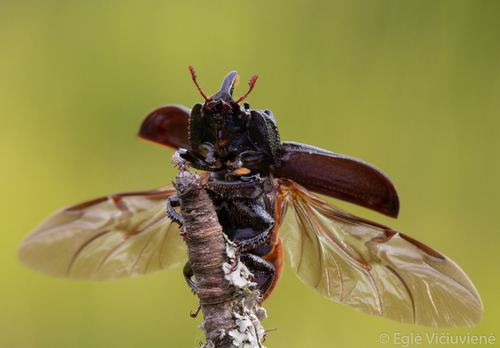
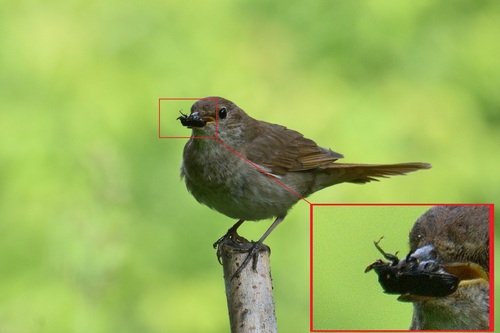
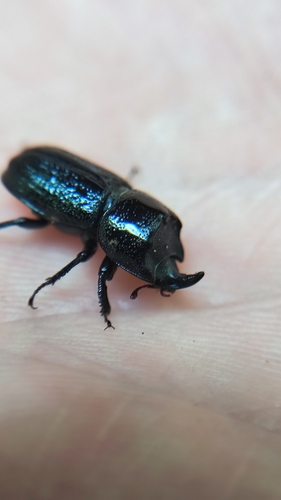
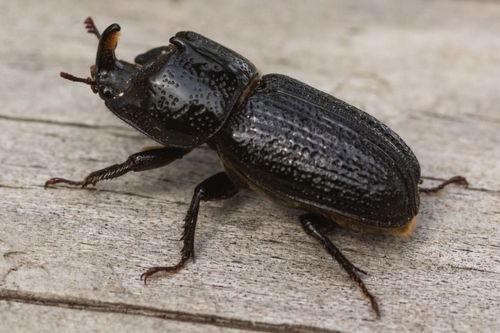
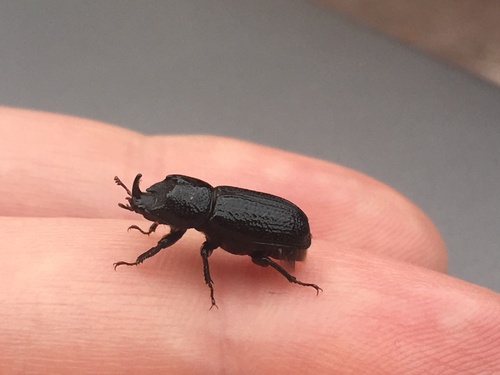
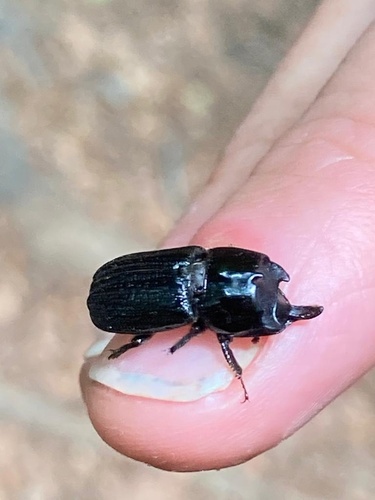
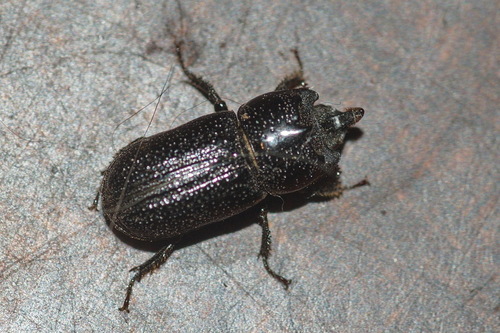
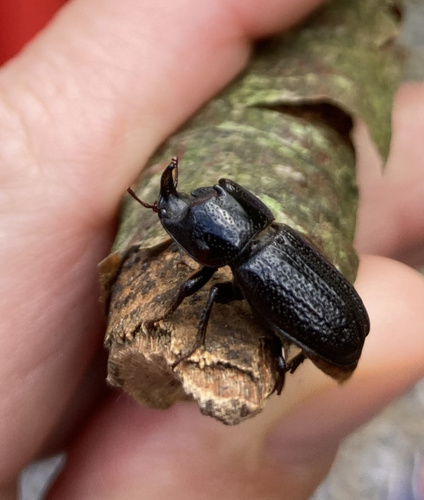
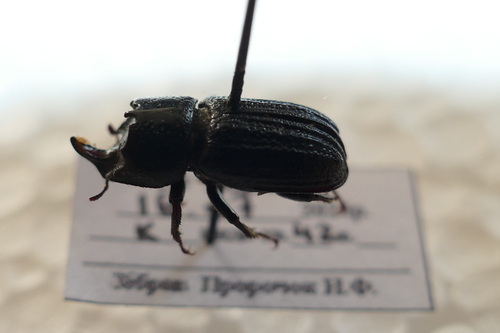
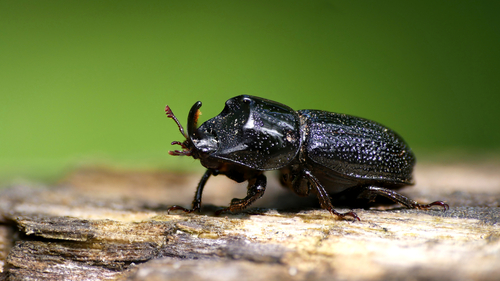
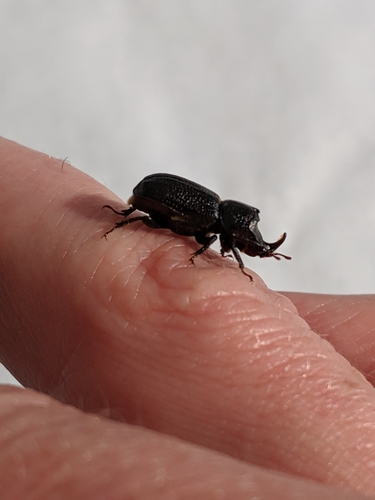
Sinodendron cylindricum (Linnaeus, 1758)
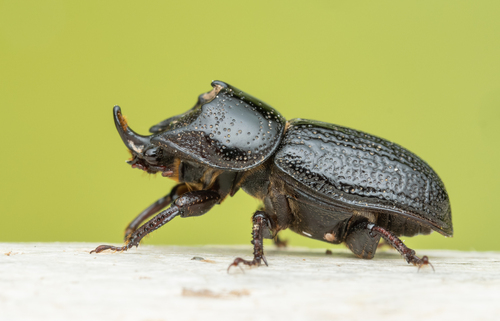
Source: Wikipedia
Synonyms 5
- 16,451 GBIF occurrences
- 2,646 iNaturalist observations
This is a widespread and common species in most of its European range. Population trends appear stable or increasing in some countries.In Denmark (Hansen 1996), Germany, and Finland this species is common. In Hungary, the population size and trend have not been quantified, although the species is regarded as common in its localities (O. Merkl pers. comm. 2009). In the UK, it is very widespread across Britain, the population is strong and with little or no sign of any decline. In Ireland, it has a very fragmented distribution, but a reasonable number of known sites, some of which are protected. It is common and widespread in Latvia. In Romania, good populations in size occur in the south-west. In Ukraine, this species is not common. In Spain there are no quantitative data available; non-systematic observations at the Sierra de Guadarrama, one of the southernmost parts of its Iberian distribution, indicate a fairly high number of exit holes in the populations (in the order of ten) (M. Méndez pers. obs. 2009); a total of 89 squares of 10 x 10 km are occupied (Grupo de Trabajo sobre Lucanidae Ibéricos 2006, Blanco Villero and Sáez Bolaño 2007). In European Russia, Sinodendron cylindricum is rare in the north, common and widespread in central and southern parts of the area, the population is very large.
This is an obligate saproxylic species of temperate forests and cultural landscape. Typically found in decaying wood of deciduous trees in temperate and mixed woodland and cultural landscape - old pasture woodlands, avenues and parks. Larvae bore in hard, white- or yellow-decayed heartwood of large to midsized, usually standing decayed trees, but are also reported to develop in Pinus, including stumps. Larval development normally takes two or three years, up to four in Spain. It has been reported live from floating timber in both freshwater and seawater. It flies in daylight in early summer in the UK (Alexander 2002). In the UK, suitable host trees occur in a wide variety of situations and it is widespread in the cultural landscape (Alexander 2002). In Hungary all known localities are in old beech Fagus forests. In Latvia, it is most abundant on Alnus, Betula and Tilia, preferring xerothermic conditions. In Romania adults often were recorded from old stumps in beech forests in the Carpathians. In European Russia, larvae are also reported from brown decay (Nikitsky 2016). Adults are present all year round but a clear maximum in July in Spain and males use their horns to fight; three larval instars (Grupo de Trabajo sobre Lucanidae Ibéricos 2006) have mainly been found in beech forests (Grupo de Trabajo sobre Lucanidae Ibéricos 2006) (never in pine forests), although in the Sierra de Guadarrama has been found on birch Betulatoo (de la Rosa 2006). The available habitat in Europe is large and not in immediate decline.
There is no major threat known to this species. However, the amount of decaying timber in forests and cultural landscape is declining all across Europe.
This species occurs in several protected areas (e.g. Belarus, Estonia, Germany, the UK, Hungary, Ireland, Latvia, Poland, Romania, European Russia, Spain). In Spain, about 23% of the beech forests are in protected areas and the presence of Sinodendron cylindricum in protected areas is known. However, even within protected areas decaying wood is sometimes managed.
European regional assessment: Least Concern (LC)EU 27 regional assessment: Least Concern (LC)Sinodendron cylindricumis an obligate saproxylic species of stag beetles bound to southern boreal and temperate mixed and deciduous forests. The European and EU 27 extent of occurrence (EOO) and area of occupancy (AOO) are large, strongly exceeding the threatened species threshold. The population is likely very large, stable and without evidence of decline. The species is variably common across its wide European range. There is no main threat identified to this species, which is therefore assessed as Least Concern in Europe and the EU 27 region.
Gallery