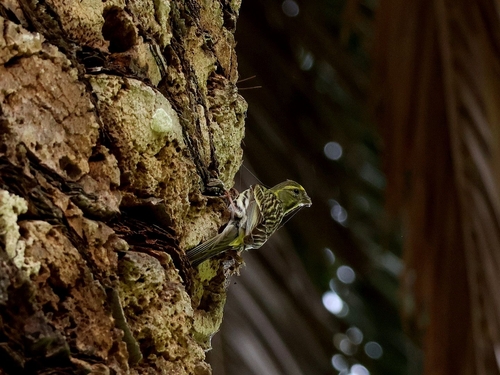
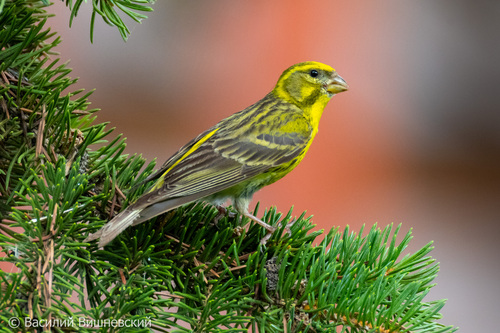
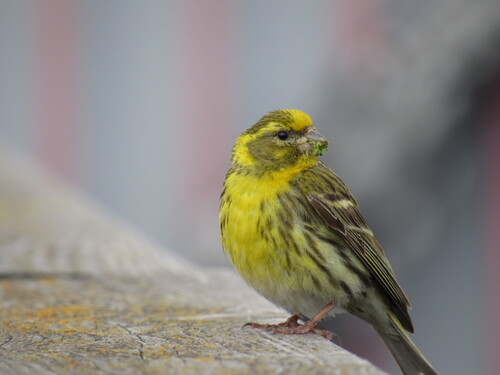
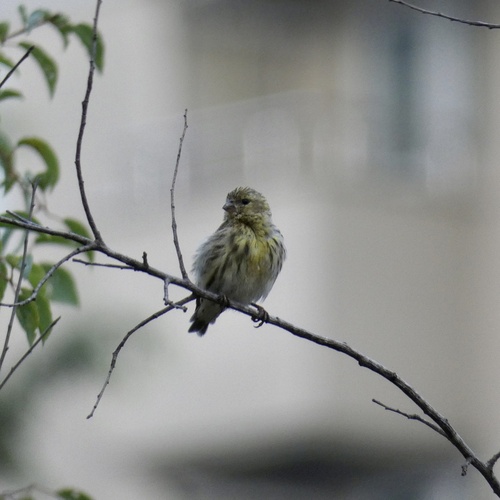
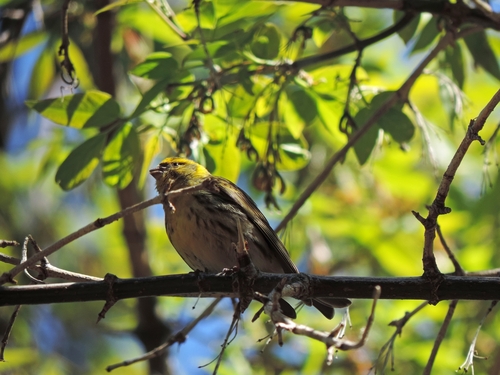
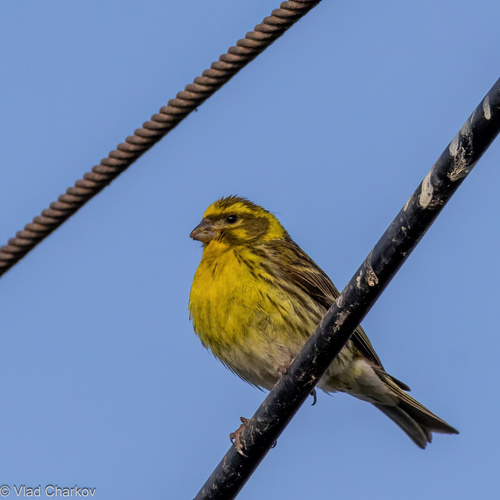
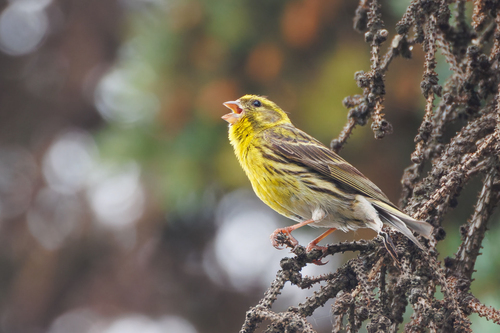
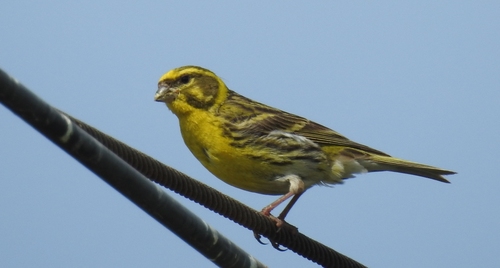
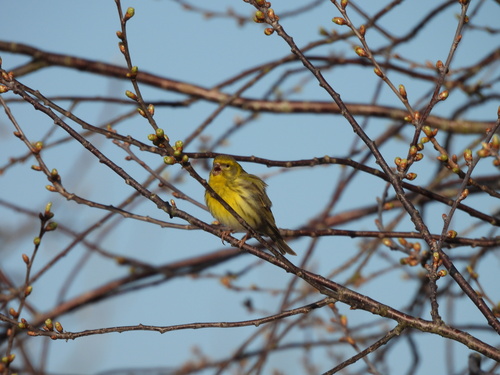
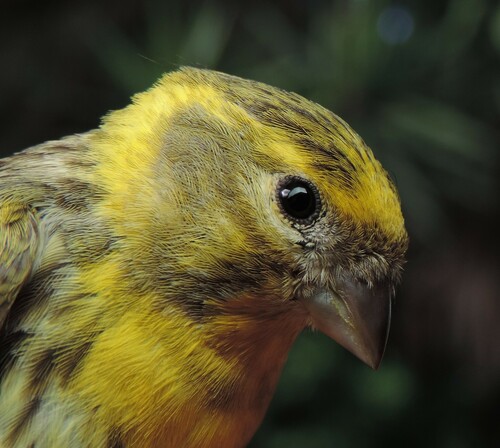
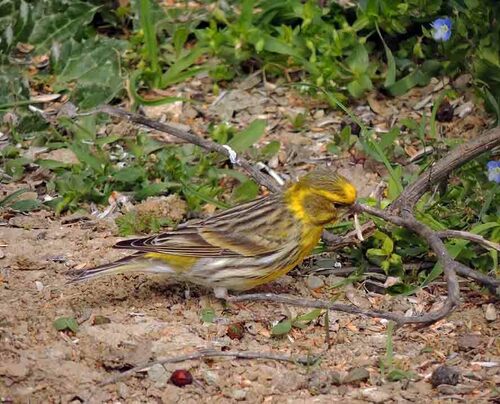
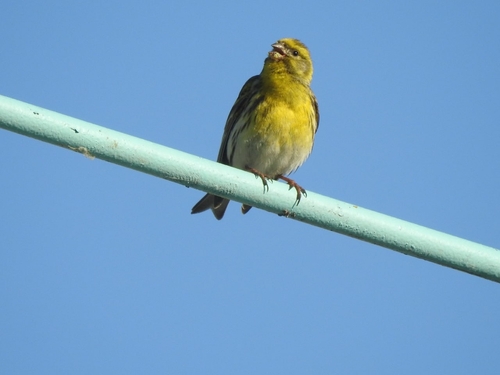
Serinus serinus (Linnaeus, 1766)
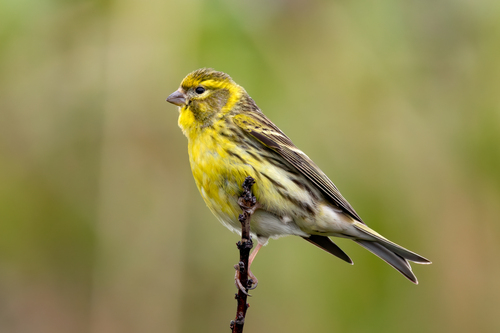
Source: Wikipedia
- 1,791,411 GBIF occurrences
- 40,557 iNaturalist observations
The European breeding population is estimated at 17,600,000–28,000,000 pairs, which equates to 35,200,000–55,900,000 mature individuals. The breeding population in the EU28 is estimated at 1,190,000–2,490,000 pairs, which equates to 2,380,000–4,970,000 mature individuals. For details of national estimates, see the Supplementary Information.
This species occurs in lowland to lower montane mosaics of wooded hills with conifers and open country, maquis slopes with pine (Pinus) woods, small stands of cedars (Cedrus), junipers (Juniperus), cypress, European silver fir (Abies alba) and thuja (Thuja). It is also widespread in olive (Olea) and citrus groves, open agricultural areas, tall hedges and windbreaks, orchards, vineyards, plantations, suburban parks, avenues and gardens, ravines and gorges with trees and shrubs.The breeding season runs from February to early August. The nest is sited above ground among the outermost branches in the crown or on a branch against the trunk of a bush or tree. It is a small and compact platform of small twigs, plant stems and down, bark strips, roots, grasses, moss, animal hair and feathers. Clutches are three to four eggs.It feeds mainly on seeds, buds, shoots, flowers and small invertebrates (Clement 2016).The species is sedentary to migratory; most birds vacate the northern part of its range, although in some years small numbers remain (Snow and Perrins 1998).Although the generation length for both EU and Europe regional assessments were calculated using the same methodology, new information arriving after the EU assessments were undertaken gave rise to an update in the generation lengths. This new information was then used for the Europe level assessments giving rise to a difference between the generation lengths used for the EU and Europe regions.
There are not thought to be any current significant threats to this species.
Conservation Actions UnderwayBern Convention Appendix II. There are currently no known specific conservation measures for this species.Conservation Actions ProposedNo conservation measures are currently needed for this species.
European regional assessment: Least Concern (LC)EU28 regional assessment: Least Concern (LC)In both Europe and the EU28, this species has an extremely large range (its extent of occurrence (EOO) is much larger than 20,000 km² and its area of occupancy (AOO) is much larger than 2,000 km²), and hence it does not approach the thresholds for Vulnerable under the range size criteria (criteria B and D2). The population size is extremely large, (much larger than 10,000 mature individuals), and hence it does not approach the thresholds for Vulnerable under the population size criteria (criteria C and D). Despite the fact that the population trend appears to be decreasing, the decline is not believed to be sufficiently rapid to approach the thresholds for Vulnerable under the population size reduction criterion (criterion A). The probability of extinction has not been calculated for this species, therefore criterion E cannot be applied. For these reasons the species is evaluated as Least Concern in both Europe and the EU28.
Gallery