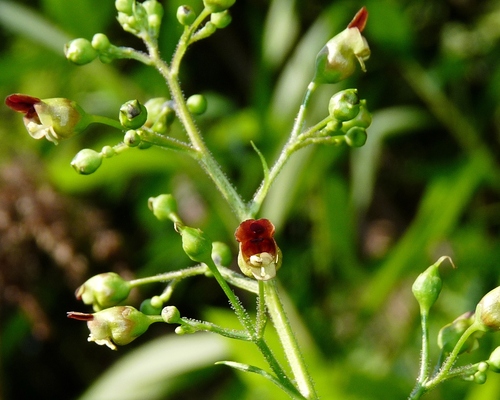
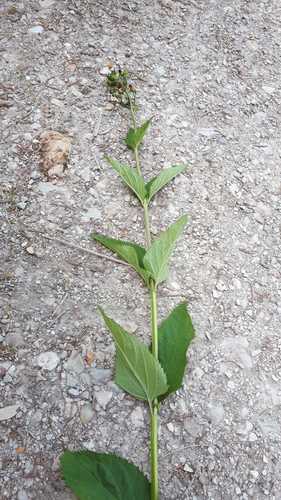
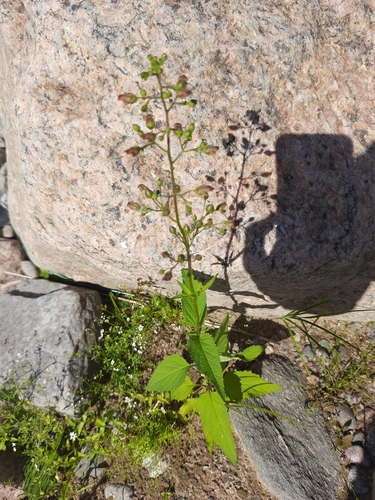
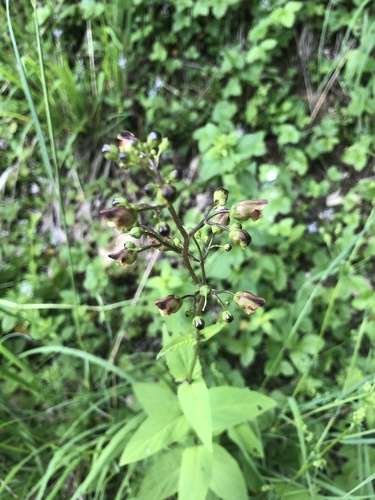
Scrophularia nodosa L.
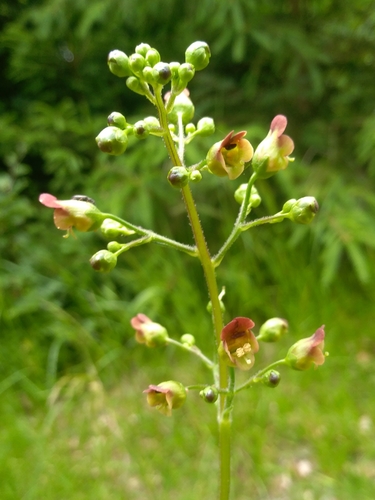
Source: Wikipedia
Synonyms 23
- 520,723 GBIF occurrences
- 24,052 iNaturalist observations
Populations are known to be stable (Botanical Society of Britain and Ireland 2024).
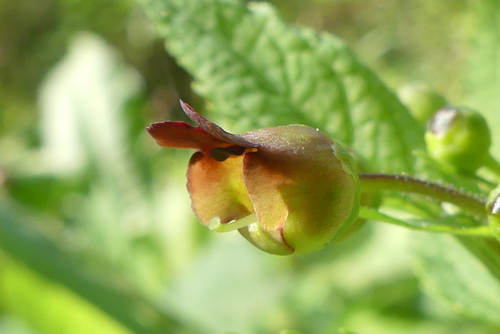
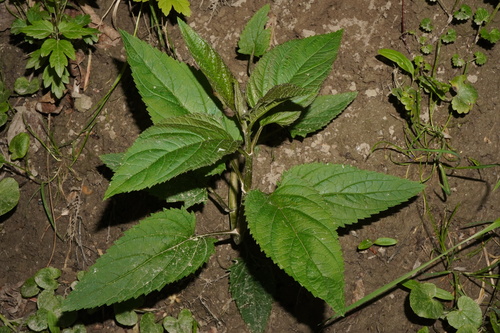
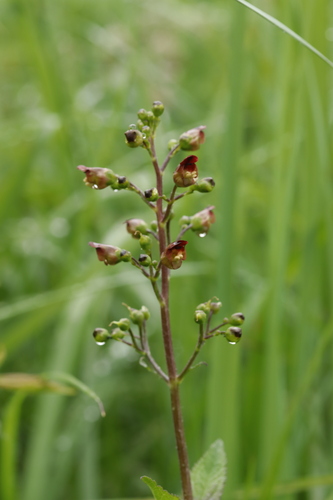
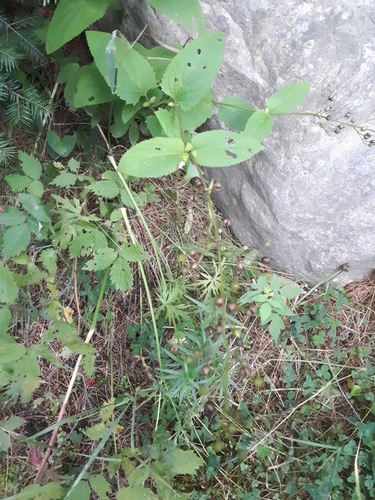
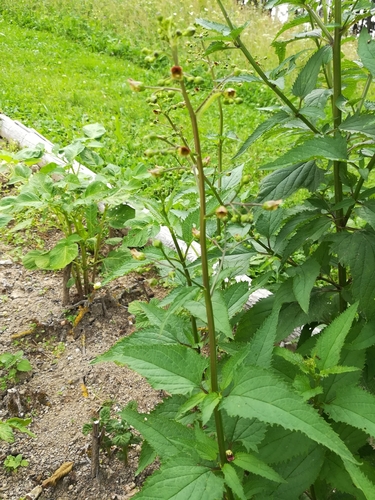
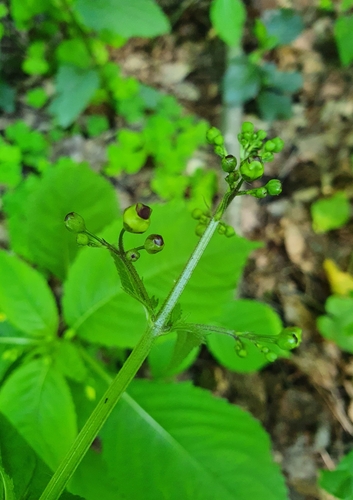
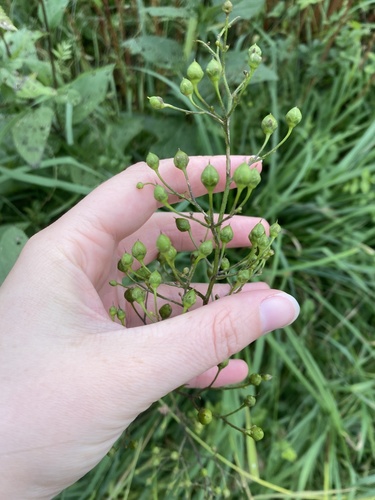
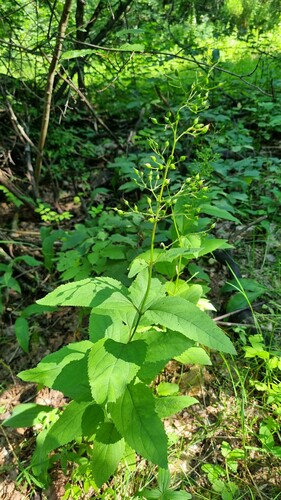
A medium to tall hairless woodland perennial herb found in hedgerows, margins of woodlands, rivers, streams and damp habitats. It has an unpleasant scent to attract wasps for pollination (Blamey and Grey-Wilson 2003). In places it is part of the subnitrophilic communities surrounding urban areas (Castroviejo et al. 2009).
There are no known widespread or significant threats to this species.
It is listed as Least Concern in Denmark, Estonia (eElurikkus 2024), Germany (Ludwig and Schnittler 1996), Luxembourg (Colling et al. 2025), Norway (Artsdatabanken 2024), Switzerland, and the United Kingdom.The species is represented by 69 germplasm accessions held at European institutions (EURISCO 2024) and is included in the living collection of at least 99 botanical gardens (BGCI 2024). It occurs in many protected areas, including Natura 2000 sites (UNEP-WCMC and IUCN 2024, GBIF.org 2024).
European regional assessment: Least Concern (LC)EU 27 regional assessment: Least Concern (LC)This species is classified as Least Concern for both Europe and for the EU27 Member States due to its widespread distribution, stable populations and no major known threats.
Gallery