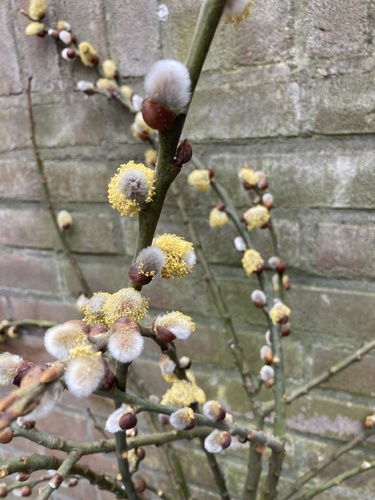
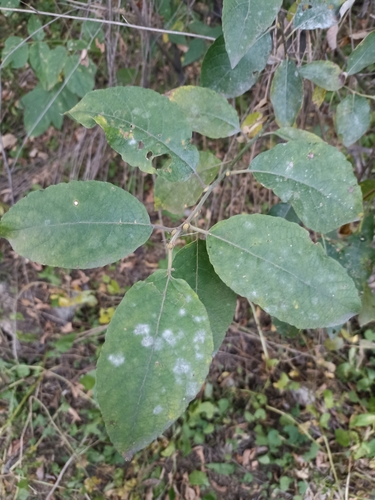
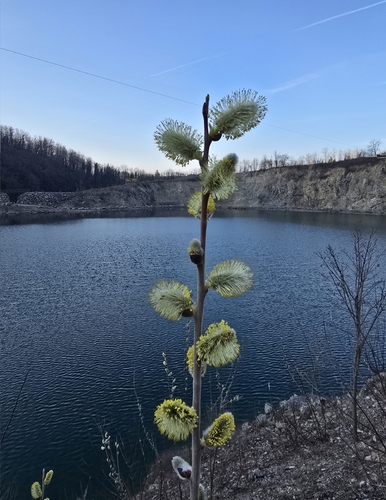
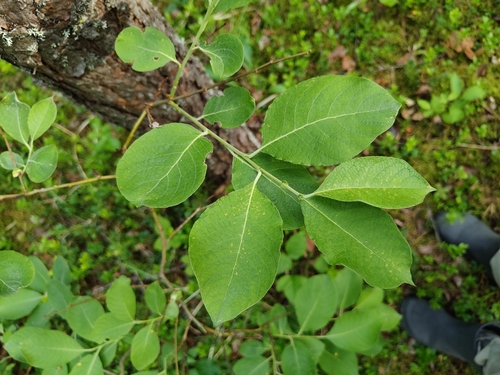
Salix caprea L.
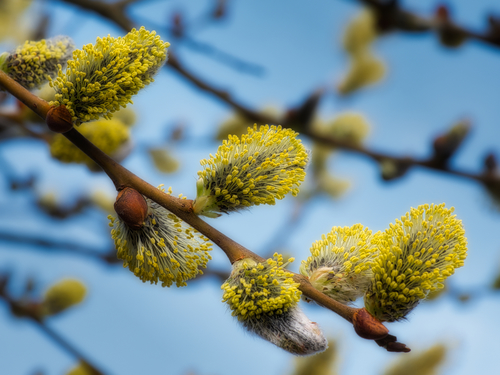
Source: Wikipedia
Synonyms 47
- 760,962 GBIF occurrences
- 43,528 iNaturalist observations
Within Europe Salix caprea is common in agricultural landscapes (Enescu et al. 2016). Population abundance within Asia is not known. Overall because the species has a widespread native range its population is likely to be large and stable.
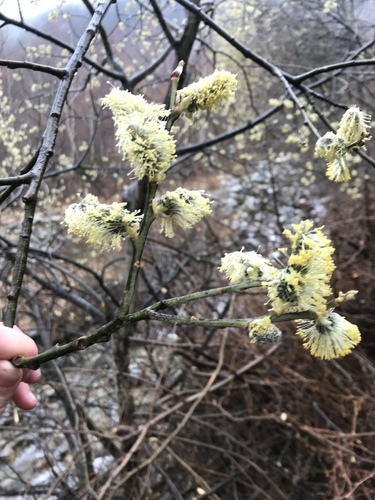
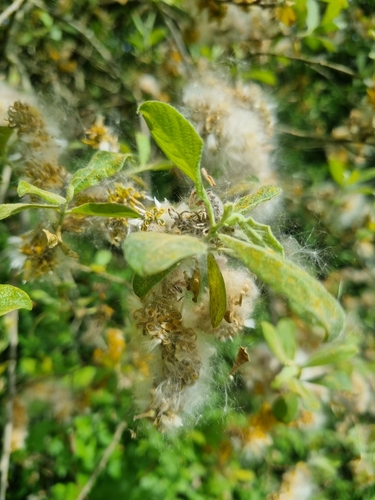
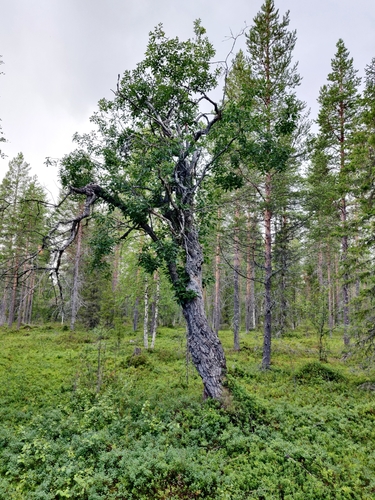
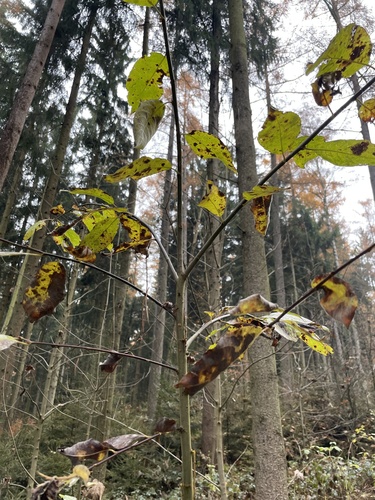
Salix caprea is a tree to 12–15 m tall or occasionally a shrub (Skvortsov 1999). The species is found in both boreal and temperate forests on mountains or in riparian zones. The species is a pioneer establishing itself in dry and wet sites and growing best in open or disturbed areas. It is a fast growing and light demanding species. Salix caprea is a host to many important lichen species. It is also an important nectar and pollen source for insects and birds as it flowers early in the year (Enescu et al. 2016).
Historically there was species loss to the timber trade however trees are now rarely taken from natural stands instead plantations have been established. Currently there are no serious threats to wild populations of Salix caprea with Europe except within Spain this species is threatened by forestry, fires, overgrazing, hydrological modification and low reproductive rate (Cabezudo et al. 2005). Within plantations the species is susceptible to pathogens, these do not pose a serious threat to the naturally occurring species. Threats to the species within Asia are not known.
Salix caprea is found in 121 ex situ collections (BGCI 2017). Regionally the species is assessed as Least Concern within Europe. On the country level the species is considered not threatened Least concern in Switzerland (Moser et al. 2002), China (Sung et al. 2004), Estonia (Lilleleht 2008), Great Britain (Cheffings and Farrell 2005) and Luxembourg (Colling et al. 2005). In Andalusia this species is listed as Endangered (Cabezudo et al. 2005). It is likely that S. caprea is found within habitats protected under EC habitats directive although it is not a specified species. It is recommended that population trends are monitored especially across the species Asian range and that there is site based action to conserve the species where necessary.
Salix caprea is a tree to 12–15 m, occasionally a shrub. It is found in the majority of European countries and also in The Caucasus, The Middle East, China and Russia. It is assessed as Least Concern. The species has a large extend of occurrence (EOO), as such population is also likely to be large and there are no reports of decline. Also there are currently no large scale threats to species and it is well represented in ex situ collections. It is recommended further information on population across the species range, particularly in Asia, be gathered.
Gallery