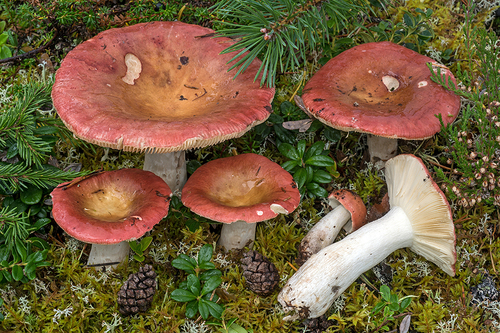
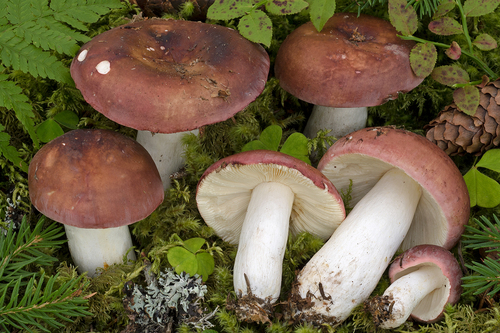
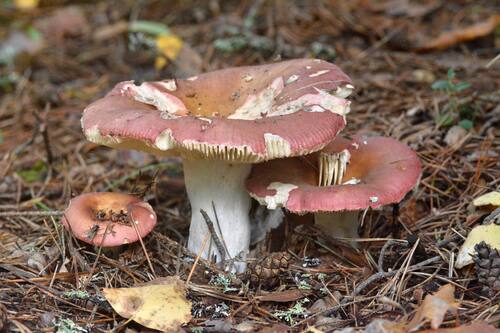
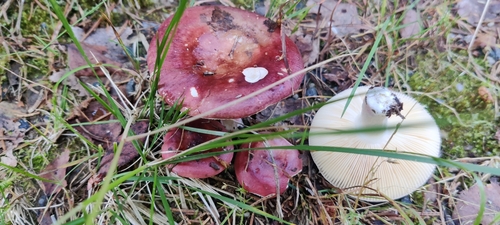
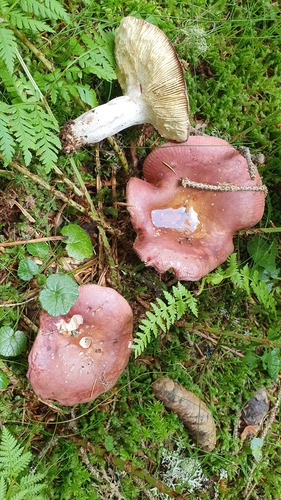
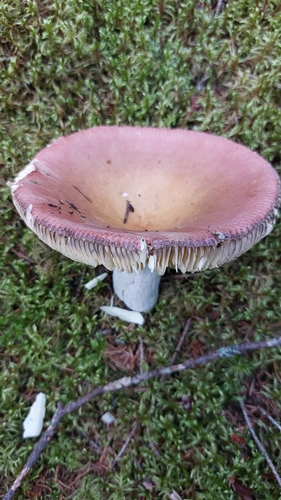
Russula vinosa Lindblad
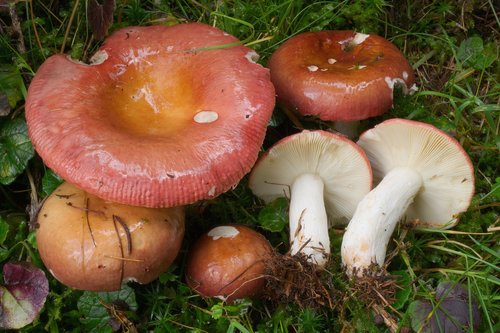
Source: Wikipedia
Synonyms 4
- 18,762 GBIF occurrences
- 531 iNaturalist observations
The population size is likely to be very large since this is such a widespread species, and more or less stable as there is no indication of any decline.
Russula vinosa is common in coniferous forest. It is an ectomycorrhizal mushroom associating with conifers. In mountainous areas it also associates with Betula spp.
There are no major threats to this species. It is commonly and widely found in woodlands.
No conservation measures are needed for this species since it is widespread and there are no major threats to it.
Russula vinosa is a widespread, edible, ectomycorrhizal fungus in Eurasia and North America. There is no evidence of decline. It can be locally abundant where suitable habitat exists. Therefore, it is assessed as Least Concern (LC).
Gallery