Rubus idaeus L.
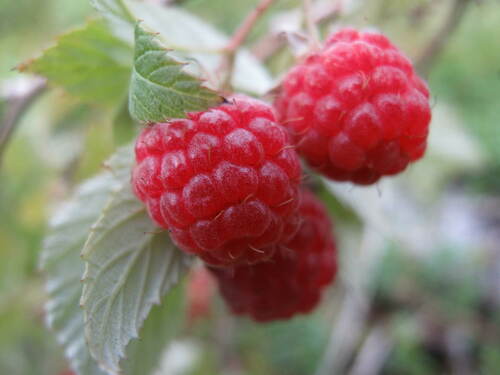
Source: Wikipedia
Synonyms 50
- 810,333 GBIF occurrences
- 84,605 iNaturalist observations
A very widespread and common species (Blamey and Grey-Wilson 2003). As it is cultivated widely it can be difficult to distinguish native and alien populations (BSBI/BRC 2024).
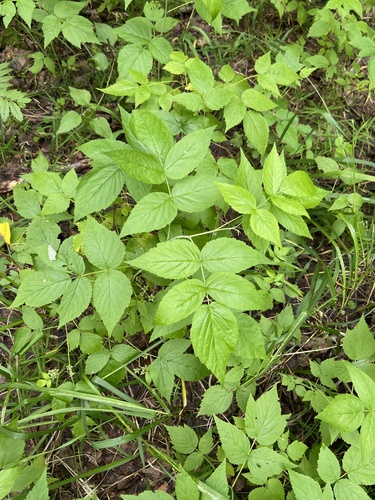
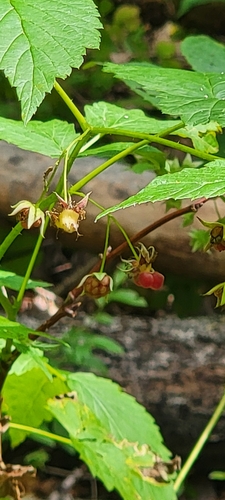
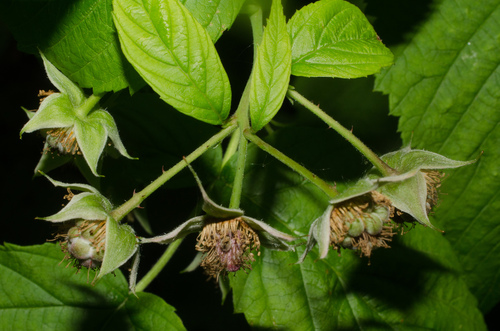
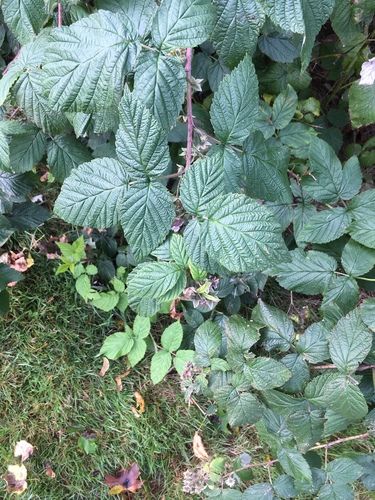
A tall perennial found in open woodland, heaths, moors, commons, hedgerows, railway embankments and on waste places as an escape from cultivation. The fruits are dispersed by birds and the plant can also spread by suckers, often forming thickets (Blamey and Grey-Wilson 2003, BSBI/BRC 2024).
No significant threats to the species are known.
There are no conservation measures in place or needed. The species is listed as Least Concern on several national Red Lists. The species is represented by 716 germplasm accessions held at European institutions (EURISCO 2024) and is included in the living collection of at least 119 botanical gardens (BGCI 2024). It occurs in many protected areas, including Natura 2000 sites (UNEP-WCMC and IUCN 2024, GBIF.org 2024).
European regional assessment: Least Concern (LC) EU 27 regional assessment: Least Concern (LC)This species is classified as Least Concern for both Europe and for the EU27 Member States due to its widespread distribution, stable populations and no major threats.
Gallery