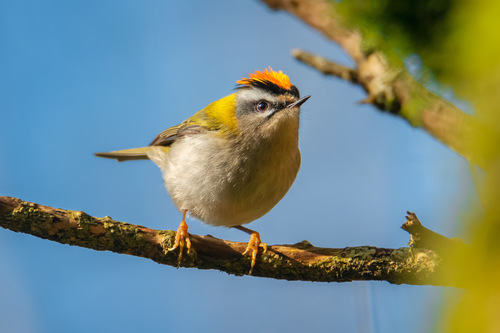
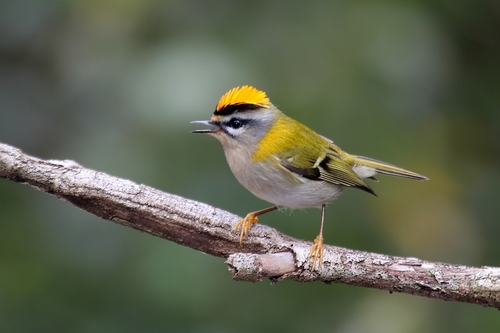
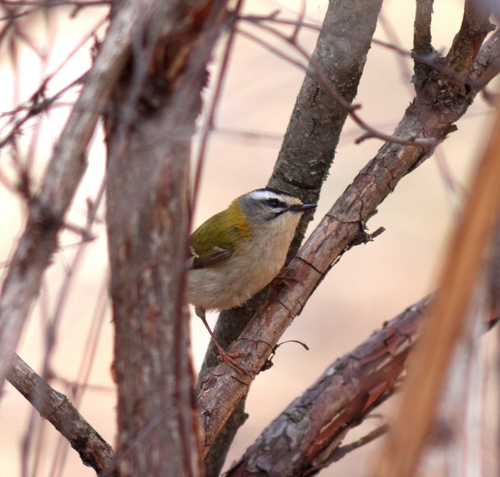
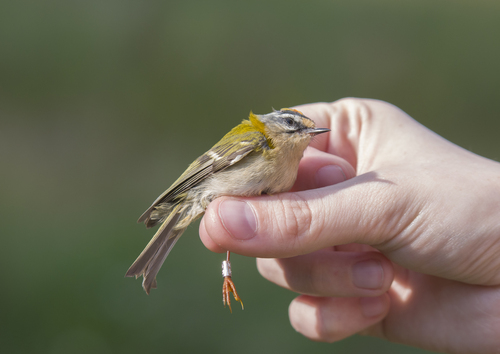
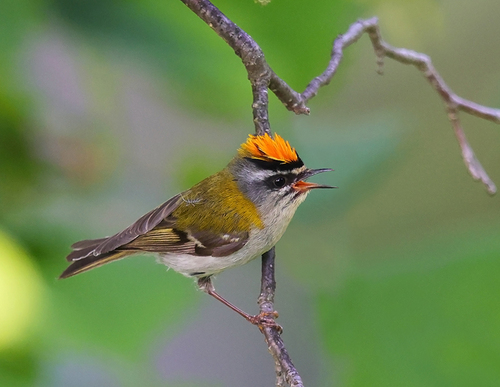
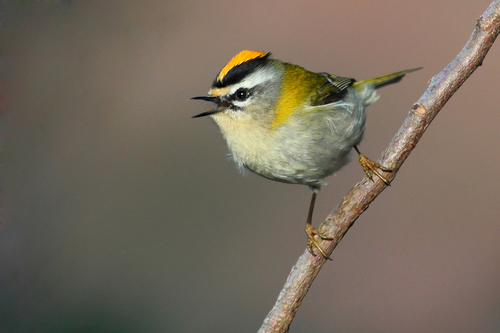
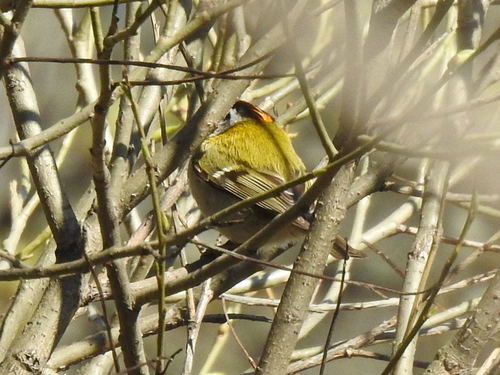
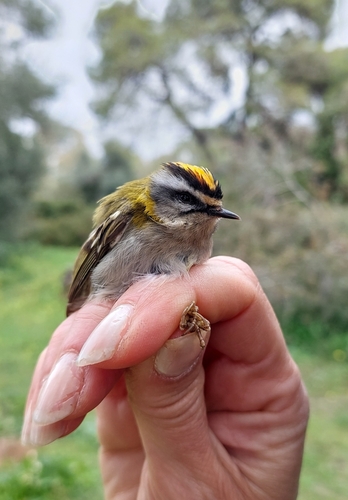
Regulus ignicapilla (Temminck, 1820)
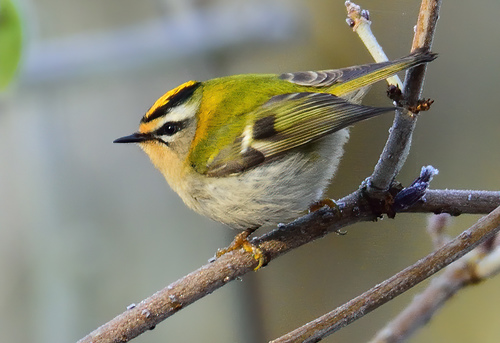
Source: Wikipedia
Synonyms 2
- 873,178 GBIF occurrences
- 14,566 iNaturalist observations
In Europe, the total population size is estimated at 9,120,000-16,300,000 mature individuals, with 4,560,000-8,110,000 breeding pairs (BirdLife International 2021), and comprises most (c.95%) of the species' global range. The global population size has therefore been estimated at 9,600,000-17,200,000 mature individuals.
This species is found in coniferous forest with spruce (Picea) and fir (Abies) and is fairly common in mixed forest, as well as in deciduous stands with only a few mature conifers interspersed. In the Mediterranean region it uses cork oak (Quercus suber) and holly oak (Quercus ilex) stands and in Morocco it inhabits Atlantic cedar (Cedrus atlantica) forest. Breeding begins in April and continues until August. The nest is a typical regulid cup of three layers, made of moss, lichen, feathers and spider web, inner cushion layer with fewer and larger feathers and outer covering of lichens. It is suspended 9–18 m above the ground in the vertical twigs of a conifer or, if no conifers are present, in a climbing plant or in deciduous tree, especially oak. Clutches are six to thirteen eggs. It feeds on arthropods, such as moths and caterpillars (Lepidoptera), aphids (Aphidoidea) and spiders (Araneae). The species is primarily migratory (Martens and Päckert 2015).
There are not thought to be any current significant threats to this species.
Conservation Actions UnderwayBern Convention Appendix II. There are currently no known conservation measures for this species.Conservation Actions ProposedNo conservation measures are currently needed for this species.
This species has an extremely large range, and hence does not approach the thresholds for Vulnerable under the range size criterion (extent of occurrence under 20,000 km² combined with a declining or fluctuating range size, habitat extent/quality, or population size and a small number of locations or severe fragmentation). The population size is extremely large, and hence does not approach the thresholds for Vulnerable under the population size criterion (under 10,000 mature individuals with a continuing decline estimated to be over 10% in ten years or three generations, or with a specified population structure). The population trend appears to be increasing, and hence the species does not approach the thresholds for Vulnerable under the population trend criterion (over 30% decline over ten years or three generations). For these reasons the species is evaluated as Least Concern.
Gallery