Quercus rubra L.
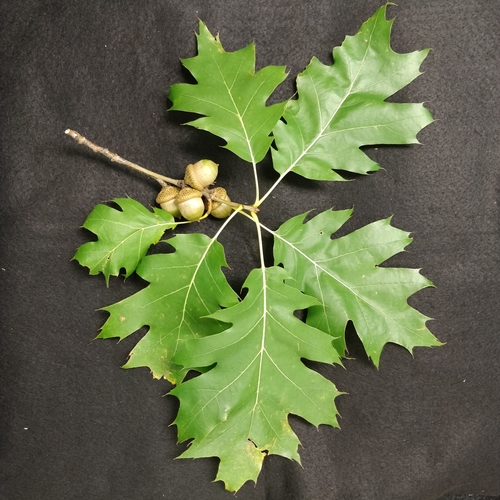
Source: Wikipedia
Synonyms 20
- 234,449 GBIF occurrences
- 121,383 iNaturalist observations
The total population size of Quercus rubra has not been quantified, but given its common occurrence throughout its wide geographic range, the number of mature individuals of this species is likely very great. Oak decline has been reported to have impacted Northern Red Oaks toward the southern extent of the range (in Missouri, Arkansas and central Appalachia). However, these impacts are not widespread and not likely to significantly reduce Q. rubra's robust population in the near future. Overall, Northern Red Oak is stable and is listed as Globally Secure (G5) by NatureServe.
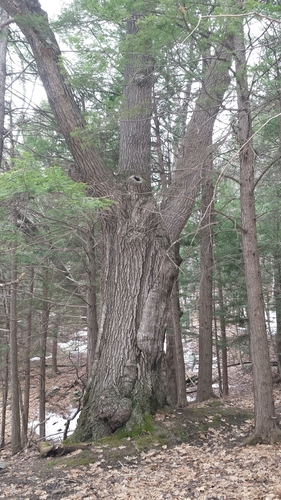
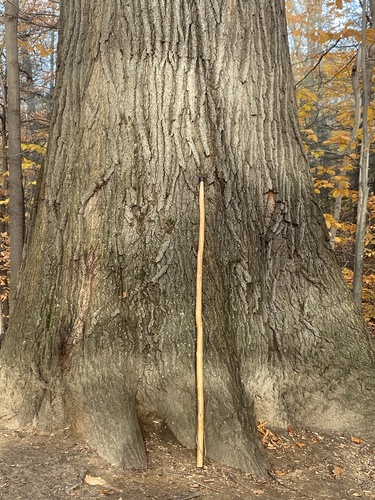
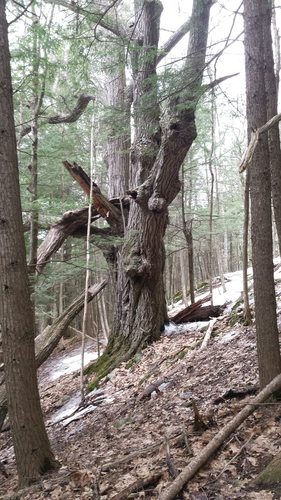
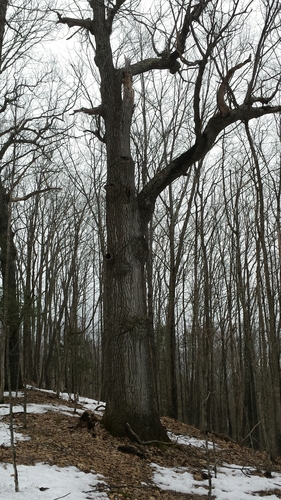
Northern Red Oak is a medium to large deciduous tree, usually reaching a height of about 30 m. This species is one of the tallest and fastest growing red oaks, with a straight, columnar trunk and a large, rounded crown. Quercus rubra is commonly found on a variety of dry-mesic to mesic sites, including rich woods, dry slopes, rock outcrops, sandy plains and at the edges of floodplains. Northern Red Oak is a dominant species in a range of communities such as mixed mesophytic forests, pine-oak communities and southern bottomland forests. Common co-occurring species include White Oak (Q. alba), Black Oak (Q. velutina), Eastern White Pine (Pinus strobus), American Beech (Fagus granifolia) and Maple (Acer spp.).
Northern Red Oak is susceptible to Oak Wilt (caused by the fungus Ceratocystis fagacearum) and has been impacted by oak decline in the southern portion of its range, possibly related to drought and weather extremes in the region. However, no reports of serious decline across the distribution are currently available, and Quercus rubra remains secure at this time.
As a common species with a very wide distribution, Quercus rubra is not currently a priority for conservation action. Notably, this species is currently grown in 229 ex situ collections worldwide, according to BGCI.
Northern Red Oak occurs widely throughout much of eastern North America and is a canopy dominant in many communities across this range, spanning an extent of occurrence (EOO) of over 4,150,000 km2. Quercus rubra remains abundant and secure throughout its distribution and therefore is Least Concern.
Gallery