Ptilidium pulcherrimum (Weber) Vain.
Source: Wikipedia
Synonyms 24
- 26,605 GBIF occurrences
- 4,649 iNaturalist observations
The population trend as a whole is assumed to be stable, although its status in particular geographical areas varies considerably over time, as it is a dynamic colonist. In some areas near the edge of its range (e.g., Ireland), it forms temporary sink subpopulations, with individual stands colonising from elsewhere (possibly Scandinavia) and not lasting very long. It forms large subpopulations in upland areas. The overall population size is very large.
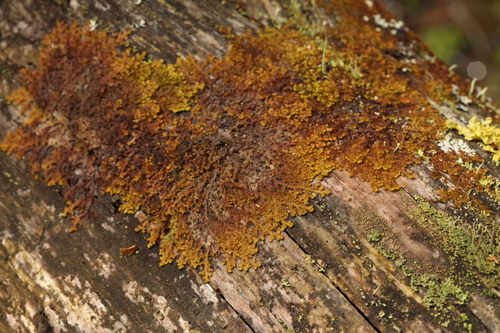
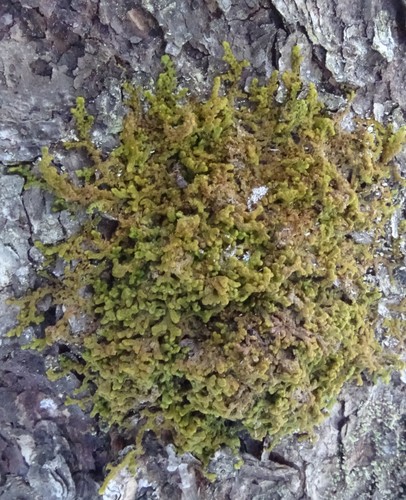
This is a corticolous species that grows on usually rather dry dead wood and as an epiphyte on acid barks in moderately humid forests, often on exposed roots or tree bases (Meinunger and Schröder 2007, Blockeel et al. 2014, Köckinger 2017). More rarely it grows on acid silicate boulders and on dry peat. As an efficient disperser (by spores) and a colonist, it forms 'source and sink' subpopulations, with individual colonies coming and going, resulting in very uneven occurrences near the edge of its range.
This species is not threatened over its range, although it is rare in some areas near the edges of its range.
Generally not threatened, this liverwort is included in some Red Lists near the edge of its range: it has been assessed as Endangered in Spain, as Vulnerable in Italy and as Near Threatened in Hungary (Hodgetts 2015). It is still officially listed as Regionally Extinct in Ireland, although it was rediscovered in Northern Ireland in 2012 (Blockeel et al. 2014; note that the Irish Red List covers both the Republic of Ireland and Northern Ireland.) No conservation measures are required at present. It occurs in many protected areas.
European regional assessment: Least Concern (LC)EU 28 regional assessment: Least Concern (LC)The Tree Fringewort (Ptilidium pulcherrimum) is widespread and common throughout most of Europe, with an extent of occurrence (EOO) and area of occupancy (AOO) largely surpassing the threshold values for application of a threatened Category. It forms large subpopulations in upland areas and the population trend as a whole is considered to be stable, although its status in particular geographical areas varies considerably over time. As it is an efficient disperser and dynamic colonist, it forms 'source and sink' subpopulations, with individual colonies coming and going, resulting in very uneven occurrences and rarity near the edges of its range (e.g., Ireland). There appear to be no major threats to it in Europe. This species is therefore assessed as Least Concern. No conservation measures are required at present.
Gallery