Pteridium aquilinum (L.) Kuhn
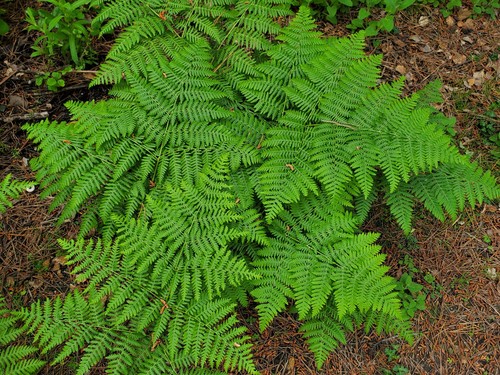
Source: Wikipedia
Synonyms 47
- 1,086,620 GBIF occurrences
- 161,698 iNaturalist observations
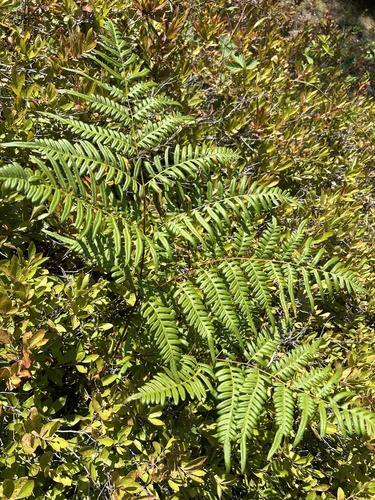
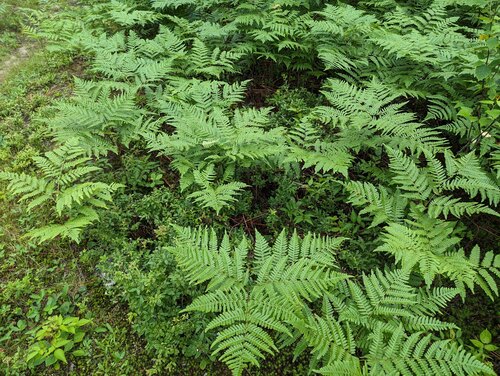
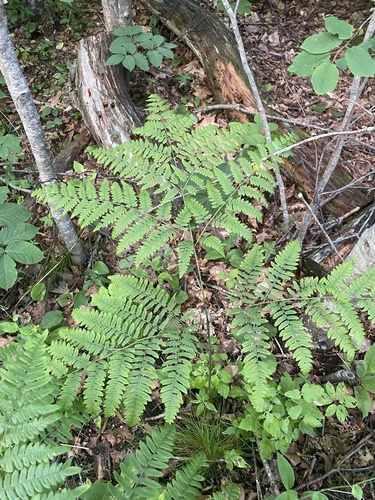
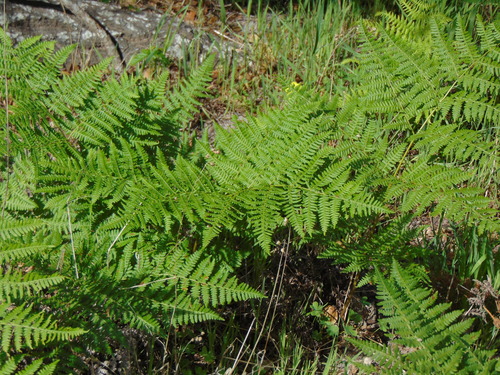
The plants of this species usually form big stands covering large terrain. It can be very invasive but this is often a result of vegetative spread rather than sexual reproduction. The population trend is increasing.
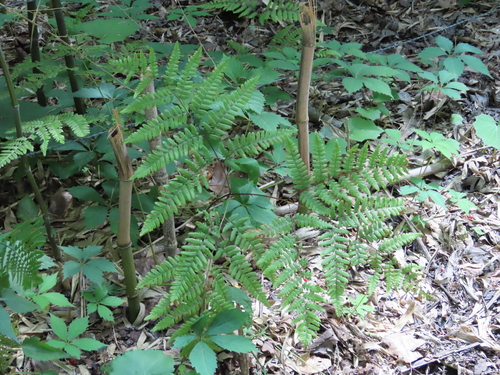
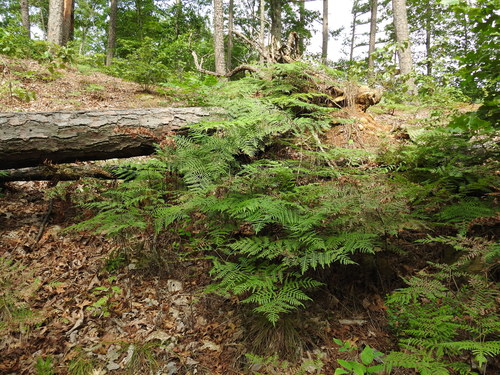
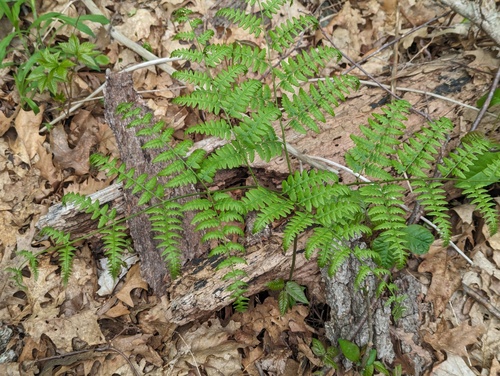
Bracken often grows in deciduous and coniferous woodlands and parklands, coppices, on slopes, in glades, on heathlands, steppes, along forest edges and in meadows. It is often found in dry sandy soil, usually acidic, and sometimes calcareous (Komarov 1968, Page 1997). It can also be a weed in gardens (M. Christenhusz pers. comm. 2016) and it grows on masonry (particularly juvenile plants) in cities (F. Rumsey pers. comm. 2016). The species benefits from fire to spread. Its elevation limits are 0 - 2,000 m.
This is a resilient and widespread species without any threats.
Bracken is widespread and often occurs in abundance, easily colonizing new areas especially after fire. In Malta it is listed as Endangered, as it is only known from one site on Gozo island (Lanfranco 1989). However, elsewhere it is very common and not of conservation concern. It is present in protected areas throughout its range.
European regional assessment: Least Concern (LC)EU 28 regional assessment: Least Concern (LC)Bracken is a widespread, common, fern with resilient subpopulations. It has an increasing population trend and there are no threats the species. It is therefore assessed as Least Concern.
Gallery