Prunus spinosa L.
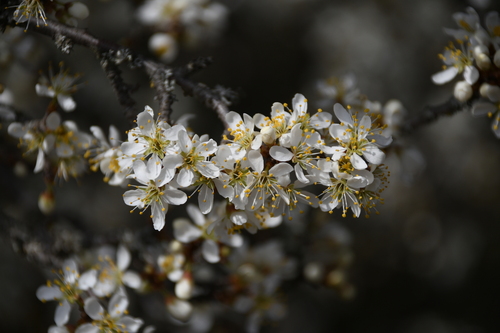
Source: Wikipedia
Synonyms 48
- 1,084,122 GBIF occurrences
- 63,004 iNaturalist observations
It is reported to be widespread and common in many countries and is known to be stable in Slovakia, Italy, Spain, Portugal, the Netherlands, and the UK.
This species is able to grow in various soil types, occurring in open woodland, scrub, hedgerows, scree and cliff-slopes in the UK (BSBI 2023). In Finland, it is found in forest edges, roadside thickets, rocky sites and meadows, favouring limy soil. The Portuguese endemic P. spinosa subsp. insititioides occurs in alkaline soils and is frequent in woods, ditches, edges of paths and hedges (Espírito-Santo 1996).
It is thought that some hybridisation is occurring with cultivated P. domestica, which is threatening the genetic integrity of the species.
This species is classified as Vulnerable (VU) in Lithuania (Rašomavičius 2007), but as Least Concern (LC) in several other countries, including Denmark (Aarhus Universitet 2019).As it is a widespread species, some subpopulations occur in protected areas. It is recommended that the monitoring and management of this species be incorporated into the existing management plans of these sites.The Portuguese endemic P. spinosa subsp. insititioides occurs partly in the Natural Park of Serra de Aire e Caindeeiros (Espírito-Santo1992) and the Natural Park of Sintra-Cascais (Espírito-Santo 1996). According to Espírito-Santo (1996), there is no need to undertake special conservation measures.The species is represented by 132 germplasm accessions held at European institutions (EURISCO 2024) and is included in the living collection of at least 151 botanical gardens (BGCI 2024). It occurs in many protected areas, including Natura 2000 sites (UNEP-WCMC and IUCN 2024, GBIF.org 2024).
European regional assessment: Least Concern (LC)EU 27 regional assessment: Least Concern (LC)Blackthorn (Prunus spinosa) is widely distributed across Europe and is known to be widespread, common and stable throughout much of its range. It is therefore regionally assessed as Least Concern for both Europe and for the EU27 Member States. However, it is nationally threatened in some countries at the periphery of its range. National level monitoring may be required.
Gallery