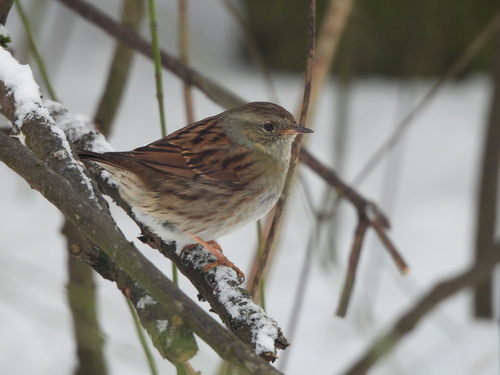
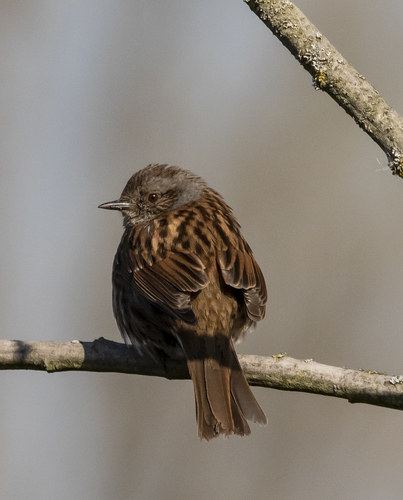
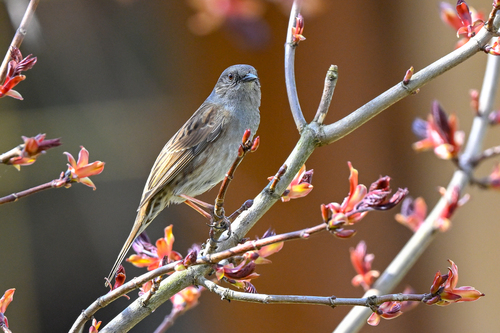
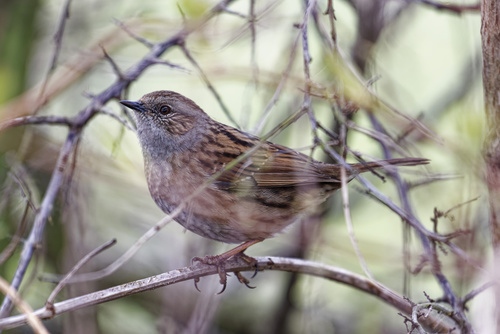
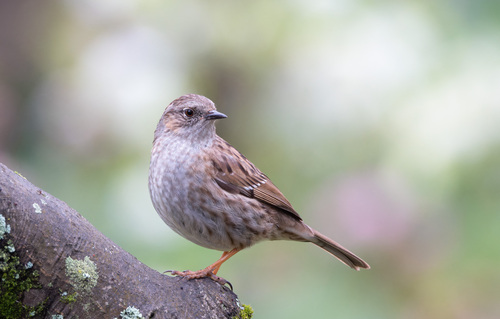
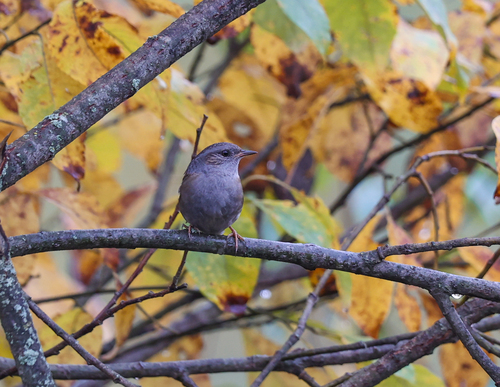
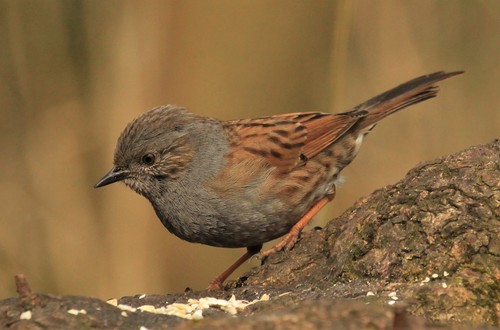
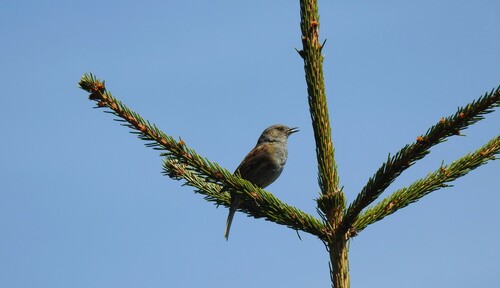
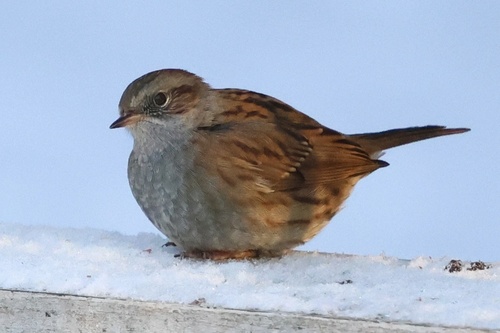
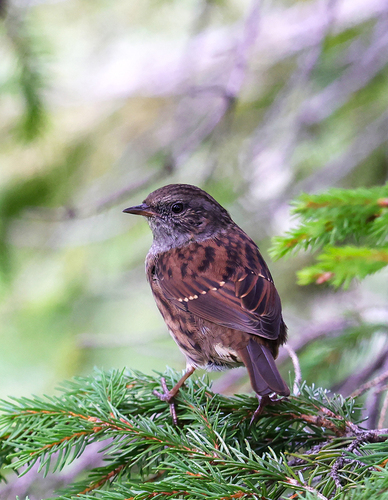
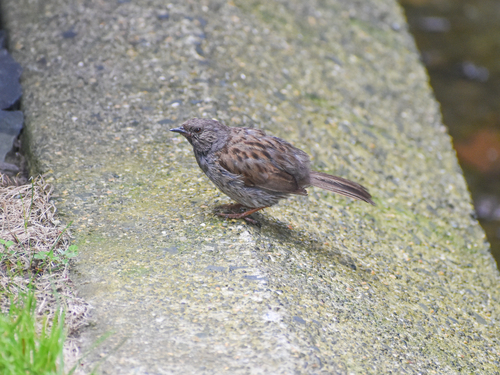
Prunella modularis (Linnaeus, 1758)
Source: Wikipedia
- 3,932,830 GBIF occurrences
- 45,000 iNaturalist observations
The European breeding population is estimated at 11,000,000–18,500,000 pairs, which equates to 22,100,000–37,000,000 mature individuals. The breeding population in the EU28 is estimated at 9,730,000–16,000,000 pairs, which equates to 19,400,000–31,900,000 mature individuals. For details of national estimates, see the Supplementary Information.
This species is found in a wide variety of habitats across its range. It breeds in scrubby habitats, extensive marshlands and in the Mediterranean area, lowlands and semi-arid plains. It is typically a woodland species in much of Europe but in the North Sea countries it is most common in farmland, favouring hedges, scattered bushes and farmsteads and suburban areas, where it is common in cemeteries, parks, orchards and gardens (Hagemeijer and Blair 1997).The species breeds from March to July across Europe except in Russia where breeding is from May to August. The nest is a cup of twigs, stems, roots, grass and moss, lined with hair, wool and sometimes feathers, located above the ground in a bush, hedge or tree. It lays three to six eggs.It feeds mainly on arthropods but supplements its diet with seeds in the winter (Hatchwell 2016).In western Europe the species is resident; in western-central Europe it is partially migratory, making altitudinal movements in montane areas; in Fennoscandia and central Europe it is fully migratory (Hagemeijer and Blair 1997).Although the generation length for both EU and Europe regional assessments were calculated using the same methodology, new information arriving after the EU assessments were undertaken gave rise to an update in the generation lengths. This new information was then used for the Europe level assessments giving rise to a difference between the generation lengths used for the EU and Europe regions.
The decline in the U.K. is thought to be due to changing farming practices which has allowed other passerines to force this species into more marginal sites (Hagemeijer and Blair). However no specific factor has been found for these local declines (Hatchwell 2016).
Conservation Actions UnderwayBern Convention Appendix II. The species has been listed as ‘amber’ on the U.K. national red list (Hatchwell 2016).Conservation Actions ProposedResearch should look into the threats in areas where the species is declining and assess their impact.
European regional assessment: Least Concern (LC)EU28 regional assessment: Least Concern (LC)At both European and EU28 scales, this species has an extremely large range (its extent of occurrence (EOO) is much larger than 20,000 km² and its area of occupancy (AOO) is much larger than 2,000 km²), and hence it does not approach the thresholds for Vulnerable under the range size criteria (criteria B and D2). The population size is extremely large, (much larger than 10,000 mature individuals), and hence it does not approach the thresholds for Vulnerable under the population size criteria (criteria C and D). Despite the fact that the population trend appears to be decreasing, the decline is not believed to be sufficiently rapid to approach the thresholds for Vulnerable under the population size reduction criterion (criterion A). The probability of extinction has not been calculated for this species, therefore criterion E cannot be applied.For these reasons, the species is evaluated as Least Concern in both Europe and the EU28.
Gallery