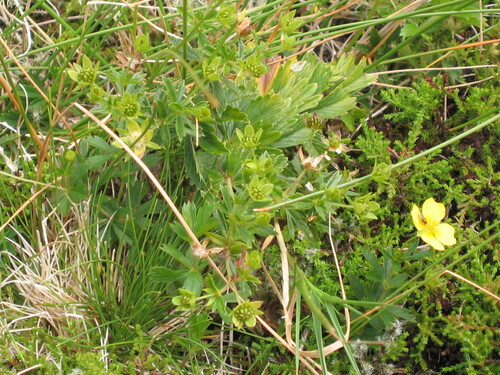
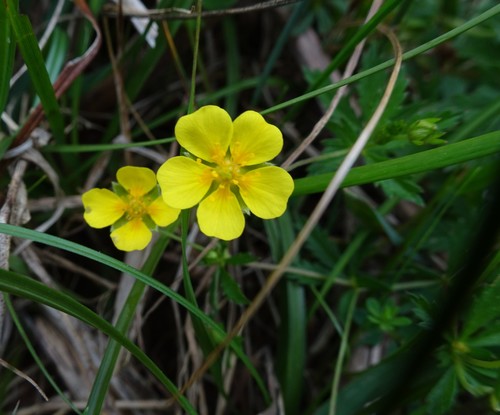
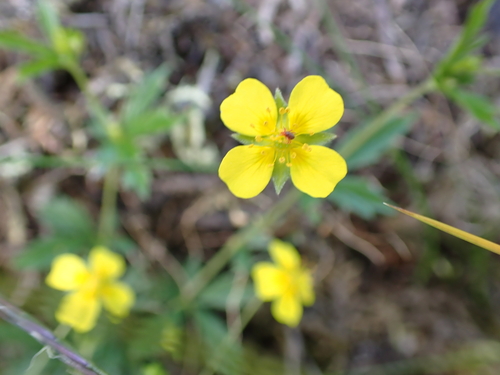
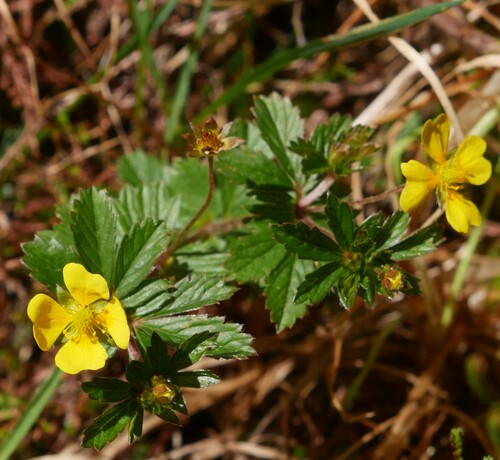
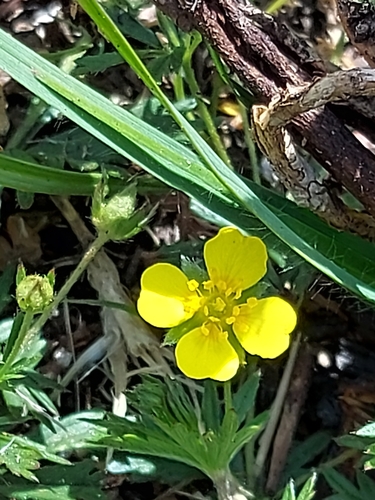
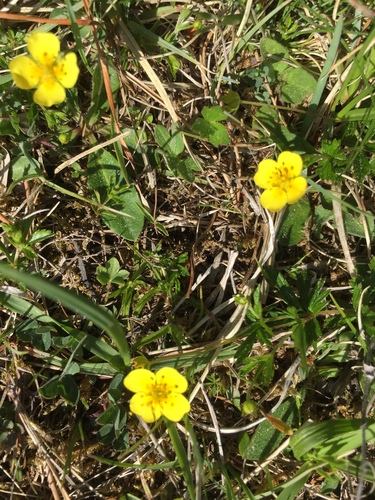
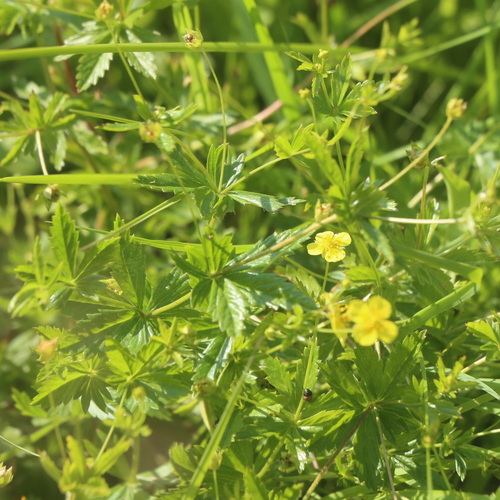
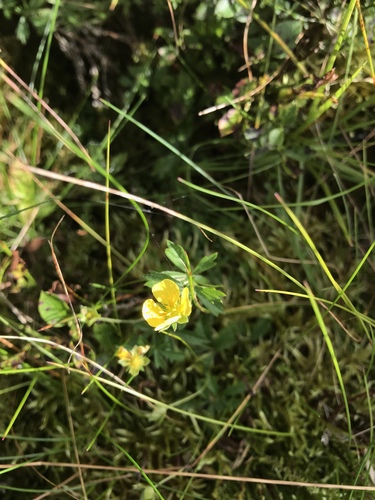
Potentilla erecta (L.) Raeusch.
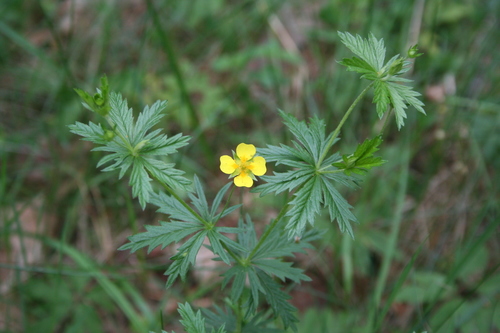
Source: Wikipedia
Synonyms 45
- 1,076,887 GBIF occurrences
- 35,211 iNaturalist observations
It is widespread and abundant throughout Europe (BSBI/BRC 2024).
Tormentil is a perennial herb commonly found in upland and montane grasslands, heaths, moors, wet hay and fen meadows, edges of watercourses, open forests, bogs and hedgebanks on acid soils, avoiding chalk (Castroviejo et al. 1998, Botanical Society of Britain and Ireland 2024). The Tormentil Mining Bee (a Biodiversity Action Plan species in the United Kingdom), Andrena tarsata and its rare listed cleptoparasite Nomada roberjeotiana are strongly associated with P. erecta as well as other Potentilla species (Botanical Society of Britain and Ireland 2024).
There are not thought to be any widespread or significant threats.
There are no conservation measures in place or needed. It is listed as Near Threatened in the national Red List of Luxembourg (Colling 2005) but Least Concern in several countries, including Germany (Ludwig and Schnittler 1996), Switzerland, the United Kingdom, and others. The species is represented by 63 germplasm accessions held at European institutions (EURISCO 2024) and is included in the living collection of at least 92 botanical gardens (BGCI 2024). It occurs in many protected areas, including Natura 2000 sites (UNEP-WCMC and IUCN 2024, GBIF.org 2024).
European regional assessment: Least Concern (LC)EU 27 regional assessment: Least Concern (LC)This species is classified as Least Concern for both Europe and for the EU27 Member States due to its widespread distribution, stable populations and no major threats.
Gallery