Populus tremula L.
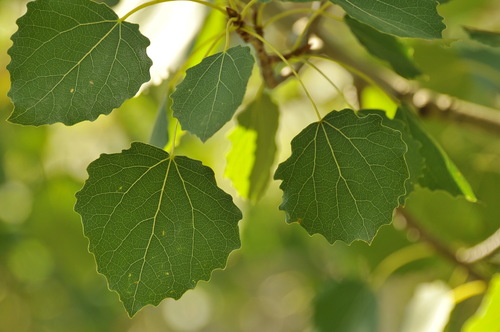
Source: Wikipedia
Synonyms 48
- 781,738 GBIF occurrences
- 45,229 iNaturalist observations
There are no figures for the population of this species. Its population is likely to be large due to its large distribution.
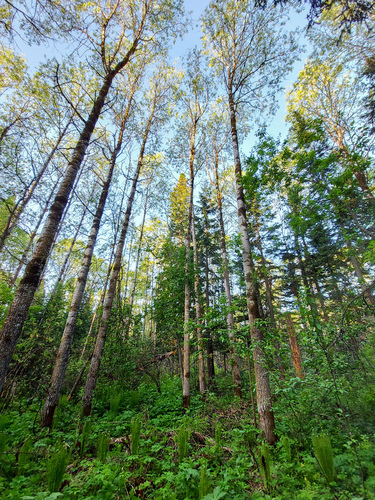
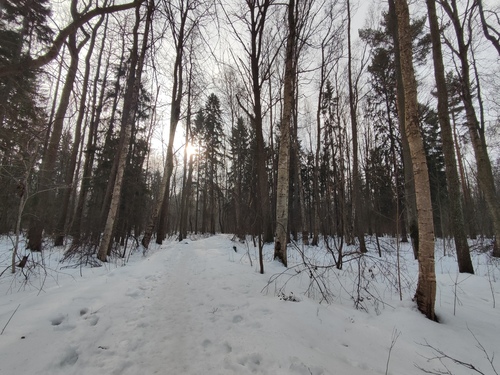
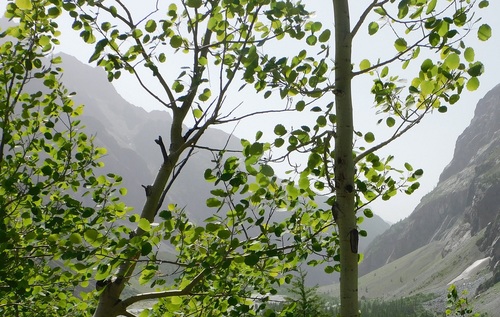
Populus tremula is a large tree species and can grow up to 30 m in height. It is requires a lot of light for growth and grows in a wide variety of habitats and climatic conditions. The species can grow into thick stands in disturbed forests due to the access to light this offers but unlike other Poplar species can also grow well in mixed forests. It can grow in association with Scots Pine (Pinus sylvestris) and birches (Betula spp.). In Scotland specifically the species occurs along water courses in woodlands with Willows (Salix sp.), Rowan (Sorbus spp.) and Alder (Alnus sp.) and some shrub species such as Hawthron (Crateaegus monogyna) (Worrell 1995). In Norway the species is found in Oak (Quercus spp.), Norway spruce and Beech woodlands (Fagus sylvatica). The species reproduces mainly through vegetative growth of root suckers. It produces a large number of seeds but conditions are often unsuitable for germination and they lose viability quickly (Worrell 1995). This means many populations are clonal. This poplar is also able to hybridise with other poplar species such as Populus alba producing hybrids that are often stronger and more vigorous then their parent plants (Cadullo and de Rigo 2016).Populus tremula also has a unique ecological importance for local herbivore, lichen, invertebrate, bird and fungi species with which it forms host-specific relationships. Due to this the species is considered a keystone species and contributes to boreal forest epiphyte populations (Cadullo and de Rigo 2016). In Britain 160 species have been found to use aspen as a food source including moths, caterpillars, beetles, flies and butterflies (Worrell 1995).
Within Europe the populations have been reduced in some regions due to the expansion of agriculture and human development. Also, within Europe individuals are damaged by grazing and bark-stripping by herbivores. These threats are likely to be more widespread but there is a lack of written literature for this. Populus hybrids are becoming more commonly used and bred for commercial purposes as they are high yielding. This poses a threat to genetic integrity of native Populus tremula and some of these hybrids may take over in degraded landscapes due to their greater vigour. The species is also effected by fungi and diseases, these however are often not fatal to the individual except Phenllinus tremulae which causes mortality in old and large trees. The species is also a intermediate host to Melampsora pinitorqua which ultimately infects Scots pine (Pinus sylvestris), due to this P. tremula has been removed from forests in Finland (Caudullo and de Rigo 2016). The use of this species for timber also poses a threat, though this is very small. Chinese populations may be threatened by Asian Longhorned Beetle (Anoplophora glabripennis) as Populus is the preferred host in China but this has not been quantified (CABI 2017).
Populus tremula is found in 81 ex situ collections (BGCI 2017). This species is listed as Least Concern within Switzerland (Moser et al. 2002), Estonia (Lilleleht 2008), Luxembourg (Colling 2005) and Europe.
Populus tremula is a very common large tree. It is widespread being found all over Europe, through to Russia, West Asia and into China. The species is listed here as Least Concern. Although we do not have population information for the species we do not believe that the threats are great enough to move the species into a threatened category. Outside of Europe there is a lack of population and threat information for this species and this information should be collected.
Gallery