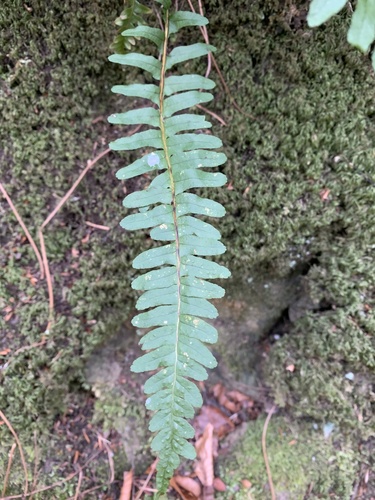
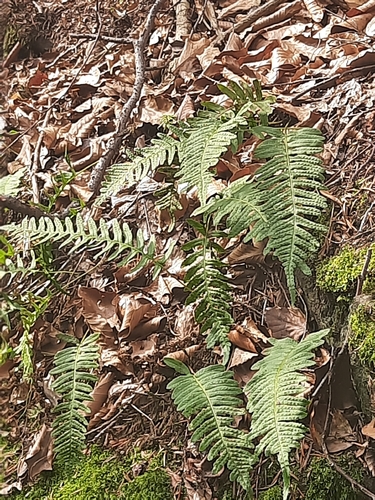
Polypodium vulgare L.
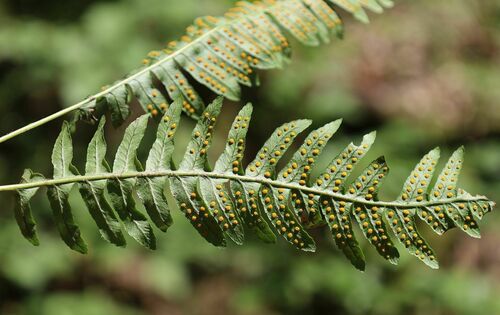
Source: Wikipedia
Synonyms 34
- 482,631 GBIF occurrences
- 26,180 iNaturalist observations
This species is common and widespread throughout its distribution, although in Madeira it seems to be rare. The overall population trend is stable.
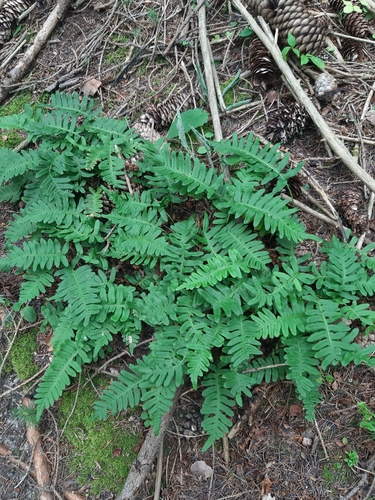
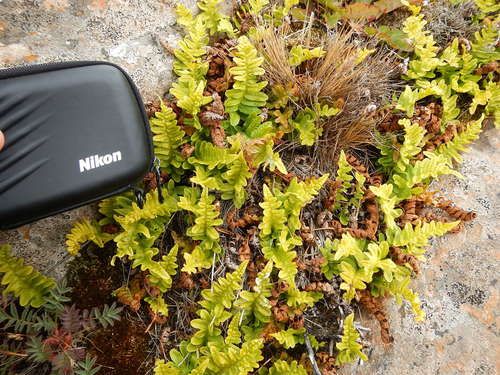
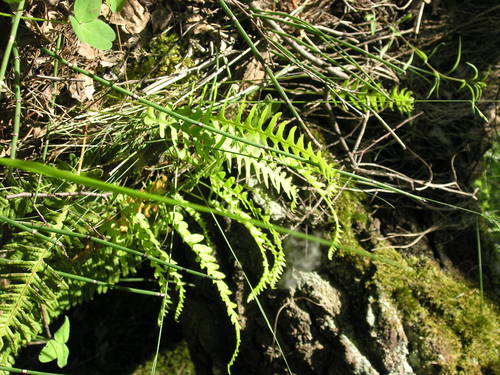
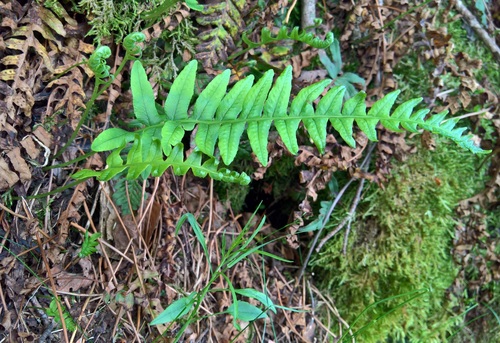
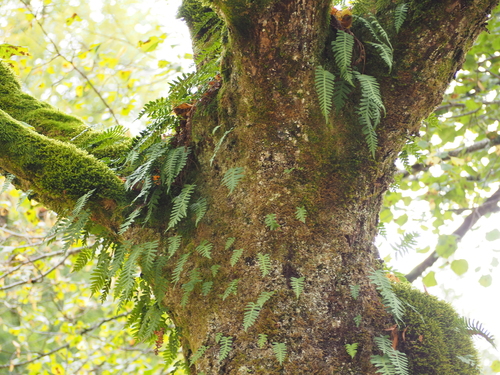
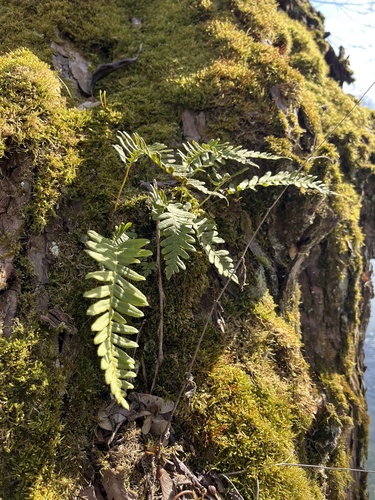
Common Polypody prefers well-drained, predominantly acidic substrates such as grits, granites, gneiss and sandstones, often in small fissures. It also grows on the north side of sand dunes (Van der Meijden 2005; M. Christenhusz pers. obs. 2015). It is often found on rocky outcrops, on boulders, shaded stony slopes or in sandy soil in broadleaf or coniferous woods. It is tolerant of exposure and can be found on montane scree or on large granite boulders. In the west of its range, in areas with higher rainfall and more humid air, this fern can grow epiphytically on tree trunks, mostly on oak (Quercus) and other deciduous trees (Komarov 1968, Castroviejo et al. 1986, Page 1997, BSBI/BRC 2024).
There are no major significant or widespread threats to this species.
It is listed on the following national Red Lists:
- Belarus: Near Threatened (Ermakova 2005).
- Belgium: Least Concern (Van Landuyt et al. 2006).
- Bulgaria: found in national parks, rare, with few subpopulations occupying small areas, but of no economic importance (Kathe 2003, Evstatieva and Hardalova 2004).
- Estonia: Least Concern (eElurikkus 2024).
- Finland: Least Concern (Rassi et al. 2010).
- Germany: Least Concern (Ludwig and Schnittler 1996).
- Luxembourg: Least Concern (Colling 2005).
- Norway: Least Concern (Artsdatabanken 2024).
- Switzerland: Least Concern (Moser et al. 2002).
- United Kingdom: Least Concern (Stroh et al. 2025).
The species is represented by four germplasm accessions held at European institutions (EURISCO 2024) and is included in the living collection of at least 133 botanical gardens (BGCI 2024). It occurs in many protected areas, including Natura 2000 sites (UNEP-WCMC and IUCN 2024, GBIF.org 2024).
European regional assessment: Least Concern (LC)EU 27 regional assessment: Least Concern (LC)This fern species is classified as Least Concern for both Europe and the EU27 Member States due to its widespread distribution, stable population, and absence of major threats.
Gallery