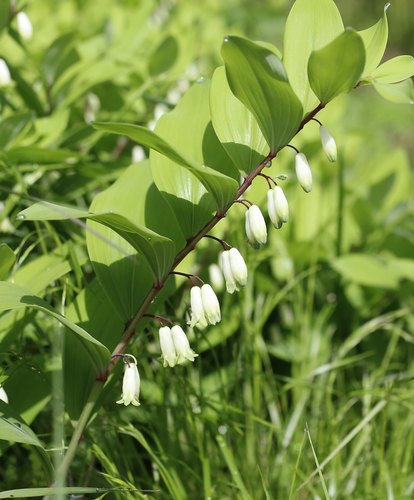
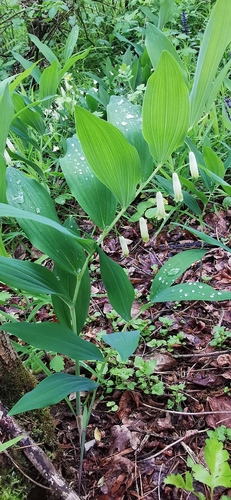
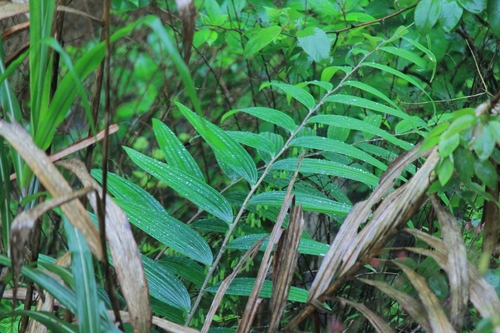
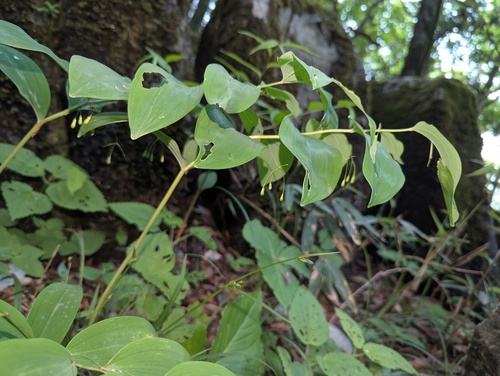
Polygonatum odoratum (Mill.) Druce
Source: Wikipedia
Synonyms 48
- 166,717 GBIF occurrences
- 23,317 iNaturalist observations
Records of the species are numerous and there is currently no indication of widespread population decline. In the United Kingdom, the species' population has apparently stabilised after a period of decline caused by habitat loss in the late 20th century (BSBI/BRC 2023).
Polygonatum odoratum is a rhizomatous, perennial herb of ancient Fraxinus woods and rocky habitats and limestone outcrops and less commonly in thickets, generally growing on calcareous soils. It flowers from May to June and is also grown in gardens (Blamey and Grey-Wilson 2003, Castroviejo et al. 2009, BSBI/BRC 2023).
This species has declined with the destruction of limestone pavement and the quarrying of limestone, but this threat is now much reduced, and the distribution has probably stabilised (BSBI/BRC 2023).
Limestone pavement is a priority habitat in the United Kingdom, and is where Polygonatum odoratum can be found. The limestone pavement is protected from loss and deterioration by the United Kingdom and Ireland Biodiversity Action Plan Steering Group, which oversees the UK Biodiversity Action Plan for Limestone Pavements. As a result P. odoratum is being protected and preserved (BSBI/BRC 2023), and is assessed as VU (C2a(i) (Stroh et al. 2025). It is listed as Near Threatened in Luxembourg (Colling 2005) and Least Concern in Denmark (NERI 2007), Norway (Artsdatabanken 2023), and Switzerland (Moser et al. 2002). The species occurs in several protected areas, including Natura 2000 sites (UNEP-WCMC and IUCN 2023).
European regional assessment: Least Concern (LC)EU 27 regional assessment: Least Concern (LC)Angular Solomon's-Seal (Polygonatum odoratum) is widespread throughout Europe. In some areas, habitat loss has been identified as a threat. At present, there is no indication of population declines likely to trigger any thresholds for listing as a threatened species. Due to its broad distribution and presumed large, stable population, the species is assessed as Least Concern for both Europe and the EU27 Member States.
Gallery