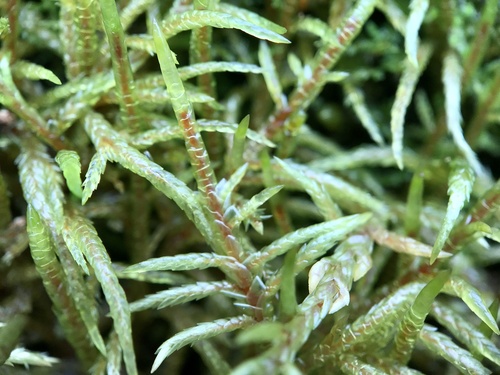
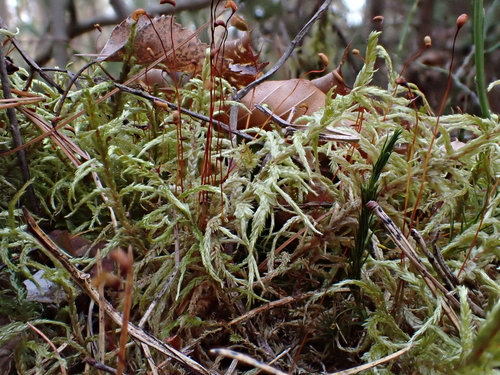
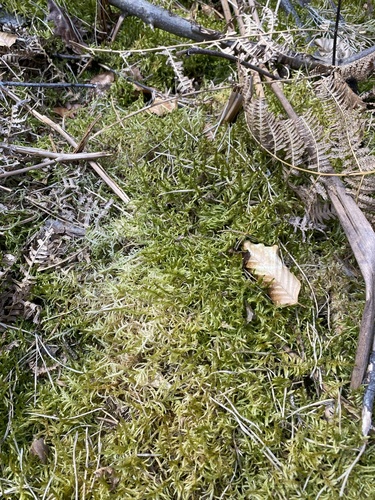
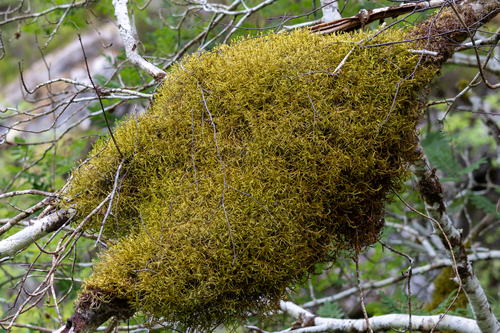
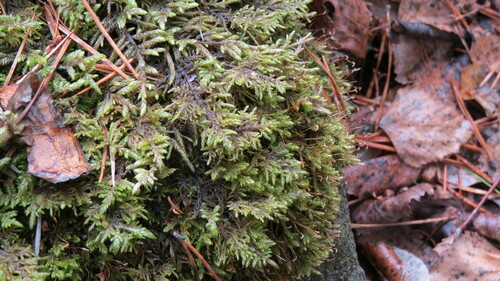
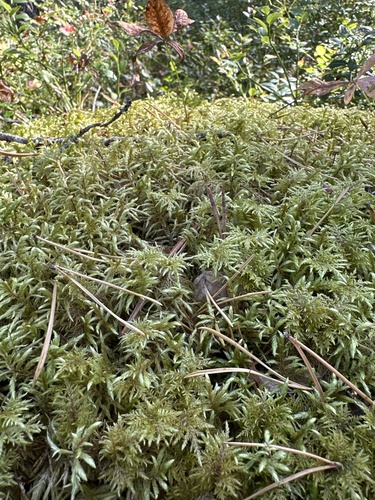
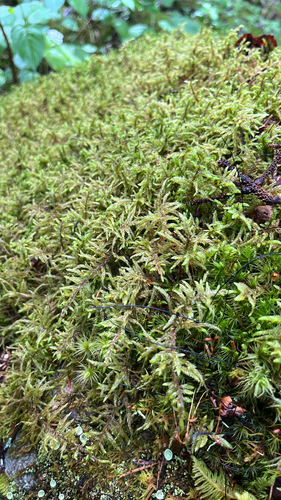
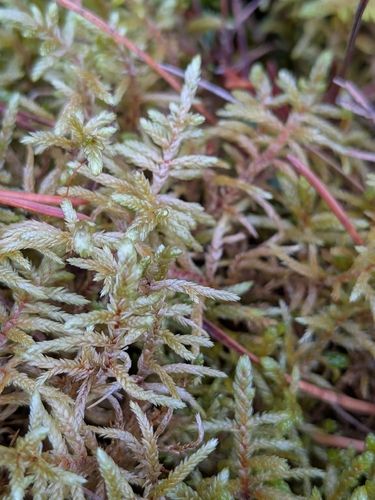
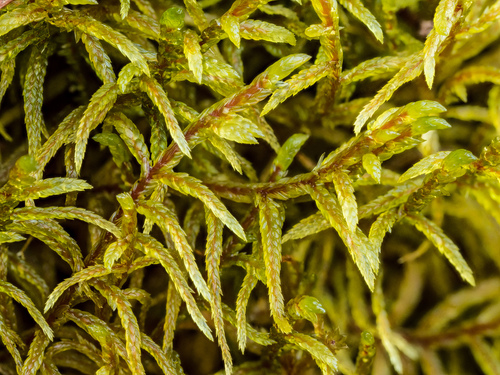
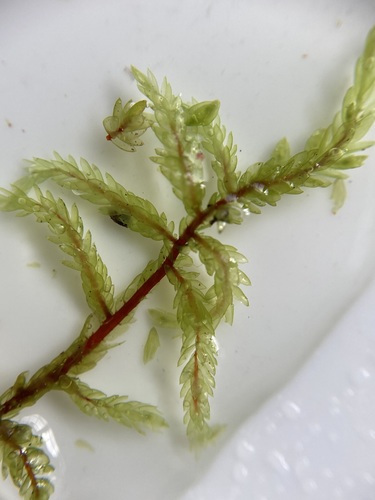
Pleurozium schreberi (Willd. ex Brid.) Mitt.
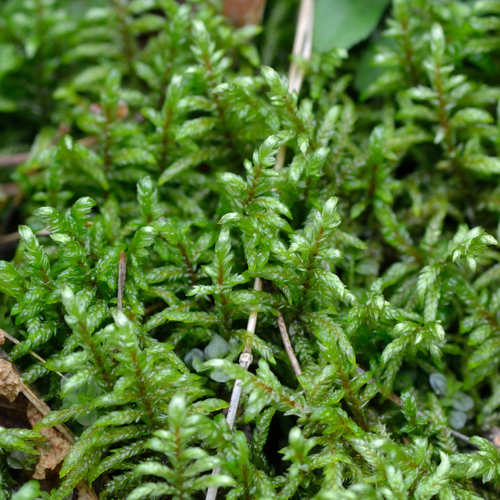
Source: Wikipedia
Synonyms 50
- 269,775 GBIF occurrences
- 24,582 iNaturalist observations
This is one of the most common species of moss in Europe, being widespread everywhere except in a few of the smaller southern territories. It is considered to have a stable population trend.
This is a conspicuous species of heathland, temperate woodland, coniferous and boreal forests and other base-poor habitats. It is common among dwarf shrubs, especially Calluna and Vaccinium, on upland moors and lowland heaths, Krummholz, stony alpine grassland and tundra, and it also occurs among boulders, in stable scree, on hummocks in bogs, in unimproved acid grassland and grassheath, and on fixed dunes. It may persist in old grassland in churchyards and parkland. In dense woodland and commercial conifer plantations it is confined to sites where there is sufficient light, for example on banks by forest roads. It is one of several robust pleurocarps that sometimes colonise former industrial sites, such as disused collieries and spoil tips (Atherton et al. 2010). Normally it grows on peaty and sandy soils and on raw humus; over limestone and other basic rocks it is confined to pockets of peat or leached soil. Associates include Polytrichum formosum, P. juniperinum, Dicranum scoparium, D. polysetum, Pohlia nutans, Ptilidium ciliare, Hylocomium splendens, Leucobryum glaucum, Hypnum jutlandicum, Rhytidiadelphus loreus and Sphagnum species (Blockeel et al. 2014, Meinunger and Schröder 2007). Its altitudinal range is ca. 0-2,740 m.
There are no known threats to this species.
No conservation measures are required at present. This species is listed as Endangered (EN) in Madeira and Vulnerable (VU) in Portugal (Hodgetts 2015). It is known to occur in protected areas across its range in Europe.
European regional assessment: Least Concern (LC) EU 28 regional assessment: Least Concern (LC) One of the most common species of moss in Europe, the Red-stemmed Feather-moss (Pleurozium schreberi) is assessed as Least Concern in Europe and the EU 28 in view of its wide distribution, with an extent of occurrence (EOO) and area of occupancy (AOO) greatly surpassing the threshold values for application of a threatened category, general abundance and stable population trend. There are no known threats to this species and so no conservation measures are required at present. It is known to occur in protected areas across its range in Europe.
Gallery