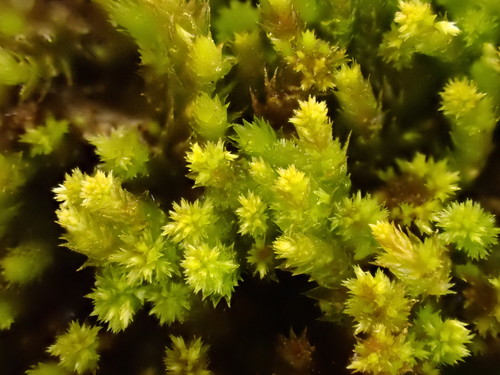
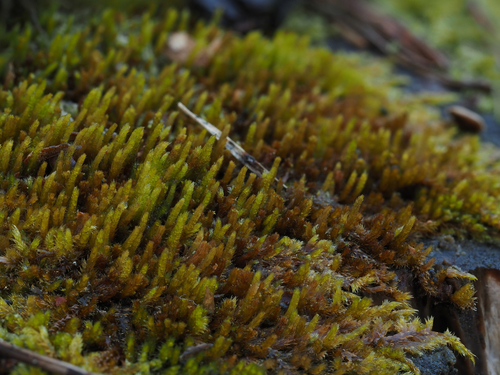
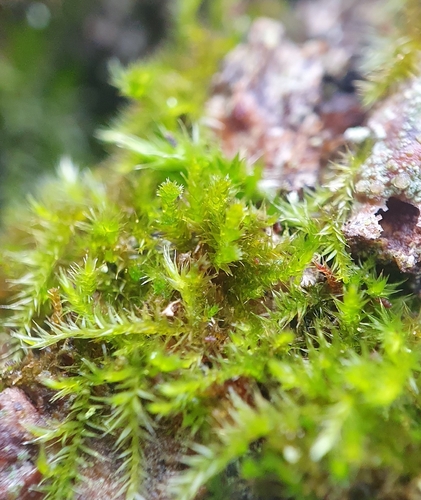
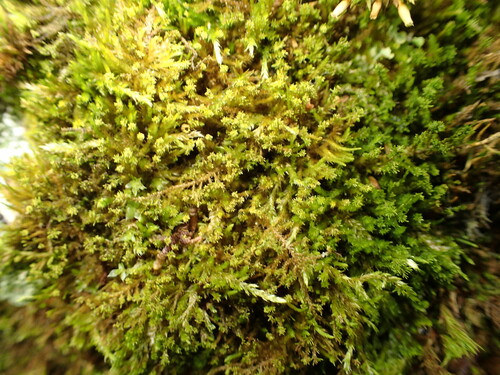
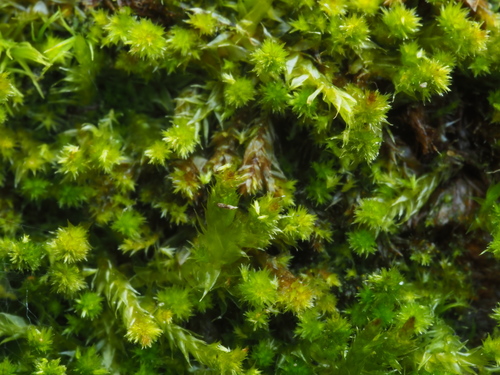
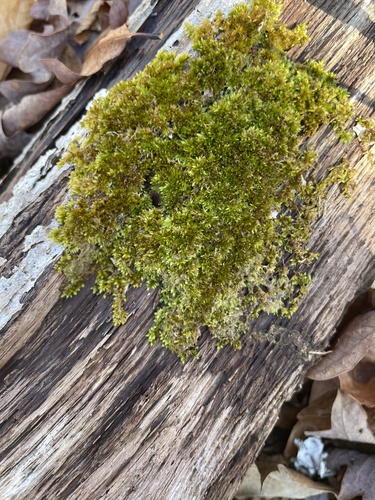
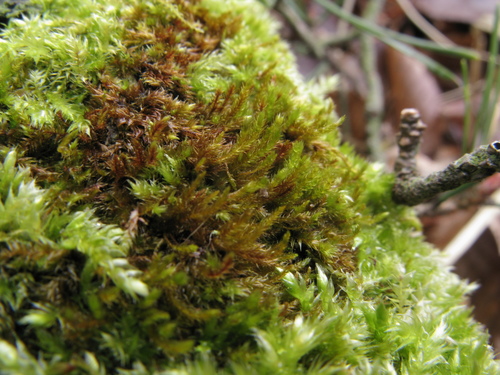
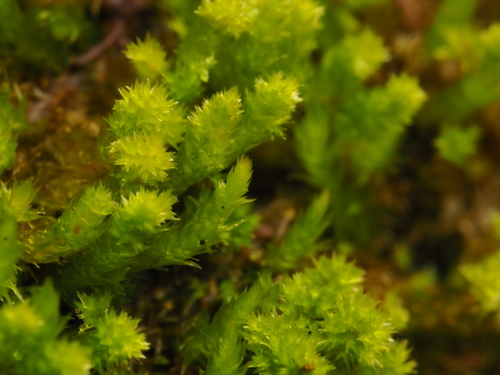
Platygyrium repens (Brid.) Schimp.
Synonyms 33
- 16,088 GBIF occurrences
- 4,214 iNaturalist observations
This species has certainly increased in some areas, including Britain, northern France, Belgium and the Netherlands (Blockeel et al. 2014), and no decline has been reported elsewhere in Europe, so its overall trend is increasing.
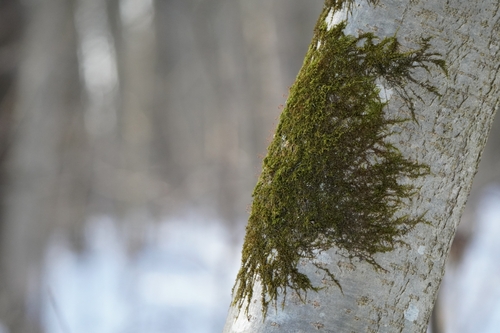
This moss is an epiphyte on the trunks and branches of a wide range of deciduous trees and shrubs, with a mild preference for less acid bark types and an inclined surface. It is also frequently found on fallen branches and logs. It occurs in and at the of edge semi-natural broadleaved woodland, in wet woods (especially alder and willow carr), and on wooded stream banks, more rarely in hedgerows and orchards. Host trees are varied and include alder, apple, ash, birch, blackthorn, damson, elder, elm, hazel, hawthorn, hornbeam, maple, oak, poplar, sallow and willow. It has even been recorded on traveller’s joy (Clematis vitalba) (Blockeel et al. 2014).Its altitudinal range is ca. 0-1,710 m.Sporophytes are rare in this dioicous species, but tiny deciduous shootlets are produced abundantly in the leaf axils at the tips of shoots, and are presumably dispersed by birds and mammals.
The threats to this species are unknown.
No conservation measures are required at present. This species is listed as Data Deficient in Bulgaria and Montenegro (Hodgetts 2015). It is known to occur in protected areas across its range.
European regional assessment: Least Concern (LC) EU 28 regional assessment: Least Concern (LC) The Flat-brocade moss (Platygyrium repens) is assessed as Least Concern in Europe and the EU 28 in view of its wide distribution, with an extent of occurrence (EOO) and area of occupancy (AOO) largely surpassing the threshold values for application of a threatened category, and its increasing population trend. It is known to occur in protected areas across its range in Europe.
Gallery