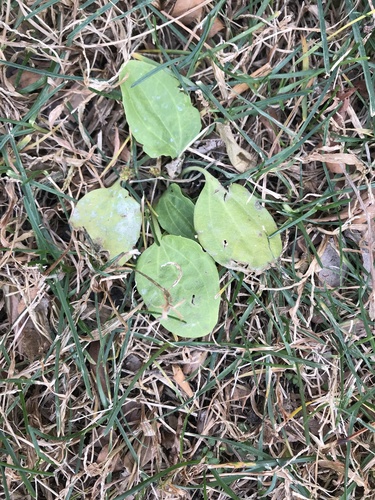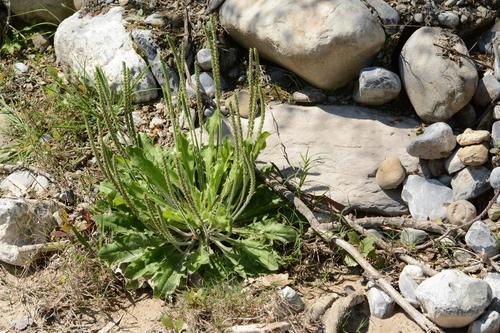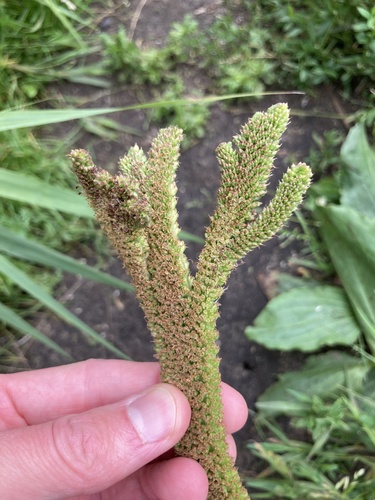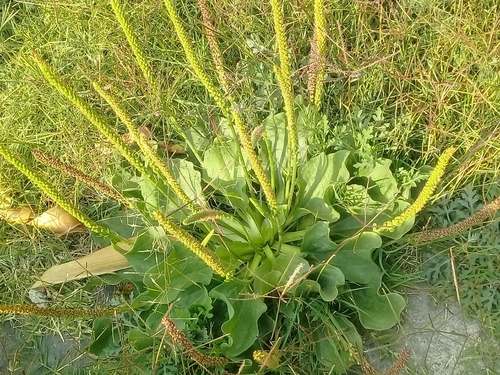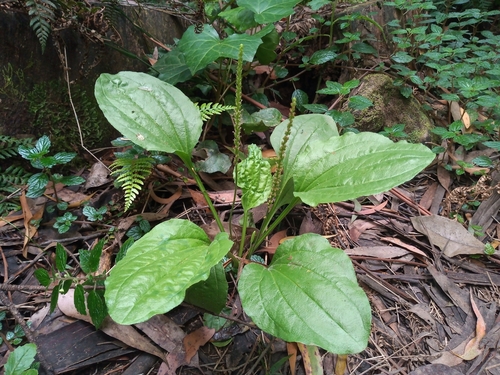
Plantago major L.

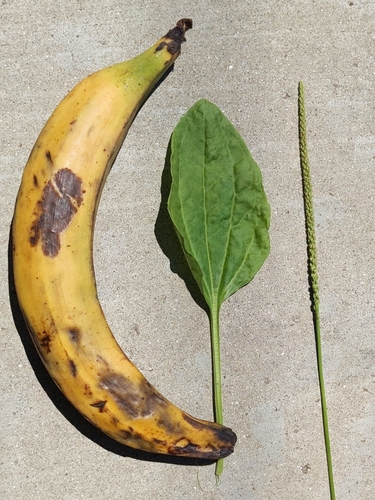
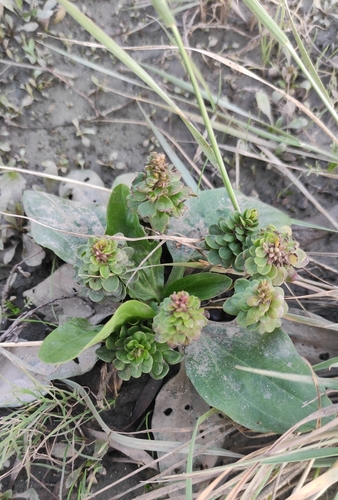
Plantago major, the greater plantain, is a species of flowering plant in the plantain family Plantaginaceae. It is native to Eurasia and temperate Africa, and widely naturalised elsewhere.

Source: Wikipedia

Synonyms 49
Plantago adriatica, Plantago angustata, Plantago borysthenica, Plantago bracteata, Plantago compressiscapa, Plantago crenata, Plantago dilatata, Plantago dostalii, Plantago dregeana, Plantago exaltata, Plantago fonticola, Plantago gigas, Plantago gouanii, Plantago humifusa, Plantago jehohlensis, Plantago laciniosa, Plantago limosa, Plantago loureiroi, Plantago officinarum, Plantago polystachia, Plantago quinquenervis, Plantago rocae, Plantago rosea, Plantago sawadae, Plantago sinuata, Plantago sorokini, Plantago stylosa, Plantago subsinuata, Plantago tabernaemontani, Plantago vulgaris, Plantago major subsp. dostalii, Plantago major subsp. pachystachya, Plantago major subsp. rigidifolia, Plantago major subsp. sinuata, Plantago major var. agrestis, Plantago major var. altissima, Plantago major var. angustata, Plantago major var. angustifolia, Plantago major var. angustissima, Plantago major var. brasiliensis, Plantago major var. compressiscapa, Plantago major var. crispa, Plantago major var. dentata, Plantago major var. desertica, Plantago major var. dilatata, Plantago major var. dostalii, Plantago major var. dumanii, Plantago major var. elatior, Plantago major var. fastigiata
  • 1,328,152 GBIF occurrences
  • 127,974 iNaturalist observations
Conservation status code
LC
Conservation: status label
Least Concern
Conservation: population trend
Stable
Conservation: year assessed
2026
Habitats
IUCN: population narrative

Broadleaf Plantain is generally a widespread and common species.

IUCN: habitat narrative

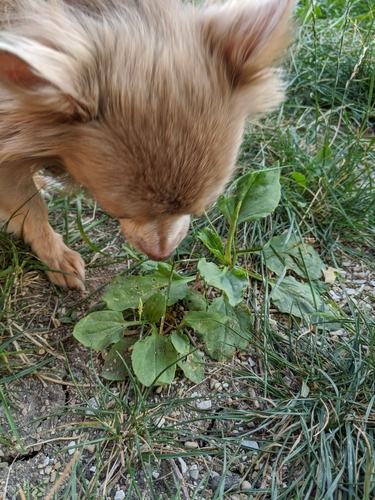
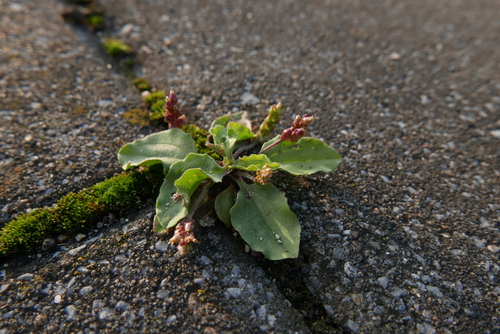
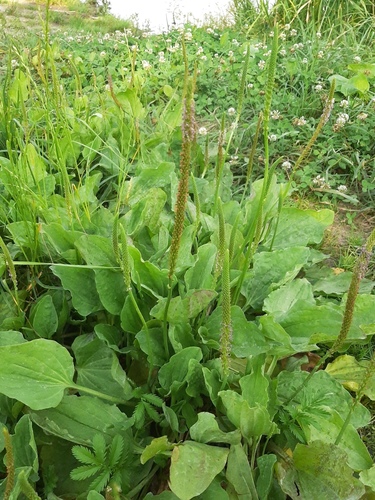
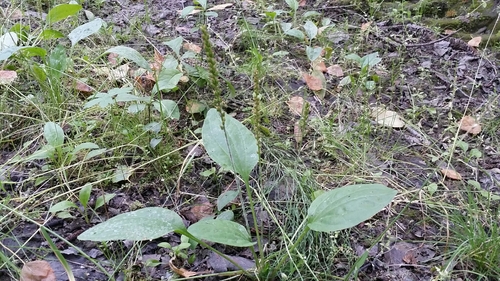
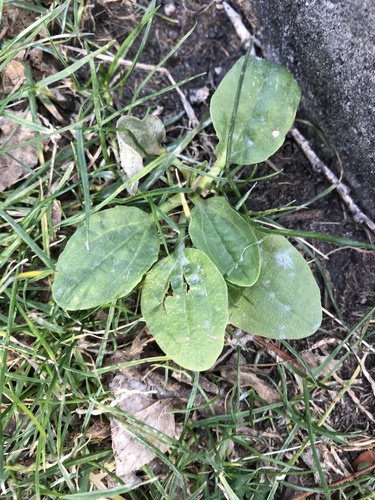
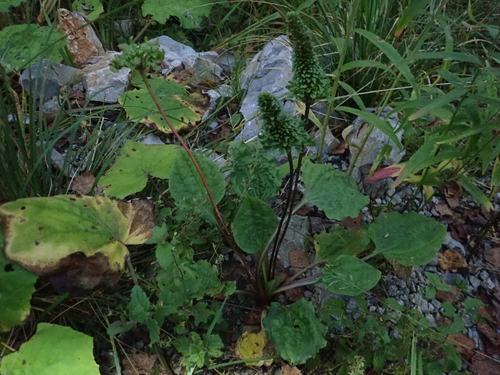
Broadleaf Plantain is a low to short perennial herb found on grassy and open waste or disturbed habitats such as trampled paths and tracks, field edges, roadsides, gardens, lawns and meadows. It grows in a wide range of soils except highly acidic soils and can produce a large and persistent seed bank (Blamey and Grey-Wilson 2003, Castroviejo et al. 2009, BSBI/BRC 2024).

IUCN: threats narrative

There are no known threats to this species.

IUCN: conservation narrative

There are no conservation measures in place or needed. This species is considered Least Concern in the national Red Lists of Belgium (Van Landuyt et al. 2006), Estonia (eElurikkus 2024), France (UICN France et al. 2018), Luxembourg (Colling 2005), Norway (Artsdatabanken 2024), Switzerland (Moser et al. 2002) and the United Kingdom (Cheffings and Farrell 2005). The species is represented by 167 germplasm accessions held at European institutions (EURISCO 2024) and is included in the living collection of at least 137 botanical gardens (BGCI 2024). It occurs in many protected areas, including Natura 2000 sites (UNEP-WCMC and IUCN 2024, GBIF.org 2024).

IUCN: rationale

European regional assessment: Least Concern (LC)EU 27 regional assessment: Least Concern (LC)This species is classified as Least Concern for both Europe and the EU27 Member States due to its widespread distribution, stable populations and no major threats.