Pinus sylvestris L.
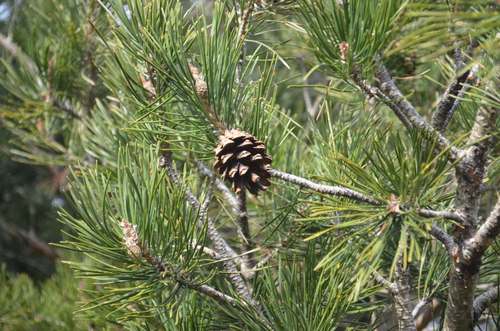
Source: Wikipedia
Synonyms 50
- 1,198,482 GBIF occurrences
- 119,159 iNaturalist observations
The population of this pine is very large and inferred to be stable as it is locally abundant and dominant in many areas.
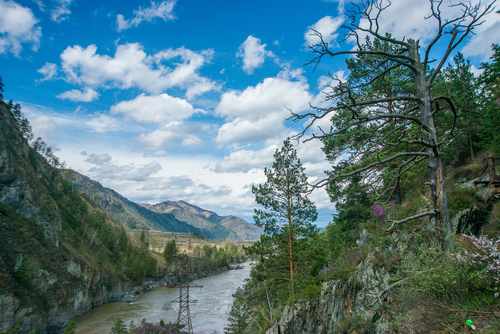
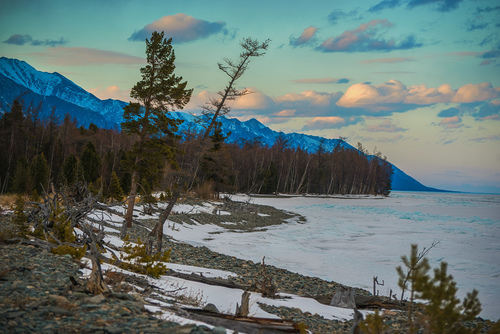
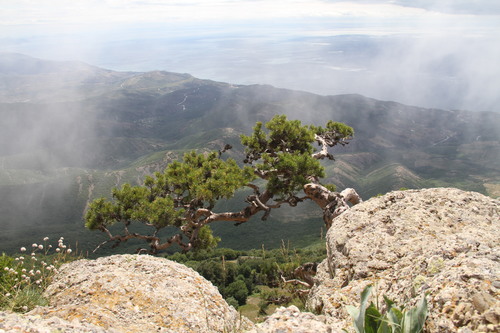
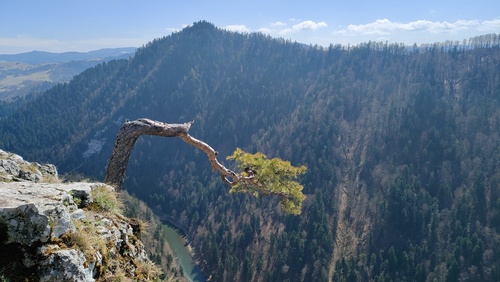
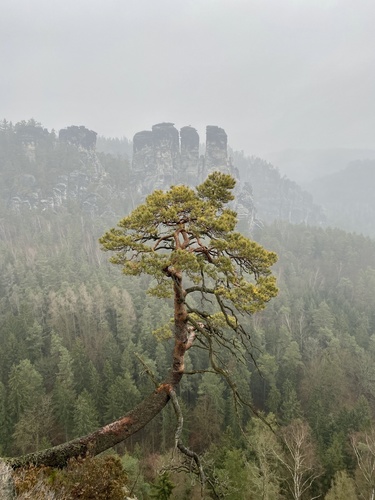
This large and long-lived pine grows naturally in a variety of habitats, the common denominator of which is a deficiency of nutrients in the soil. Thus on the Atlantic seaboard of Scotland, Ireland and Norway up to 70° N, it occurs in areas with very heavy precipitation and on thin soils overlying ancient igneous or metamorphic rocks. South of the Baltic Sea, it grows on podzolized glacial sands left after the last Ice Age.In the central Alps, it is restricted to the drier slopes and valleys below other conifers like Larix and Picea. In Scandinavia and northeast Europe, it often borders acidic peat bogs. It most commonly forms open pine forests and woodlands, but in many areas it is associated with conifers like Picea, Larix, Juniperus and with broad-leaved trees, especially Betula spp. and Populus tremula. In old-growth stands, there is often a well-developed ground cover of Vaccinium spp. or Empetrum nigrum in Atlantic regions, and such pine forests are rich in mycorrhizal fungi.
Subpopulations along the southern parts of its range, especially in areas such as the Iberian peninsular may be susceptible to impacts such as changes in precipitation patterns, recurrent droughts and an increased frequency of wildfires associated with climate change (Garzón et al. 2008, Mátyás et al. 2004). Across the whole of its range, there are currently insufficient threats for this species to be considered threatened at any level.
The species is represented by 38 germplasm accessions held at European institutions (EURISCO 2024), and is included in the living collection of at least 238 botanical gardens (BGCI 2024). It occurs in many protected areas, including Natura 2000 sites (UNEP-WCMC and IUCN 2024, GBIF.org 2024).However, few of these include the more isolated subpopulations that often occur at the margins of its range or in more extreme habitats and probably represent reservoirs of genetic adaptability. Most ex situ conservation activities, such as seed banks and seed orchards, are oriented towards tree breeding for timber production rather than broad genetic representation. A more comprehensive strategy is required to conserve the full range of genetic variability and the range of habitat types that this species characterises (Mátyás et al. 2004).
European regional assessment: Least Concern (LC)EU 27 regional assessment: Least Concern (LC)The species has a broad distribution within Europe and the extent of occurrence (EOO) and area of occupancy (AOO) for this pine are extremely large. It has a large population size and few significant threats or ongoing declines. It is assessed as Least Concern at both the Pan Europe and EU 27 member state levels.
Gallery