Picea abies (L.) H.Karst.
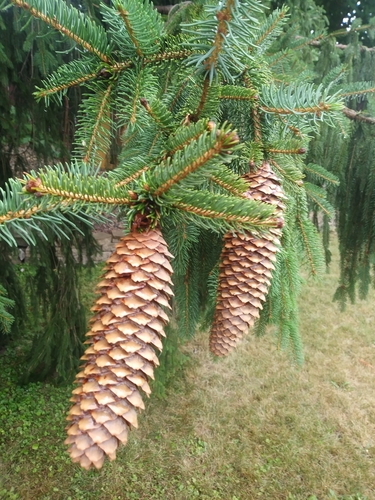
Source: Wikipedia
Synonyms 48
- 1,015,949 GBIF occurrences
- 90,412 iNaturalist observations
The population is thought to be stable.
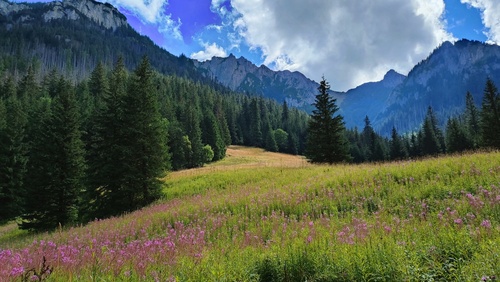
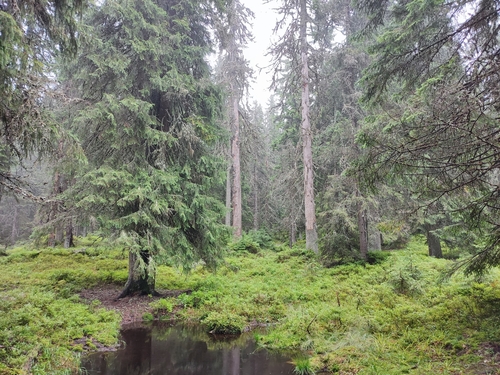
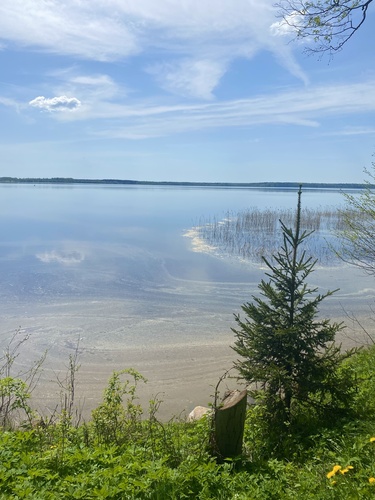
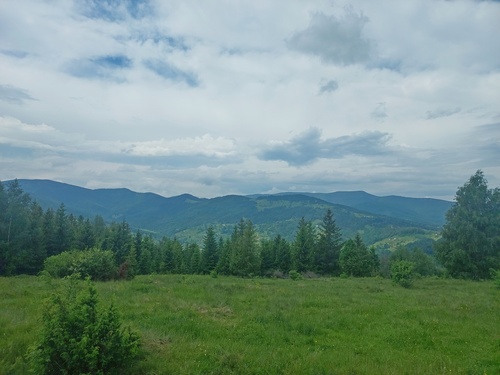
Picea abies is widespread and dominant in Boreal conifer forests of northern and northeastern Europe, where it replaces Pinus sylvestris on wetter sites because Picea abies can avoid the water table with a very shallow root system. Occurs from sea level up to 2,000 m.The natural distribution shows continental tendencies but in the western mountains of Central Europe an ecotype has evolved that is adapted to sub-Atlantic weather conditions with heavy 'wet' snowfall in early winter. Its inability to compete with more shade tolerant Abies alba and Fagus sylvatica as well as historical factors have limited its natural expansion into western Europe. In the Alps Picea abies occupies the montane to subalpine zones (dependent on local climate) especially on moist sites and in cold air pockets. Although it can occur on most substrates, acidic soils are most common and widespread as is testified by the undergrowth, if present, of ericaceous shrubs and sub-shrubs.Commonly growing with Picea abies in the Boreal forests are Betula sp. and Populus tremula, with willows (Salix) alongside streams and lakes. In the Alps Picea abies occurs with Larix decidua, Pinus cembra, and P. sylvestris or P. nigra, if not in pure stands. In eastern Europe, Picea abies is a constituent of mixed conifer-broad-leaved woodland from the Białowieża Forest in the north to the valleys of the eastern Alps and the Carpathians.
No specific range wide threats have been identified for this species or either of its varieties.
Norway Spruce is present in numerous protected areas throughout its range.Neither the typical variety nor Picea abies var. acuminata have been formally assessed, but neither are considered threatened.
Global and European regional assessment: Least Concern (LC)EU 28 regional assessment: Least Concern (LC)Picea abies is the most abundant, if not widespread conifer in Europe. As such, it is assessed as Least Concern at both the global and EU28 members states levels.
Gallery