Phegopteris connectilis (Michx.) Watt
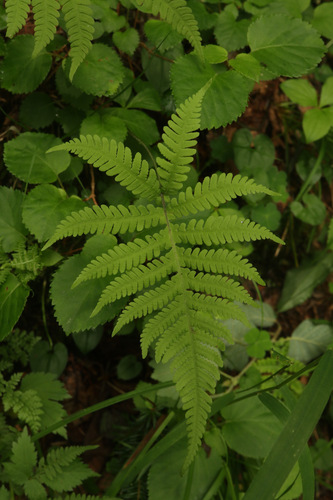
Source: Wikipedia
Synonyms 30
- 248,541 GBIF occurrences
- 17,528 iNaturalist observations
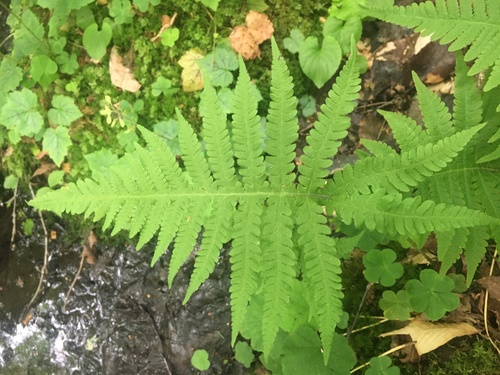
This is a frequent species in deciduous or coniferous forests, often occurring in large sways due to their clonal nature. Its current population trend is stable.
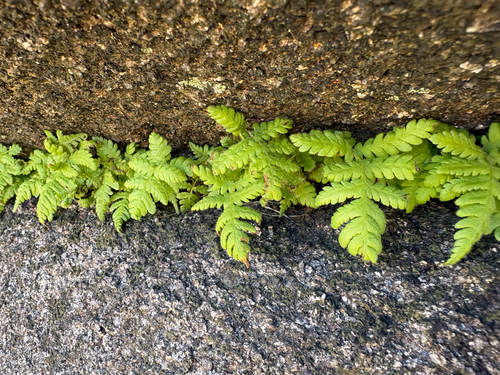
The species is mainly found in areas with cool summers and cold winters. It is usually associated with north temperate deciduous or coniferous forests, usually in shady areas with beech, oak and beech/fir or spruce woodland and on sheltered rocky banks (Komarov 1968, Fedorov 1999, Frey et al. 2006). It thrives especially on deep, moist, often semi-stable, unconsolidated mineral soil banks with steep slopes and gently irrigated by slight seepage (Page 1997). Its altitudinal range is 0 - 2,300 m.
There are no immediate threats to this species. Although logging activities may have a temporary effect on the species, it usually rebounds well as it does not mind some slight disturbance.
No conservation measures are in place and none appear to be needed. It is present in protected areas throughout its range. It is listed as Least Concern in England although there has been a historical AOO decline of 31% (Stroh et al. 2014).
European regional assessment: Least Concern (LC)EU 28 regional assessment: Least Concern (LC)This is a widespread, common and resilient species whose current population trend is stable. It is thus listed as Least Concern.
Gallery