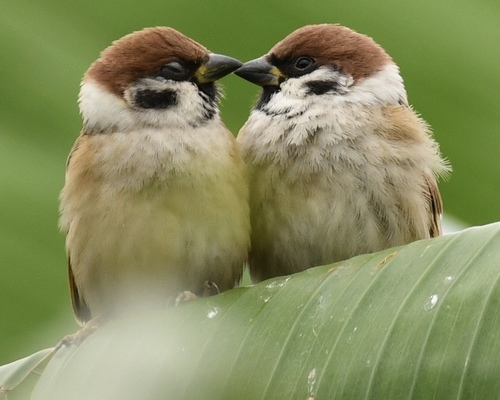
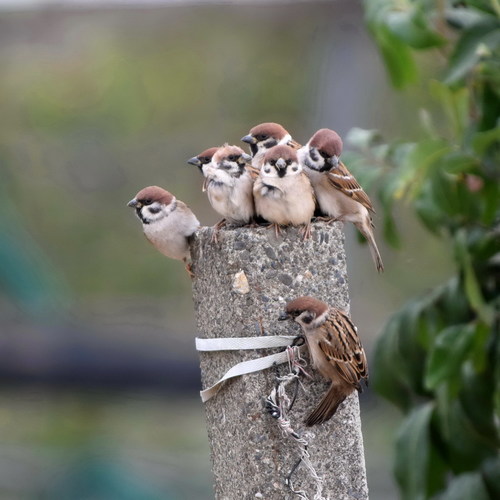
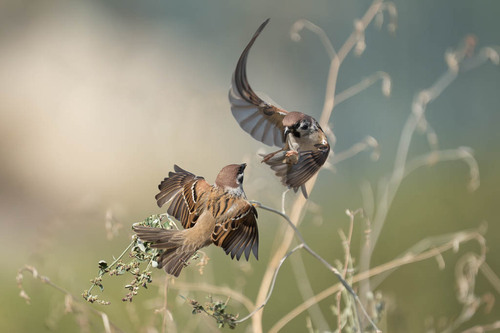
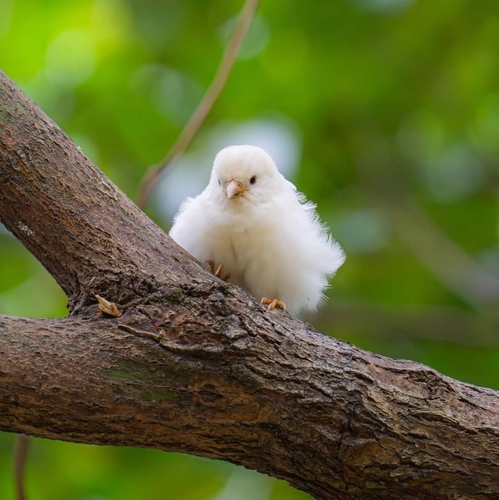
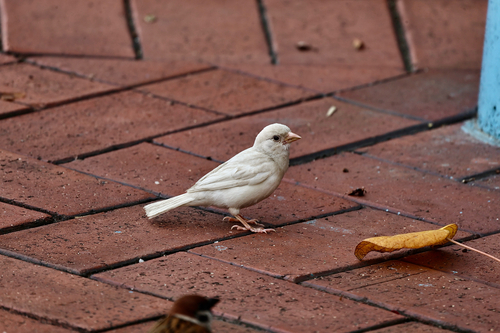
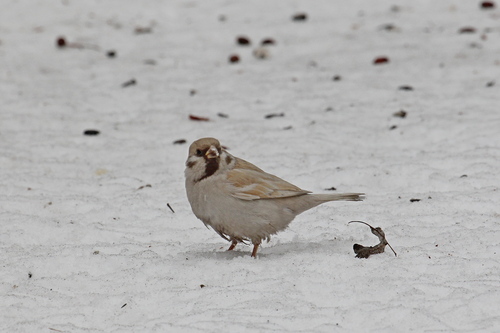
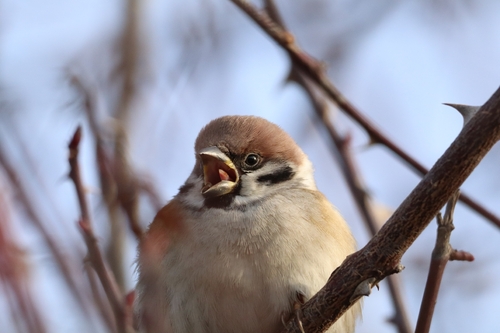
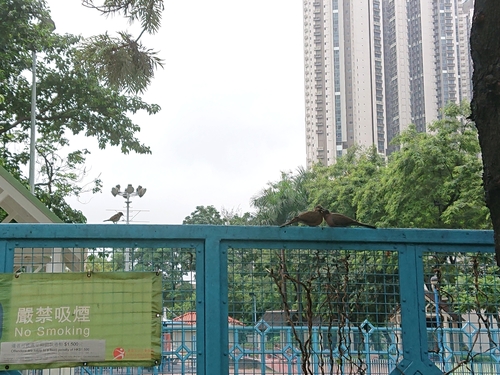
Passer montanus (Linnaeus, 1758)
Source: Wikipedia
- 4,315,761 GBIF occurrences
- 155,157 iNaturalist observations
In Europe, the total population size is estimated at 53,700,000-76,000,000 mature individuals, with 26,800,000-38,000,000 breeding pairs (BirdLife International 2021), and comprises under a quarter (c. 25%) of the species' global range. A very preliminary estimate of the global population size is therefore between 215,000,000-305,000,000 mature individuals, although this may be an underestimate as densities may be higher in the east of the range.
In the west of its range, Eurasian Tree Sparrow is found mainly in cultivated areas with hedgerow trees, orchards, gardens and farmyards, while it is less common in light woodland. In the east of its range, it is found increasingly not only in built-up areas, but also in open arid country. In the Russian Far East, where House Sparrow Passer domesticus is absent, Eurasian Tree Sparrow is common in built-up areas and is even found in urban centres. In the north of the range, the breeding season begins in April or May, whilst it begins in January in the extreme south of Asia. The species breeds in loose colonies. The nest is constructed of dried grass and rootlets, lined with feathers and animal fur; it is domed (even when in a hole) with an entrance on the side. The nest is mostly placed in a hole in a tree, earth bank, cliff or artificial structure, sometimes in the base of a large nest of heron (Ardeidae), crow (Corvidae) or bird of prey. Occasionally, the nest is free-standing in a tree, but then usually hidden in thick conifer or creepers. Clutches consist of two to seven eggs. The diet is mainly seeds, preferably smaller seeds of low herbs and grasses, including cultivated cereals, but the species also takes a significant proportion of animal food (Summers-Smith 2016). In Europe, the species is largely sedentary (Hagemeijer and Blair 1997). In central Asia, the species makes more pronounced movements. Birds in the extreme north of the range withdraw to the south, while those living in the countryside tend to move into built-up areas (Summers-Smith 2016).
Declines in this species in Europe may be a result of changes in agricultural practices, such as the increased use of pesticides and herbicides and the autumn sowing of cereals, which have lead to decreases in food for this species (Hagemeijer and Blair 1997).
Conservation Actions UnderwayIn 1996, the species was placed on the U.K. Red List of Species of National Conservation Concern (Summers-Smith 2016).Conservation Actions ProposedCreate invertebrate-rich habitats such as small-scale wetlands, and aim to increase heterogeneity in the land-use types in order to to provide invertebrates at the required abundance for this species (Field and Anderson 2004).
This species has an extremely large range, and hence does not approach the thresholds for Vulnerable under the range size criterion (extent of occurrence under 20,000 km² combined with a declining or fluctuating range size, habitat extent/quality, or population size and a small number of locations or severe fragmentation). The population size is extremely large, and hence does not approach the thresholds for Vulnerable under the population size criterion (under 10,000 mature individuals with a continuing decline estimated to be over 10% in ten years or three generations, or with a specified population structure). The population trend is unknown but is not thought to approach the thresholds for Vulnerable under the population trend criterion (over 30% decline over ten years or three generations). For these reasons the species is evaluated as Least Concern.
Gallery