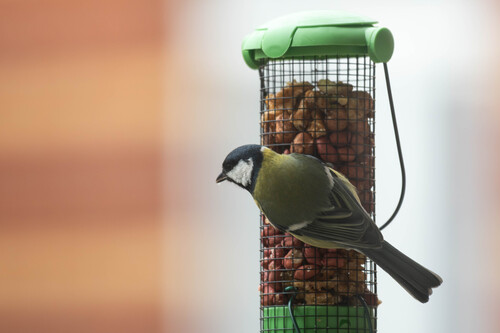
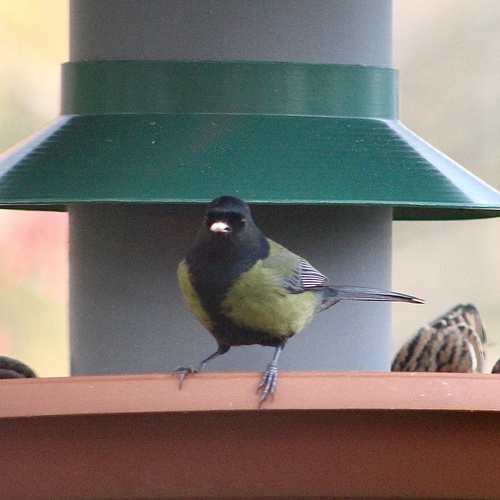
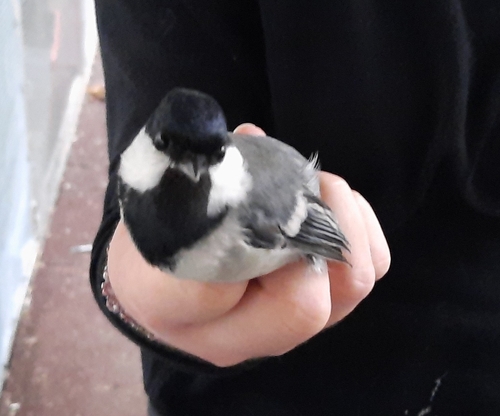
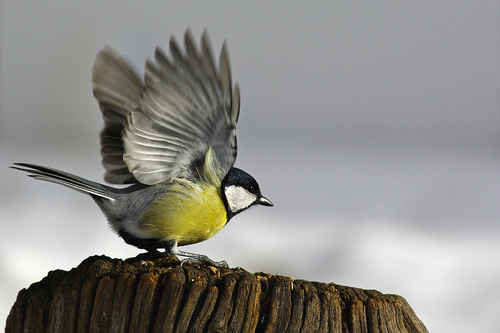
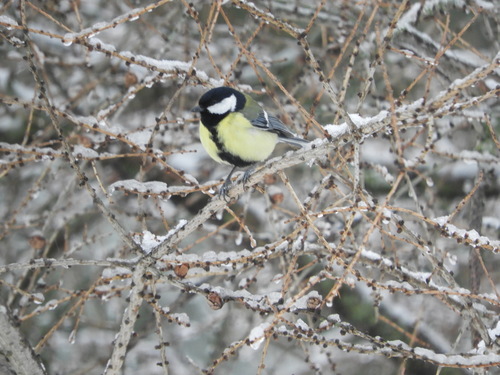
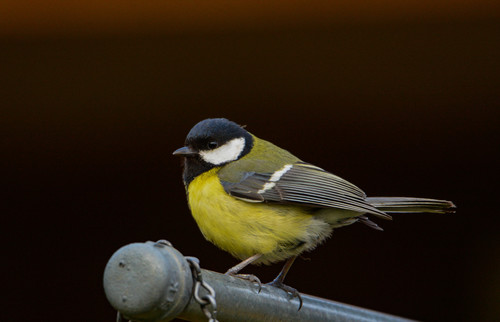
Parus major
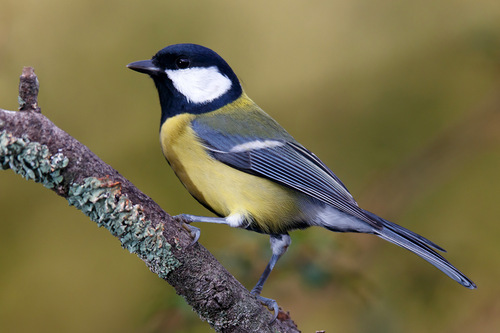
Source: Wikipedia
Synonyms 14
- 13,991,197 GBIF occurrences
- 244,590 iNaturalist observations
In Europe, the total population size is estimated at 127,000,000-205,000,000 mature individuals, with 63,600,000-103,000,000 breeding pairs (BirdLife International 2021), and comprises approximately 30% of the species' global range, so a very preliminary estimate of the global population size is between 423,000,000-683,000,000 mature individuals, although further validation of this estimate is desirable. In Europe, the species' population is considered to have remained relatively stable over three generations (10 years) (BirdLife International 2021). Based on these data, and the proportion of the species' global range that this region holds, the global population size is considered to be stable over three generations. This species is considered to have a medium dependency on forest habitat, which is estimated to be declining at a slow rate within its mapped range (Global Forest Watch 2024).
This species occupies mostly open deciduous and mixed forests and edges and clearings in dense forest, including conifer forests and boreal taiga. It is also found more widely in plantations, hedgerows, orchards, parks, gardens, the edges of cultivation, olive groves and almost any group of trees or bushes (Gosler et al. 2013). Egg-laying is generally late January to September (Gosler et al. 2013), in Europe, laying begins in March to April in southern lowlands and in May in the north but over most of Europe it begins in April (Snow and Perrins 1998). The nest is built by the female, mostly of plant fibres, grasses, moss, animal hair, wool and feathers, placed at variable height in a hole or a cavity in a tree, occasionally in a wall, rock face or building. Frequently uses nestboxes (Gosler et al. 2013). Clutches are usually six to eleven eggs in Europe. It feeds on a wide variety of insects, as well as spiders, seeds and fruit (Snow and Perrins 1998). The species is generally resident but does undertake seasonal altitudinal movements and is partially eruptive (Gosler et al. 2013).
Increased spring temperatures are resulting in a mismatch between food availability and offspring requirements leading to lowered reproductive success in at least some populations (Visser et al. 1998, Visser et al. 2006).
Conservation Actions UnderwayBern Convention Appendix II. It is one of the world's best-studied avian species (Gosler et al. 2013).Conservation Actions ProposedCurrently no conservation measures are needed for this species.
This species has an extremely large range and the population size is extremely large, hence does not approach threatened thresholds for the range or population size criteria. The population trend appears to be stable, and hence the species does not approach the thresholds for Vulnerable under the population trend criterion. For these reasons the species is evaluated as Least Concern.
Gallery