Paris quadrifolia L.
Source: Wikipedia
Synonyms 3
- 363,208 GBIF occurrences
- 27,103 iNaturalist observations
Paris quadrifolia is a widespread species and is not uncommon in many parts of its range, for example in Finland it is reported to be common or at least quite common (Naturegate 2014). In eastern Belgium it has relatively high abundance and frequency and a study of 47 subpopulations here found the mean population size was 1,106 (Jacquemyn et al. 2006). It is inferred that the population is large. However declines are noted in parts of Europe (Jacquemyn et al. 2006) and in Britain, the species has gone from LC to VU as as result of ongoing declines (Botanical Society of Britain and Ireland 2024, Stroh et al. 2025).
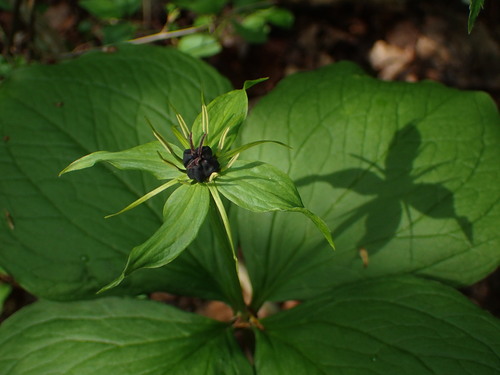
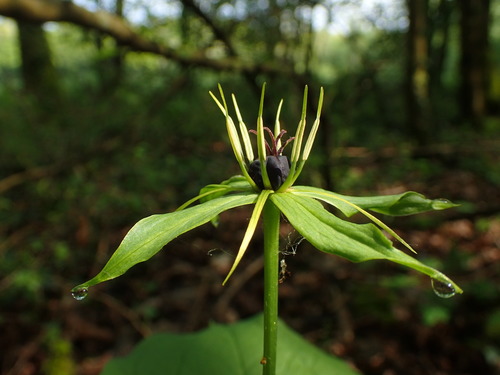
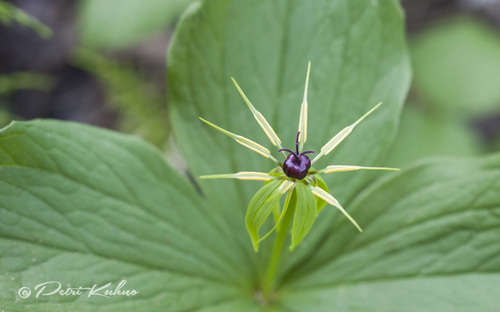
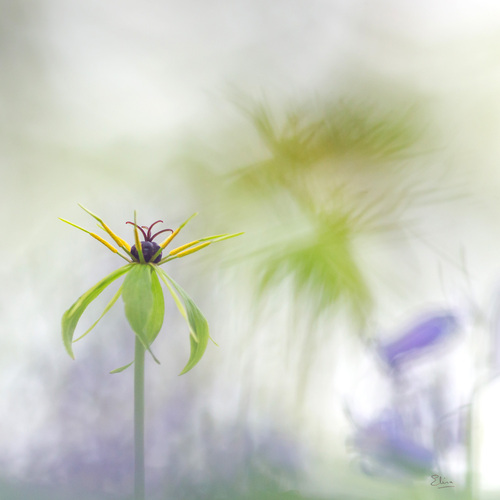
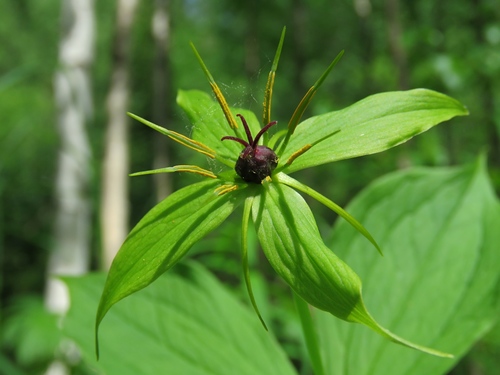
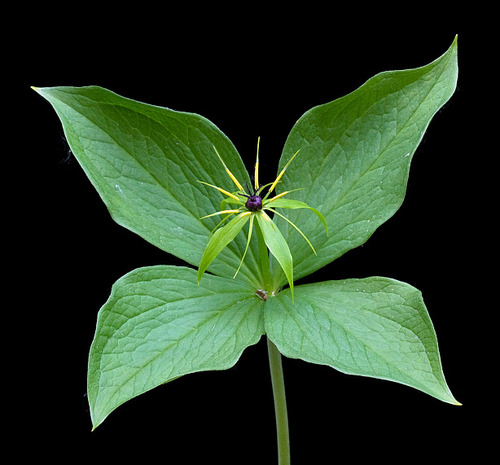
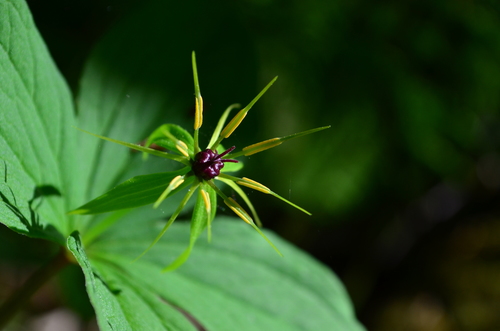
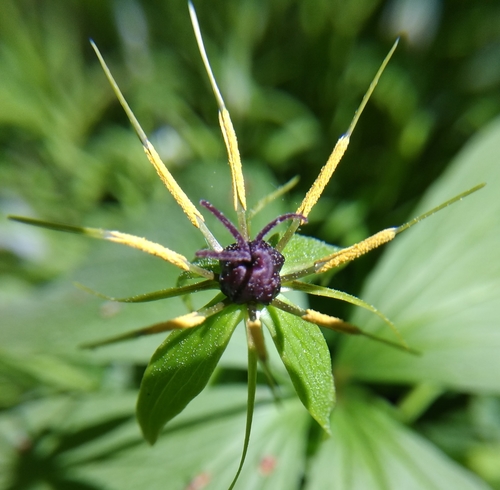
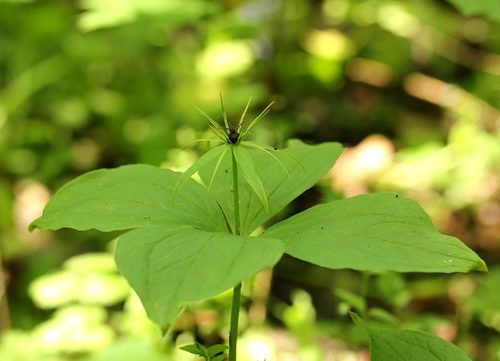
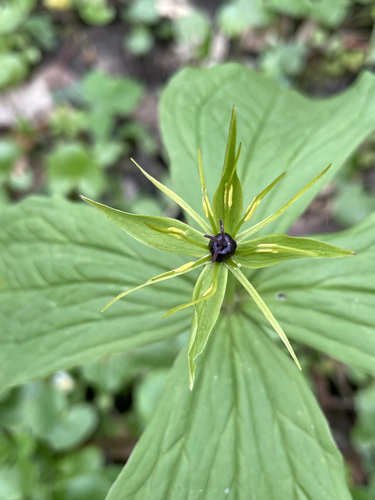
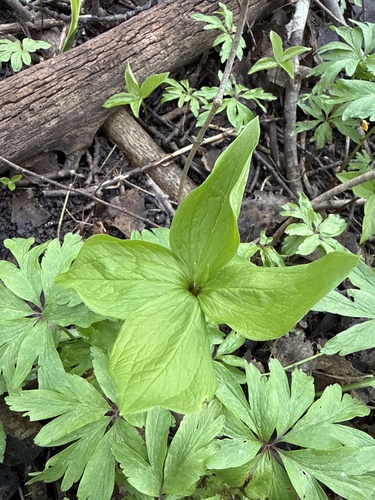
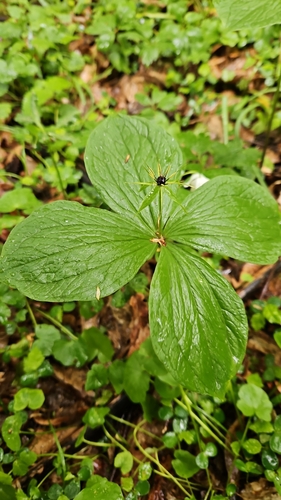
This is a perennial herb with a creeping rootstock from which clonal groups arise. It grows to 15-35 cm in height and characteristically has four leaves with a central stalked flower and bluish black berry. It is found in broad leaved forests, coppices and forest margins also in fens, swamps and streamsides, often on calcareous substrates (Naturegate 2014). It flowers in May and June and is visited by flies (Jacquemyn et al. 2006).
This species is in decline in Europe due to a loss of the broadleaved woodland that is its main habitat. This plant is a slow coloniser, and is, for example, considered an ancient woodland indicator species in southern Britain. It has limited dispersal ability even if new woodlands are planted to mitigate loss of established woodland but may spread slowly to secondary woodland which is adjacent to primary woodland (Rose 1999, Botanical Society of Britain and Ireland 2024, Board of Trustees, RBG Kew 2024). It is thought to be vulnerable to habitat changes such as drought and competition from other species, such as Hedera helix and Rubus fruticosus. Populations in unfavourable conditions show low seed production and low clonal diversity and as remnant population are more liable to extinction (Jacquemyn et al. 2006).
It has been assessed as Least Concern in France (UICN France et al. 2018), Switzerland (Bornand et al. 2016); in the UK, however, it has gone from LC (Cheffings and Farrell 2005) to VU (Stroh et al. 2025).The species is represented by six germplasm accessions held at European institutions (EURISCO 2024), and is included in the living collection of at least 89 botanical gardens (BGCI 2024). It occurs in many protected areas, including Natura 2000 sites (UNEP-WCMC and IUCN 2024).Population monitoring is recommended for this species.
European regional assessment: Least Concern (LC)EU 27 regional assessment: Least Concern (LC)The species distribution in Europe is broad and the estimated extent of occurrence (EOO) for this species greatly exceeds the values needed for a threatened category. As it occurs in a variety of habitats and is not uncommon in large parts of its range, the area of occupancy (AOO) and population are also inferred to exceed these values. There have been declines associated with loss of habitat but these are suspected not to be of a sufficient percentage of the total population to trigger a threatened category. It is assessed as Least Concern for both Europe and the EU27 Member States.
Gallery