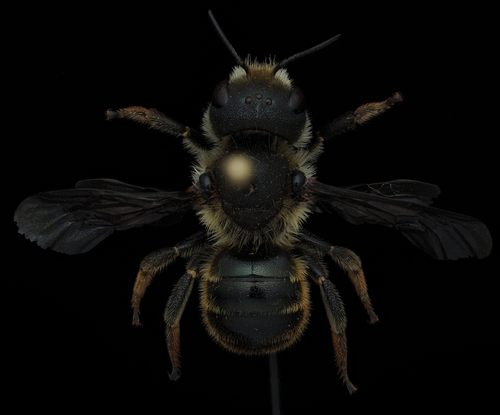
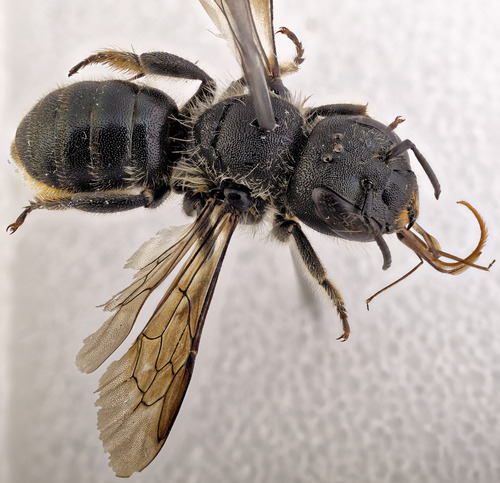
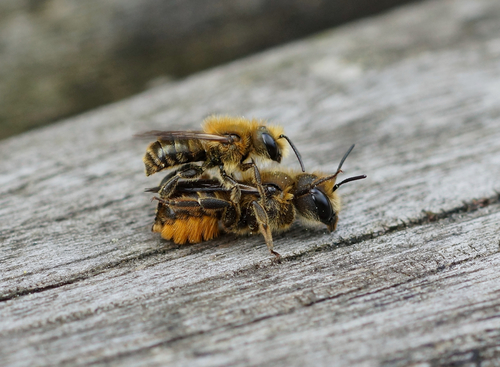
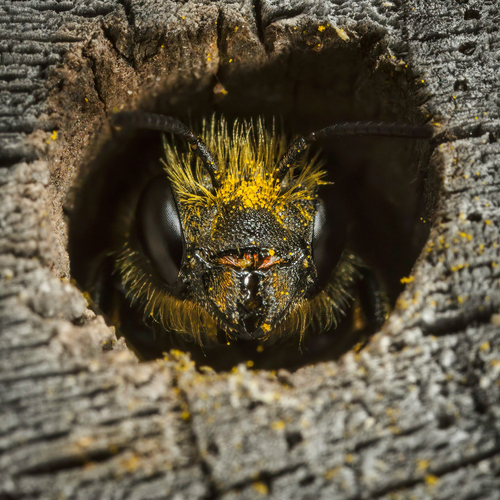
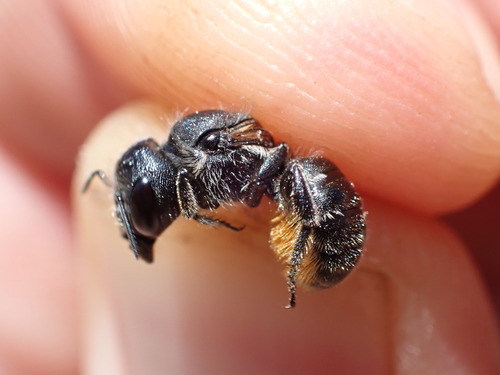
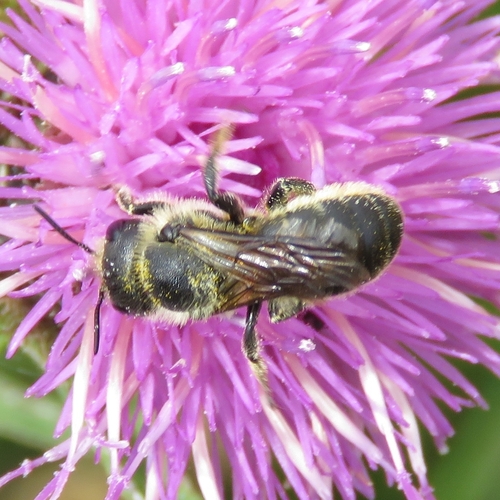
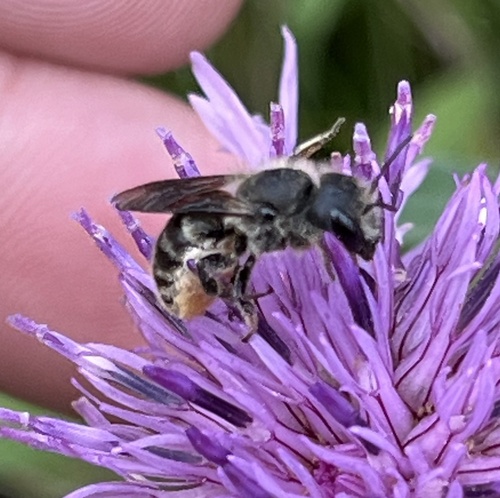
Osmia leaiana (Kirby, 1802)
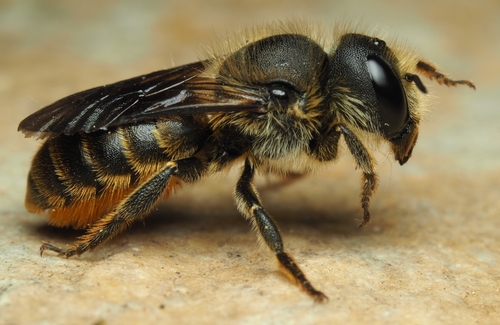
Synonyms 15
- 7,908 GBIF occurrences
- 929 iNaturalist observations
The population size and trends of this species are not known although due to the species' wide distribution and solitary behaviour, it is presumed to have a large population. It is a common species in Slovenia (Gogala 2013).
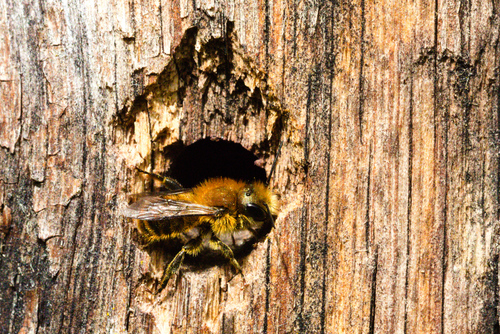
Osmia leaiana colonises a wide variety of habitats as long as there are large populations of Asteraceae and deadwood structrures. It can be found in open woodland, woodland and hedgerow edges, gravel pits and quarries, ruderal areas, extensive pastures and meadows as well as gardens and parks (SwissBeeTeam 2019).It nests in pre-existing cavities like insect burrows in dead wood and bore holes in wooden blocks, hollow stems and holes in pithy stems or holes in stones and walls. The cell partitions and nest plug are made of chewed leaves (e.g., from Rosa) (Benoist 1931, Romasenko 1980, Westrich 1989, Müller et al. 1997, Banaszak and Romasenko 2001). This species is oligolectic, in that it prefers to forage upon a narrow range of flowering plant species, specifically on Asteraceae (Westrich 1989, Müller et al. 1997, Amiet et al. 2004, unpublished data, A. Müller pers. comm. 2014).Development may be annual or biennial. In the latter case, the species spends the first winter as a resting larva and the second winter as an imago. The main flight period for males is from early May to late July, and for females from late May to late August (Gogala 2013, SwissBeeTeam 2019). In Türkiye, it was reported flying until second half of September (Grace 2010).
The threats to this species are not known.
The species is included in the National Red Lists or Red Data Books of Belgium (Least Concern; Drossart et al. 2019), Estonia (Least Concern; Soon 2020), Finland (Vulnerable; Hyvärinen et al. 2019), Germany (Threatened; Westrich et al. 2011), the Netherlands (Endangered; Reemer 2018), Norway (Least Concern; Artsdatabanken 2021) and Switzerland as Osmia fulviventris (Vulnerable; Amiet 1994).This species was previously listed in the National Red List of Finland (Vulnerable; Rassi et al. 2010) and the Netherlands (Endangered; Peeters and Reemer 2003).The species was categorised Least Concern in the European Red List of bees (Nieto et al. 2014).It is unknown whether it occurs within any protected areas. Further research should be conducted to determine the population size, trends, and threats to the species.
European regional assessment: Least Concern (LC) EU 27 regional assessment: Least Concern (LC)Osmia leaiana is listed as Least Concern in view of its wide distribution and presumed large overall population. Despite the fact that this species is listed as Least Concern, further research should be conducted to determine the population trends.
Gallery