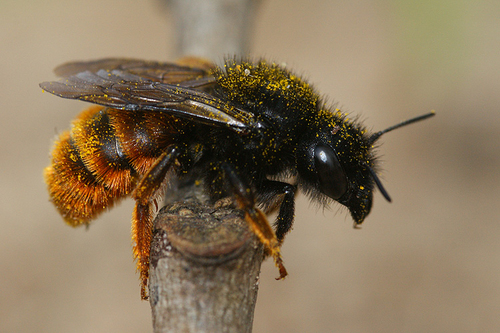
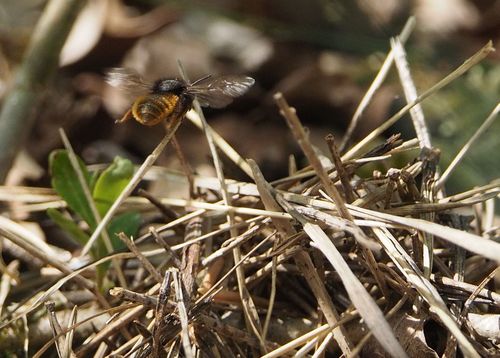
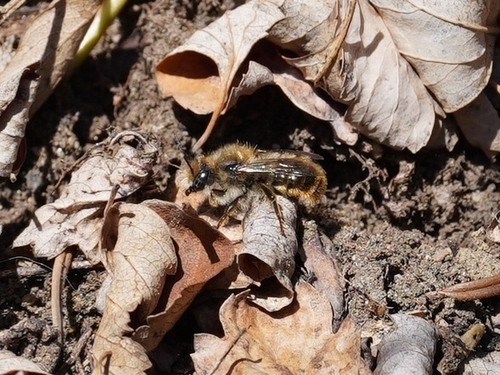
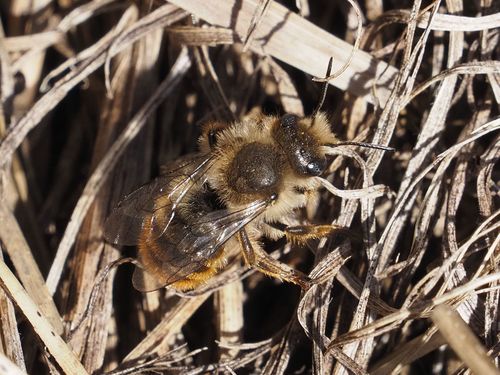
Osmia bicolor (Schrank, 1781)
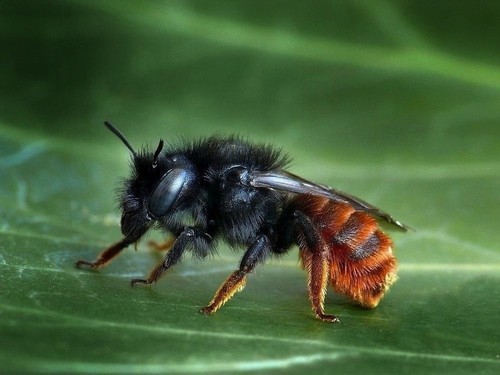
Source: Wikipedia
Synonyms 7
- 12,327 GBIF occurrences
- 1,625 iNaturalist observations
The population size and trends of this species are not known although due to the species' wide distribution and solitary behaviour, it is presumed to have a large population.
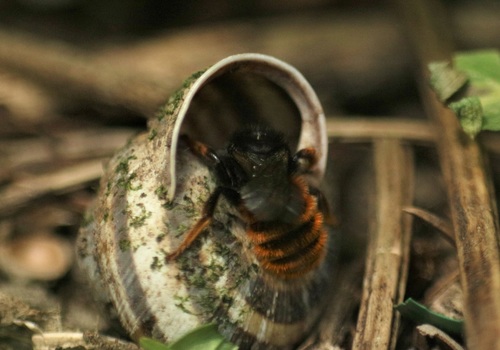
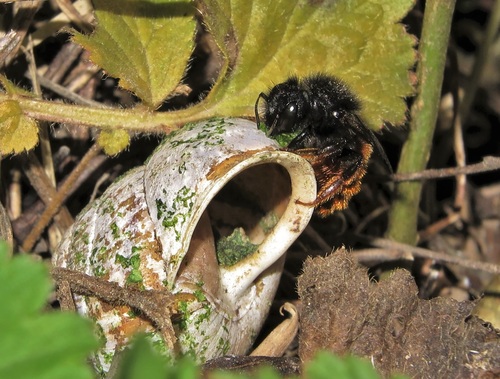
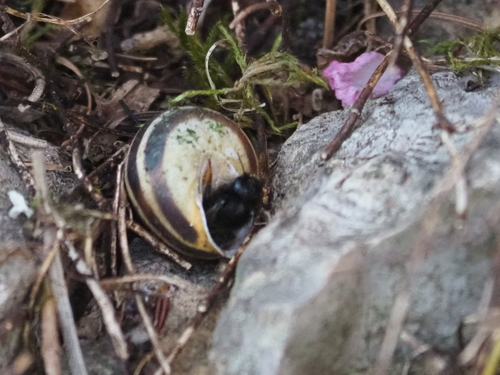
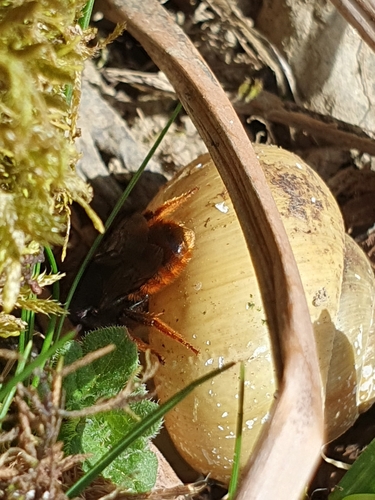
Osmia bicolor colonises a variety of different habitats as long as these have a large number of empty snail shells available: forest and hedgerow edges, fallow grasslands, gravel pits and quarries, sparsely vegetated slopes, ruderal areas and extensively farmed pastures. Meadows that are mown every year are only used as a source of food, as there are no empty snail shells (Peeters et al. 2012, SwissBeeTeam 2019).It nests in empty and generally medium-sized snail shells with mostly one cell, in rare cases with up to five cells. The closed shell is turned so that the shell opening is directed towards the ground before it is hidden under hundreds of pine needles, dry grass blades, fragments of dead leaves, scales from beech buds or wood particles. Occasionally, the females dig the shell 1.5 cm deep into the ground before it is covered with vegetable matter. The cell partitions between two cells are made one-layered partitions of leaf pulp. The outermost cell is closed by a one to two centimetre long nest plug consisting of one (rarely several) compartment with small pebbles, earth, broken snail shells, pieces of chalk and wood particles densely packed between two partitions of leaf pulp. The shell surface is plastered with patches of leaf pulp (Grozdanic and Vasic 1965, Amiet 1973, Westrich 1989, Müller et al. 1997, Banaszak and Romasenko 2001, Müller 2022b). This species is polylectic, in that it prefers to forage upon a wide range of flowering plants species (at least 17 plant families) (Westrich 1989, Amiet et al. 2004, Müller 2022b).It is a univoltine species, flying from the beginning of March to the end of May for males, and from mid-March to the beginning of July for females, with the peak hatching period for males clearly preceding that for females (Amiet et al. 2004, Gogala 2013, SwissBeeTeam 2019).
The threats to this species are not known.
The species is listed in the National Red Lists or Red Data Books of Belgium (Near Threatened; Drossart et al. 2019), Estonia (Least Concern; Soon 2020), Finland (Near Threatened; Hyvärinen et al. 2019), Germany (Not Threatened; Westrich et al. 2011), the Netherlands (Regionally Extinct; Reemer 2018) and Norway (Least Concern; Artsdatabanken 2021).The species was previously listed in the National Red List of the Netherlands in a different category (Endangered; Peeters and Reemer 2003).The species was categorised Least Concern in the European Red List of bees (Nieto et al. 2014).It is unknown whether it occurs within any protected areas. Further research should be conducted to determine the population size, trends and threats to the species.
European regional assessment: Least Concern (LC) EU 27 regional assessment: Least Concern (LC)Osmia bicolor is listed as Least Concern in view of its wide distribution and presumed large overall population. Despite the fact that this species is listed as Least Concern, further research should be conducted to determine the population trends.
Gallery