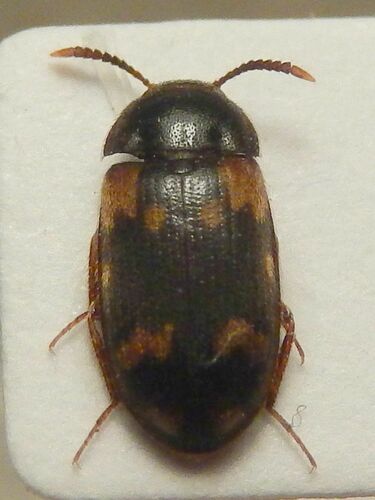
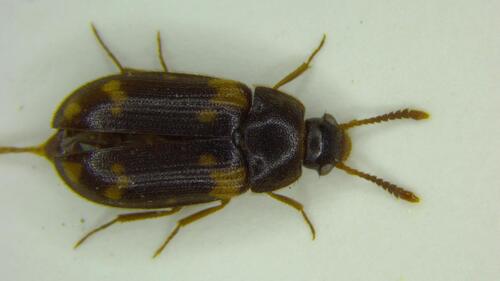
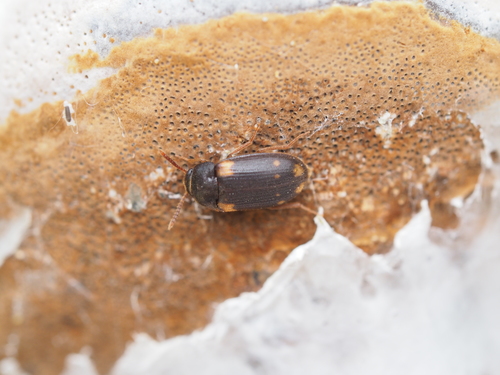
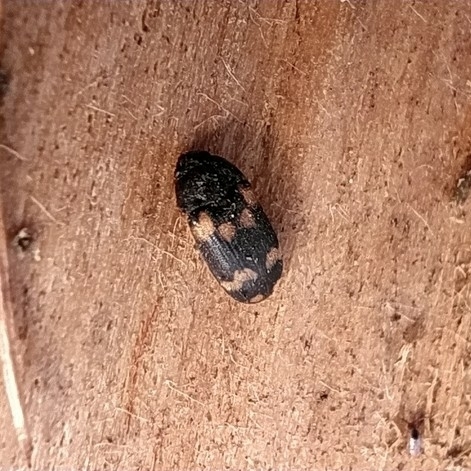
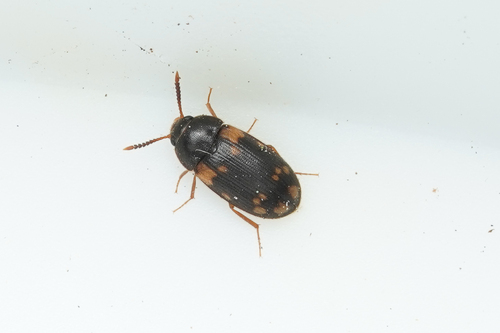
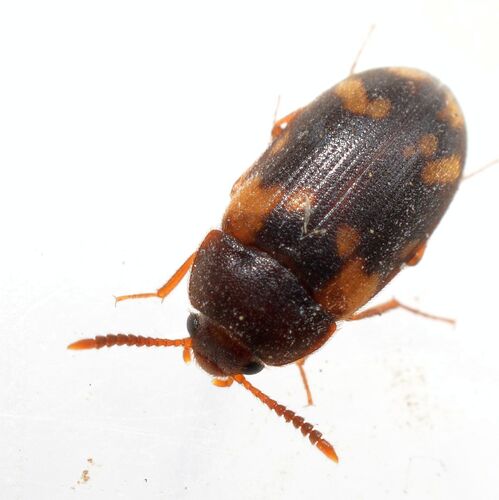
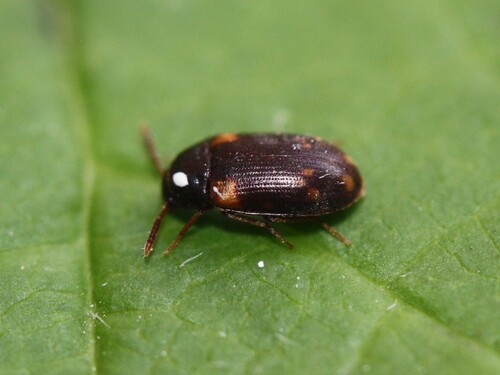
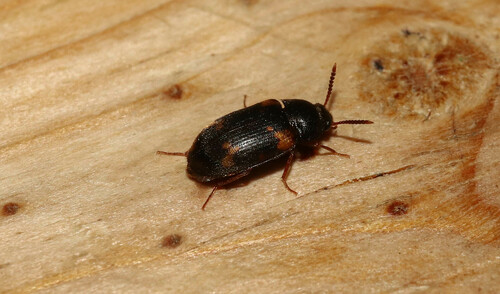
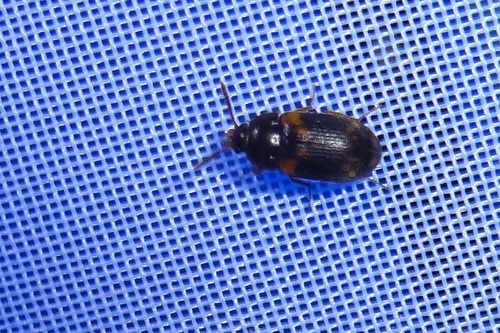
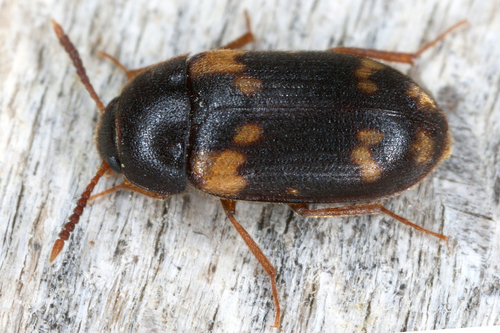
Mycetophagus decempunctatus Fabricius, 1801
Synonyms 2
- 693 GBIF occurrences
- 17 iNaturalist observations
This is a widespread species that is common in at least some parts of its range. The population trend is stable. In Estonia and Latvia this species is rare but widespread across the both countries. In Finland it is rather common in the south and its population is stable. In France it is widespread and common. In Germany Mycetophagus decempuncatus is very rare, more common in the eastern and central federal states, and absent or sporadic in the western and southern federal states. In European Russia the species is abundant in boreal and temperate regions. In Spain the species is restricted to the mountainous areas in the east and north. It is rare and sporadic in the Balkans and southern Italy.
This is an obligate saproxylic, mycetophagous species. It occurs in boreal and temperate forests, pasture meadows, parks and avenues. Larvae of Mycetophagus decempunctatus develop in sporophores of several wood-decaying fungi species (for instance, Hericium coralloides, Laetiporus sulphureus, Pleurotus spp., Polyporus squamosus, Pseudoinonotus dryadeus, Volvariella bombycina (Nikitsky 1993, Nikitsky and Bibin 2010)) and the species is connected to various deciduous trees, but mainly in Inonotus obliquus (Nikitsky 1993). Adult beetles appear and feed on sporophores of a variety of wood-decay fungi (Fomes, Inonotus, Laetiporus, Piptophorus) and under bark, mostly of broad-leaved trees. Pupation occurs in fungi fruit bodies or in soil. The life cycle is one to two years. In the eastern part of the range (European Russia) adult beetles are active from May to the end of summer (Nikitsky et al. 1996). In Germany, this species is included in the list of relic species of old-growth forests (Müller et al. 2005). In Hungary, it occurs in broad-leaved forests, mainly in oak, hornbeam and beech (O. Merkl, pers. comm. 2009). In Latvia, most often observed on Laetiporus sulphureus on broad-leaved trees, rarely also on Fomes fomantarius. In Ukraine, larvae develop in Inonotus obliquus, sometimes Laetiporus sulphureus and Polyporus squamosus (Drovgalenko, pers. communication 2009).
No main threat is identified for this species. The available habitat is large and not immediately threatened across the range. Certain local populations in Latvia and Estonia threatened by large-scale forestry. These activities will likely have a long-lasting negative impact on the population of Mycetophagus decempunctatus in the future. At a European scale it is unlikely for these local threats to negatively affect the whole population within the next ten years.
The species occurs in several protected areas across the range (e.g. France, Germany, Latvia, Poland, European Russia, Sweden). It was recently assessed as a very rare species for the German national Red List (Esser 2021).
European regional assessment: Least Concern (LC)EU 27 regional assessment: Least Concern (LC)This beetle is assessed as Least Concern in Europe and the EU 27 region since the extent of occurrence (EOO) and area of occupancy (AOO) are large, both exceeding the thresholds for threatened species and a main threat is not identified. Some local populations are likely threatened by logging and the general decline of old trees, but these are unlikely to affect the whole European population in the next ten years.
Gallery