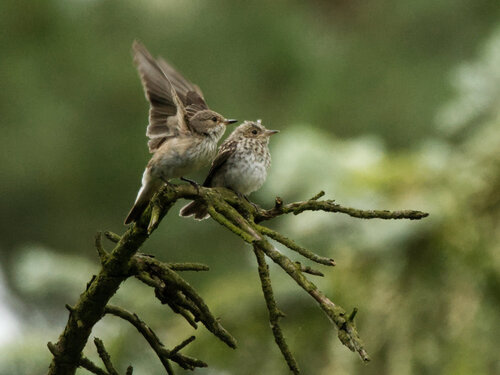
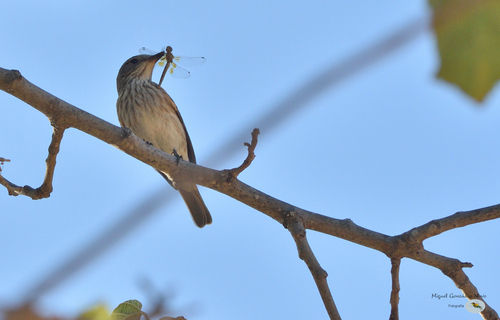
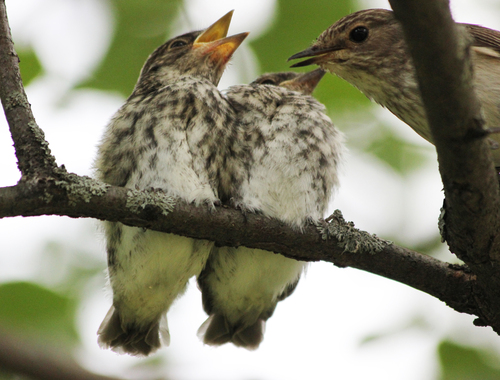
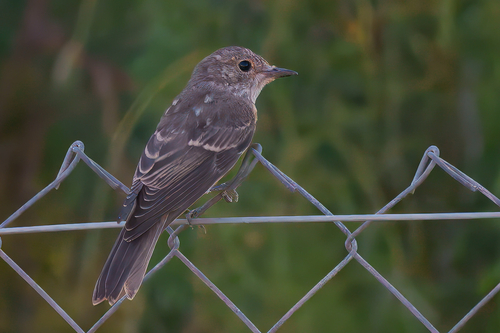
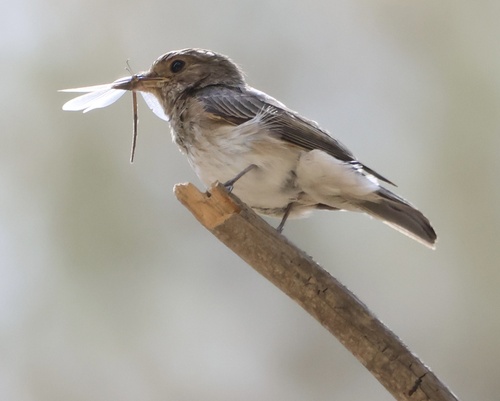
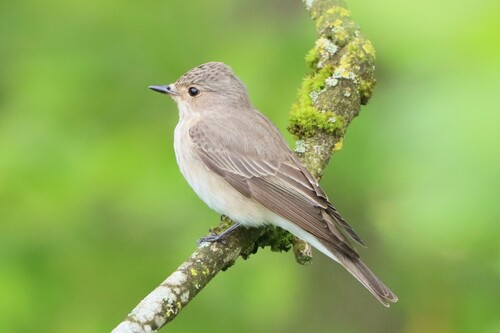
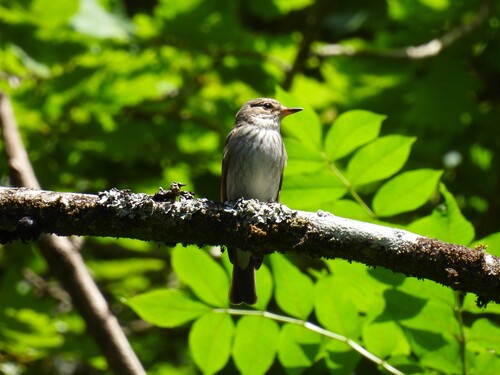
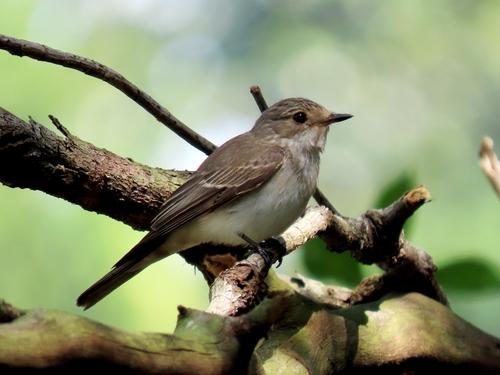
Muscicapa striata (Pallas, 1764)
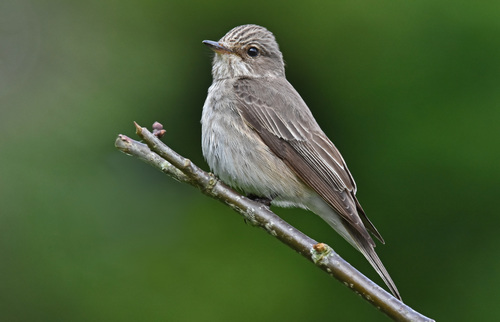
Source: Wikipedia
- 1,364,336 GBIF occurrences
- 42,116 iNaturalist observations
The European breeding population is suspected to be 10,300,000-18,700,000 pairs, which equates to 20,600,000-37,400,000 mature individuals. The breeding population in the EU28 is estimated at 4,420,000-8,380,000 pairs, which equates to 8,850,000-16,800,000 mature individuals. For details of national estimates, see the Supplementary Information.
This species inhabits almost any open woodland or timbered area with raised perches providing an open view. During the breeding season it favours well-spaced mature trees to younger trees and bushes, and thus has adapted well to avenues, parks, gardens, orchards and other man-made habitats, as well as occupying many types of deciduous or coniferous woodland. It is also found at woodland edges, in forest glades, clearings and burnt patches, and in trees along streams, rivers and edges of standing water. The breeding season in Europe is from mid-May to mid-August. The nest is a bulky cup of loosely piled fine twigs, rootlets, dead leaves, pieces of decaying bark, moss, dry grass, lichens and fibres, bound with hair and lined with hair, feathers and finer material. It is sited above the ground on a natural or artificial ledge, in a niche, at the base of a basket-shaped tuft of twigs against a tree trunk, in a hole in a tree, branch or stump, in creeper against a tree or wall, or on top of a flat branch. Clutches are two to seven eggs, but most commonly four to six. It is insectivorous, feeding mainly on flying insects, especially flies (Diptera) and hymenopterans but will also take other invertebrates and some fruits. The species is migratory, wintering in sub-Saharan Africa (Taylor 2015).Although the generation length for both EU and Europe regional assessments were calculated using the same methodology, new information arriving after the EU assessments were undertaken gave rise to an update in the generation lengths. This new information was then used for the Europe level assessments giving rise to a difference between the generation lengths used for the EU and Europe regions.
In north-west Europe, it is thought that declines may be due to a long sequence of generally cooler summers, or adverse factors such as biocide-induced reductions or contamination of insect populations, removal of old trees and general habitat deterioration (Taylor 2015).
Conservation Actions UnderwayCMS Appendix II. Bern Convention Appendix II. There are currently no known conservation measures for this species.Conservation Actions ProposedAs the causes of declines are uncertain, further research is needed to investigate possible factors. The species would also benefit from the protection of its favoured mature woodland habitats, a reduced use of broad-spectrum insecticides and the maintenance of mature trees in farmland, parks and gardens (Tucker and Heath 1994).
European regional assessment: Least Concern (LC)EU28 regional assessment: Least Concern (LC)At both European and EU28 scales, this species has an extremely large range (its extent of occurrence (EOO) is much larger than 20,000 km² and its area of occupancy (AOO) is much larger than 2,000 km²), and hence it does not approach the thresholds for Vulnerable under the range size criteria (criteria B and D2). The population size is extremely large (much larger than 10,000 mature individuals), and hence it does not approach the thresholds for Vulnerable under the population size criteria (criteria C and D). Despite the fact that the population trend appears to be decreasing, the decline is not believed to be sufficiently rapid to approach the thresholds for Vulnerable under the population size reduction criterion (criterion A). The probability of extinction has not been calculated for this species, therefore criterion E cannot be applied. For these reasons the species is evaluated as Least Concern within both Europe and the EU28.
Gallery