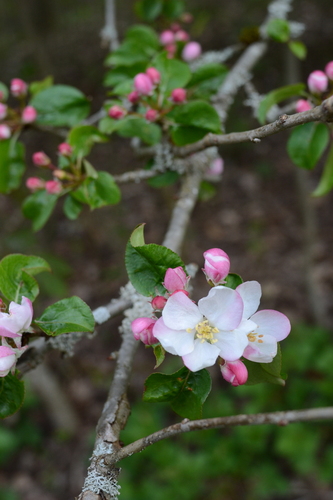
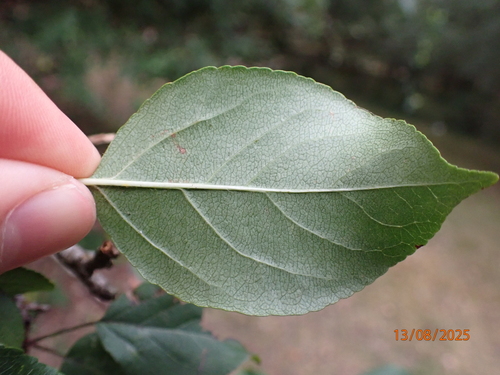
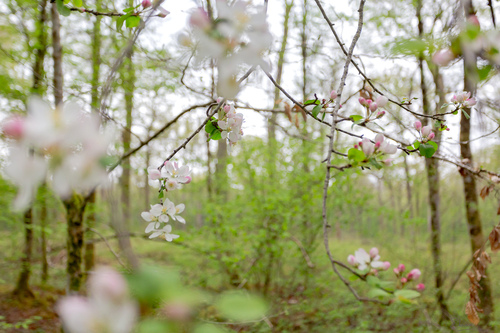
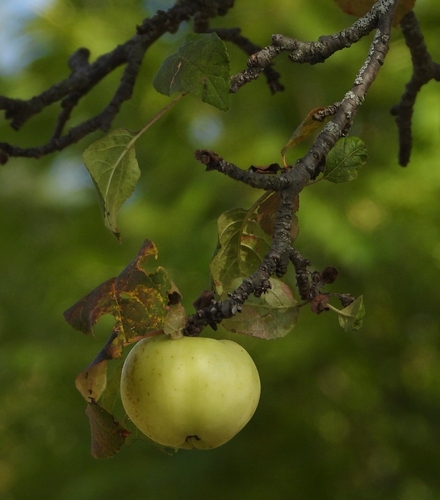
Malus sylvestris Mill.
Source: Wikipedia
Synonyms 39
- 184,777 GBIF occurrences
- 10,801 iNaturalist observations
Knowledge of the European subpopulation is available for the following countries:
- Belgium: Two subpopulations are documented from Flanders, comprising a total population of 50 individual trees. Subpopulations are known from other portions of the country; all but one of these is composed of fewer than eight individuals. (Koopman et al. 2006)./li
- Denmark: Comprehensive population figures are not available; however, the species occurs in several subpopulations numbering up to 400 individuals each (Larsen et al. 2006).
- Finland: infrequent.
- France: More common than in other portions of the species' range, but subject to skewed demographic structure. Age structure of studied populations overrepresents older individuals, suggesting a decline in recruitment rates (Schnitzler et al. 2014).
- Italy: not very common.
- Slovakia: stable.
- Germany: common but hybridized with cultivated plants.
- Netherlands: A survey of the population in the Netherlands conducted in 2006 documented 111 trees in subpopulations ranging in size from 6 to 34 individuals (Koopman et al. 2006).
Genetic evidence suggests that the entire population of the species in the Netherlands and Belgium comprises a single metapopulation (Koopman et al. 2006). However, significant variation was noted within this group, and efforts should be made to protect genetic diversity within small stands.
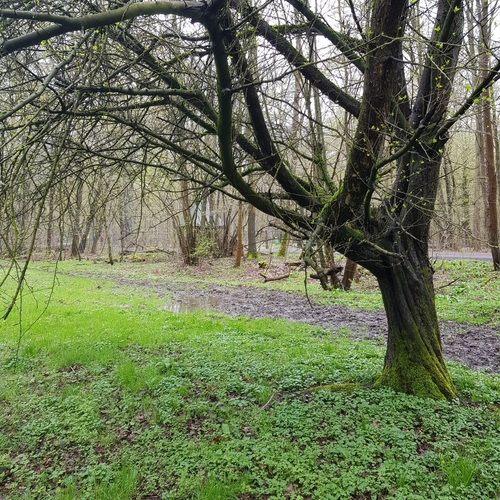
Crab Apples are short-statured trees reaching a height 4 to 10 (and occasionally up to 18 metres) (Walentowski et al. 2018). In Belgium, the species reaches a mean height of 10 m (Jacques et al. 2009).Estimates of the species' generation length vary considerably. Some estimates suggest the species has a generation length of 15-30 years (Koopman et al. 2006) while other authors list generation lengths as low as 7.5 years (Cornille et al. 2013a). Life history data for the species is not well understood in natural contexts but can be inferred from characteristics of the species' close relatives. In domesticated apples, prior to attempts to breed early fruiting, first flowering occurred around 10 years after germination (Koopman et al. 2006). Domesticated apple trees can live well in excess of 100 years (Coart et al. 2003), and under optimal conditions, Crab Apples may live for 80-100 years (Reim et al. 2012) with some individuals attaining ages up to 156 years (Schnitzler et al. 2014). Given the species' intolerance of late successional forests, wild specimens are unlikely to reach this age on a regular basis and a longevity of around 50 years can be assumed for a conservative estimate of generation length. From this demographic data, estimates of generation length can be calculated using an estimated z-value (a constant derived from estimations of relative fecundity and mortality of young and old individuals) of 0.5 to 0.75 and the formula age at first reproduction + [z * (length of reproductive period)]. An estimated generation length ranging from 30 to 40 years is obtained using this method. For the purposes of this assessment, the lower value of 30 years is assumed to be correct.In Finland, this species grows in rocky, herb-rich forests, waterfront thickets and forests and rich meadows—it favours limy soil (H. Korpelainen pers. comm. 2010). In the United Kingdom and Ireland it grows in hedgerows, scrub, copses, roadsides and also on rough ground (Preston et al. 2002), while in the Netherlands, it grows in forests and shrubwoods on humid and moderately fertile soils (Tamis et al. 2003). Danish occurrences are most common in seminatural grasslands and woodlands with a prehistory of grazing (Larsen et al. 2006). In Iberia, it grows from sea level to 1,800 m, in Germany the maximum altitude is 1,000 m, while in Norway, it is 550 m. Where the species grows in forest margins, it has to compete with taller forest species. In forest contexts, the species typically occupies the lower canopy (Ahl et al. 2021) with the caveat that upper canopies in preferred habitats are quite sparse (Walentowski et al. 2018).The species has no reproductive barriers with M. x domestica other than slight differences in flowering time (one to two weeks between peak flowering of both species in Denmark). Differences in flowering periods resulting from elevation, aspect, light levels, and variation down to the microhabitat level make these mean these differences contribute little to reproductive isolation between the species (Larsen et al. 2006, Larsen et al. 2008). Distinctions between preferred habitat of Crab Apple and M. x domestica hybrids are a crucial consideration to the conservation of the species. Subtle differences in habitat suitability may exclude hybrids and afford Crab Apples greater possibility of retaining genetic diversity. In Bavaria, where habitat suitability has been analyzed, hybrids show lower tolerance for soil inundation, low soil pH, and relatively shaded conditions (Ahl et al. 2021). Hybrids also appear to be less tolerant of shallow soils on calcareous substrates in high light environments (Walentowski et al. 2018). Existing stands with these conditions should be prioritized for conservation measures, and cultivation of domesticated apple varieties should be avoided in the immediate vicinity. To date, studies demonstrating the habitat partitioning of Crab Apples and hybrids have only been conducted in southern Germany. Further clarification is needed to determine if these trends are consistent across the species' range. Subtle differences have been observed between habitat preference across relatively short distances (Walentowski et al. 2018) and habitat preferences may require localized study.
The main threats to the species are hybridisation with M. x domestica, forest management practices (particularly as the species tends to grow in forest margins), and overall fragmentation of the population. Historically, clearance of suitable habitat for agricultural development (especially in areas cleared for fruit tree orchards, including apples), probably represented the greatest threat to the species. Modern forest management practices which impact the species include the abandonment of coppicing which has led to the proliferation of mature successional stages of forests which are incompatible with the species' light requirements (Buiteveld et al. 2021). Management of river systems has also contributed to habitat quality degradation for the species. Preferred floodplain habitats are characterised by numerous canopy gaps resulting from frequent tree falls. Management of river flows contributes to a reduction in suitable canopy gaps (Schnitzler et al. 2014). As the plants mainly occur as isolated individuals rather than as viable populations, they are susceptible to extirpation and total reproductive isolation. As an obligate outcrossing species, isolated small subpopulations become more susceptible to hybridisation, further exacerbating the threat posed by introgression.The level of genetic introgression in Crab Apple subpopulations is complicated by the use of variable thresholds for defining hybridisation, low power for distinction using molecular methods, and morphological similarity of M. sylvestris and M. x domestica, and the need to sample widely spaced small subpopulations across a very large range (Reim et al. 2020). Molecular methods are not an effective method for distinguishing Crab Apples from M. x domsestica in part due to the very high levels of genetic variation among M. x domestica (Micheletti et al. 2011). Analyses relying on morphological characteristics produce conflicting figures for the relative abundance of hybrid specimens relative to molecular techniques (Jacques et al. 2009, Kišek et al. 2021). This is in part due to the very high level of morphological variation in both Crab Apples and M. x domestica (Reim et al. 2012). Feral domesticated apples (which appear to account for 3-6% of the purported Crab Apple population) are often only distinguishable from Crab Apples via molecular methods as morphology is quite similar (Kišek et al. 2021).Several studies have analysed the level of introgression present in the species across various parts of its range. Due to variable methodology and differing cutoffs for what constitutes a hybrid, these numbers may not be directly comparable, but they give an indication of the relative level of introgression across different regions. French subpopulations in the Rhine Valley show the lowest level of introgression of the studied areas. Just 5% of sampled trees display indications of hybridisation in molecular analyses (Schnitzler et al. 2014). In the Turku Archipelago of Finland, hybrids make up a very small part of the overall population, but isolation of very small subpopulations has resulted in relatively low levels of genetic diversity (Bitz et al. 2019). 11% of wild sampled Crab Apples in Denmark displayed molecular evidence of hybridisation (Larsen et al. 2006). Analysis of linkage disequilibrium in the Netherlands and Belgium suggests that 17% of Crab Apples are putative hybrids (Koopman et al. 2006). Morphological studies of Belgian subpopulations suggest the proportion of hybrids may be as high as 35%, though this includes many trees at the margins of agricultural production areas, which may not be representative of natural contexts (Jacques et al. 2009). British, Scottish, and Slovenian subpopulations appear to be composed of nearly 30% hybrids or feral domesticates based on morphological and molecular evidence (Kišek et al. 2021, Ruhsam et al. 2019). At the upper end of estimates of admixture, molecular data suggest subpopulations in the eastern Ore Mountains of Germany are composed of 41% hybrids and feral cultivars (Reim et al. 2013).A larger sample spanning much of Europe suggests 11% of Crab Apples show molecular evidence of hybridisation (Coart et al. 2006, Denoirjean et al. 2021). The precise level of admixture in the wild population of Crab Apples remains uncertain range-wide, but is likely to fall in the range of 10-20% based on several studies (Gross et al. 2012).Molecular studies using both chloroplast and nuclear DNA samples have shown very low power to discriminate between Malus species, especially M. sylvestris, M. sieversii, and M. x domestica (Cornille et al. 2019) because many haplotypes are not specific to either wild Crab Apple or cultivated hybrid varieties (Reim et al. 2020). Analysis of chloroplast haplotypes suggests a closer relationship between wild Crab Apples and M. x domestica (Coart et al. 2006). Analysis of molecular data should be paired with morphological analyses to avoid reliance solely on either method (Larsen et al. 2006).The level of risk posed by genetic introgression remains unclear and requires attention to the relative timing of hybridisation events. Ancient DNA samples suggest that apple cultivars recovered from archaeological contexts dating to the Neolithic, late Roman period, and Middle Ages, and geographically spread from England to Estonia and south to the Alpine Foreland share sequences with both M. sieversii and M. sylvestris (Cornille et al. 2019). These findings demonstrate that wild-to-crop genetic exchange has been occurring since the Bronze Age across wide swathes of the species' habitat. Crop-to-wild genetic exchange is therefore likely to have occurred for several thousand years, though to a degree which is probably lower than would occur under modern conditions, where commercially farmed apples vastly outnumber Crab Apples. Such conditions are associated with increased rates of introgressions, and decreased pollinator diversity, which contributes to the flow of genes from crops to wild populations (Cornille et al. 2015). Relatively low historical rates of introgression are supported by the distinct clustering of M. x domestica and Crab Apples using molecular methods (Larsen et al. 2006).The timing and degree of introgression events remain uncertain, with conflicting molecular evidence arising in different areas. In some regions, genetic evidence suggests introgression is the outcome of historic interactions. Molecular signatures of introgression events in the Netherlands, for example, are somewhat ambiguous and may be the result of natural genetic diversity within the wild population (e.g. variation in the natural population that can be erroneously attributed to introgression), or very old introgression events with low levels of modern contribution (Buiteveld et al. 2021). Commercial apple cultivation peaked in the Netherlands in the 1950s and has since declined, though it remains an important industry in much of the region (Buiteveld et al. 2021). Other studies have concluded that signatures of introgression are more consistent with modern admixture. The absence of genetic evidence for historical hybridisation events in these regions suggests that hybrids may not persist for long periods in wild populations, possibly as a result of habitat partitioning. This mechanism has been proposed to explain the relatively low levels of hybridisation within large, healthy subpopulations in France (Schnitzler et al. 2014). Molecular evidence within Crab Apple occurrences in Saxony, Germany, indicates relatively recent, low levels of genetic introgression at the individual level, and maintenance of high genetic diversity among isolated Crab Apple subpopulations (Reim et al. 2020). At other sites in this region where apple cultivation does not have a long history, some of the highest levels of introgression yet reported were observed, yet the true type individuals maintain high levels of diversity (Reim et al. 2013). This unexpectedly high level of genetic diversity could be attributed to the high capacity for long-distance dispersal afforded to long-lived fruit-producing trees, but this capacity for long-distance genetic exchange enhances the possibility of further hybridisation. Direct studies of the fitness differences between pure stocks of Crab Apples and hybrids are few in number, but those that have been conducted suggest increasing levels of M. x domestica ancestry is correlated with slightly increased germination rates, faster early growth rates, and an overall increase in fitness during early life stages (Feurtey et al. 2017). Outbreeding depression, which impacts older trees, may be responsible for the clustering of M. x domestica and Crab Apples in molecular studies (Larsen et al. 2006). Additional studies of the fitness of hybrids later in life and the relative fitness levels in different habitats are needed to clarify these apparent discrepancies.Though the threat posed by introgression is thought to be greatest in areas near commercially cultivated orchards (where total population of domesticates greatly exceeds that of Crab Apples) (Ruhsam et al. 2019), some instances of hybrid introduction have been observed in areas isolated from commercial production indicating that hybridization events stemming from horticultural apple trees may contribute significantly to the threat posed to wild Crab Apples (Buiteveld et al. 2021). Domesticated apple seeds are likely to be dispersed through transport by birds, lagomorphs, and especially large herbivores, including domestic cattle (Buttenschøn and Buttenschøn 1998). Detailed analysis of the pollen dispersal curve of pollination events between Crab Apples and M. x domestica demonstrates that while most pollination events occur across short distances, 5% of pollination events occur across distances greater than one kilometre (Feurtey et al. 2017). Maximum dispersal distances of up to 11 kilometres have been reported (Reim et al. 2015). Conversely, where tree density is relatively high, more than half of pollen transfer occurs within a distance of 23 metres, and average distances are as low as 60 metres (Larsen and Kjær 2009). Variation in dispersal distances has been attributed to the density of stands and spatial scale analysed (Feurtey et al. 2017).Introgression events displayed across the species' range are consistent with the pattern of type 5 hybridisation (widespread anthropogenic introgression) (Allendorf et al. 2001), which may be exacerbated by habitat conditions, and population structure. Several recent studies examining the impact of introgression on Crab Apple populations have noted the fragmentation and low subpopulation sizes are likely to have greater impact on the extinction risk to the species than hybridization events from domesticates in the vicinity (Bitz et al. 2019, Buiteveld et al. 2021, Reim et al. 2020). Fragmentation is also likely to increase both the rate and impact of introgression events. While the species is capable of long distance dispersal through pollen movement or seed transport, fragmentation of suitable habitat is likely to accelerate the pace of hybridization and result in greater genetic introgression through increased proximity to domesticated varieties relative to Crab Apples (Jenczewski et al. 2003), and through increased pollen dispersal distances which scale inversely with population size (Feurtey et al. 2017).
Assessments of the national threat/conservation status of Crab Apples are available for the following European countries:
- Czechia: Endangered (Pladias 2022).
- Denmark: Least Concern (Moeslund et al. 2023).
- Estonia: Near Threatened (Leht 2017).
- Finland: Vulnerable (LAJI.FI 2021).
- France: Least Concern (UICN France et al. 2018).
- Germany: Vorwarnliste (Warning List) (Bundesamt für Naturschutz 2022).
- Ireland: Least Concern (Wyse Jackson et al. 2016).
- Netherlands: Least Concern (C. Kik pers. comm. 2010).
- Norway: Vulnerable (Solstad et al. 2021).
- Spain: Not Evaluated (Protected in Castilla-La Mancha, and Madrid; listed as Data Deficient in Andalusia; Anthos 2022).
- Sweden: Least Concern (SLU ArtDatabanken 2022).
Monitoring and management of this species should be incorporated into the existing management plans of the protected areas in which the species occurs.EURISCO reports 52 germplasm accessions of Crab Apples held in European genebanks, only one of which is reported to be of wild or weedy origin and does not originate from within Europe (EURISCO Catalogue 2010). Germplasm collection and duplicated ex situ storage is a priority for this species (Reim et al. 2020). Collection and maintenance of ex situ collections can be a productive source of seed stock for remediation projects, but must be conducted along maternal lines and in conjunction with genetic analyses to ensure maintenance of sufficient diversity in the wild population (Kišek et al. 2021). Such collections are well developed for France, the Netherlands and Belgium and should be expanded elsewhere within the species' range (Buiteveld et al. 2021, Feurtey et al. 2017) with particular focus on southern France, Italy, the Balkans, and the Carpathian Mountains, glacial refugia which today maintain the greatest levels of genetic diversity within the species' range (Cornille et al. 2013b, Cornille et al. 2015). Commercially available seed stock, which has been analysed, is of mixed ancestry and should be avoided in remediation projects (Feurtey et al. 2017).Analysis of the level of hybridisation in existing subpopulations is needed to better determine the degree of regional differences in the magnitude of threat presented by hybridisation. Unfortunately, the morphological similarity of Crab Apples and hybrids is slight and often not diagnostic. Additional genetic studies are needed across the species' range, including basic sampling across the species' range (Cornille et al. 2019).Additional research is needed to determine the effect of hybridisation with M. domestica on the genetic diversity of Crab Apples, with a particular emphasis on the degree of ecological exclusion of hybrids in different environments. Identification of environmental conditions which strongly favour Crab Apples over hybrids with their domesticated counterparts is crucial for developing conservation strategies and management plans in protected areas (Ahl et al. 2021).Reintroduction and remediation efforts should focus on maintenance of sufficiently dense occurrences with high populations of non-introgressed individuals. As there are no pre- or post-zygotic reproductive barriers between Crab Apples and M. x domestica (Larsen et al. 2008), maintenance of high population density is crucial to minimise pollen dispersal distances. A minimum patch size of 100 ha has been proposed for maintenance of a sufficiently large population (Schnitzler et al. 2014). Various distances for buffer regions have been proposed between Crab Apple patches and commercial apple production. A value of 500 metres appears to be sufficient, provided that Crab Apple subpopulations are relatively large (Reim et al. 2015). Attention should also be paid to grazing in areas of conservation management. Large herbivores play a critical role in the dispersal of Crab Apple seeds, and light grazing may increase germination rates (Buttenschøn and Buttenschøn 1998).
Global and European regional assessment: Data Deficient (DD)EU 27 regional assessment: Data Deficient (DD)The Crab Apple (Malus sylvestris) is native-endemic to Europe, where it is widely distributed from Portugal to Russia and from Scandinavia south to Italy and European Türkiye. However, it occurs only in small, isolated subpopulations throughout this range. It thrives in disturbed habitats, including riparian areas and coppiced forests. Threats to the species include the loss of disturbed habitats and introgression of genes from domesticated apples (Malus x domestica). Though considerable research has been conducted to determine the threats to the species, estimation of the rate of introgression is complex and difficult to quantify. In the absence of data on the rate of introgression across the species' range, it is regionally assessed as Data Deficient both globally and for the EU27 Member States.
Gallery