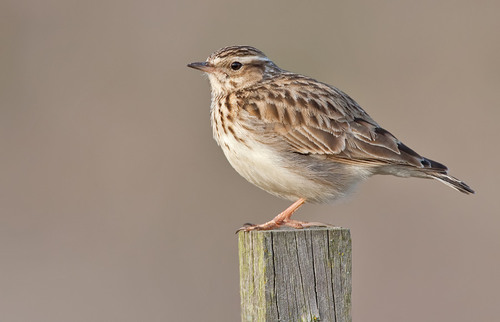
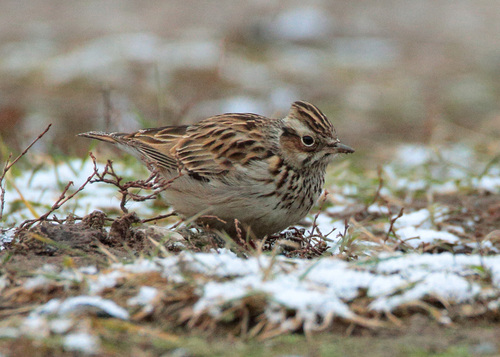
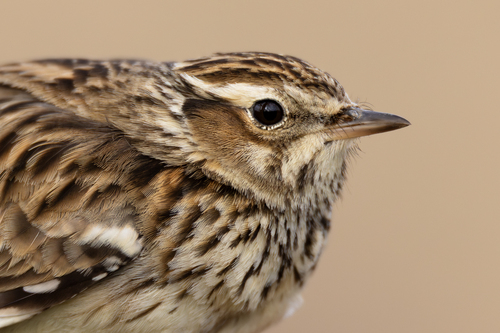
Lullula arborea (Linnaeus, 1758)
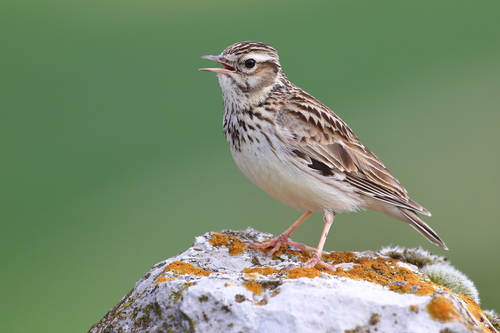
Source: Wikipedia
Synonyms 2
- 931,678 GBIF occurrences
- 9,771 iNaturalist observations
In Europe, the total population size is estimated at 4,290,000-9,130,000 mature individuals, with 2,140,000-4,570,000 breeding pairs (BirdLife International 2021), and comprises approximately 90% of the species' global range, so a very preliminary estimate of the global population size is between 4,770,000-10,100,000 mature individuals, although further validation of this estimate is desirable. The species' population in Europe is considered to have remained relatively stable over three generations (10 years) (BirdLife International 2021). As this region holds the vast majority of the species' global range, the global population size is considered to be stable over three generations.
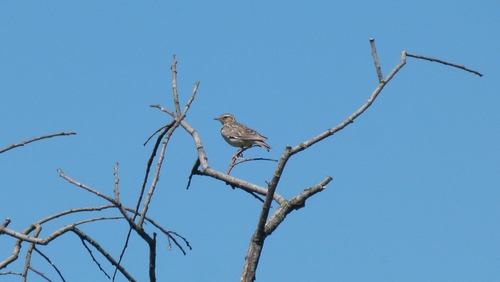
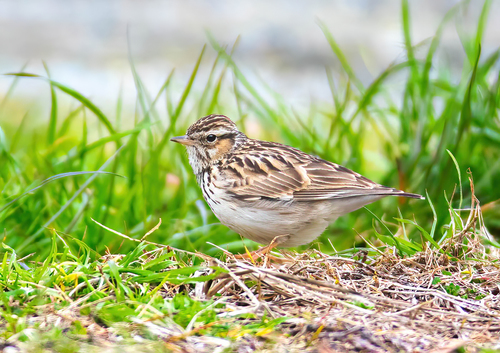
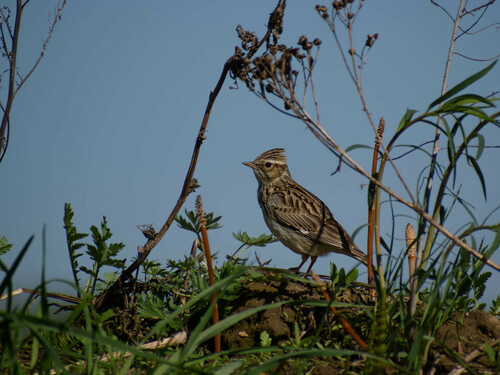
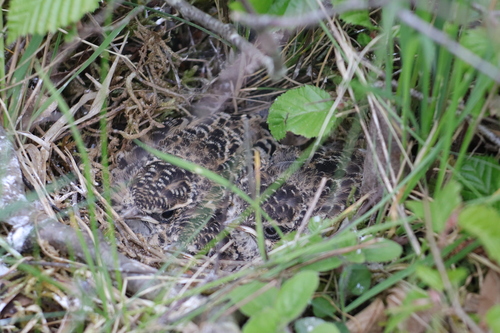
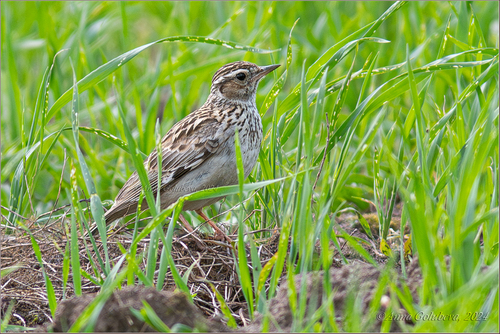
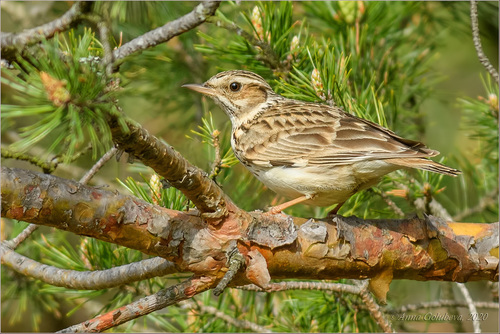
This species inhabits a variety of open and semi-open habitats on well-drained soils, with a preference for acidic, sandy soils. It favours unmanaged or poorly managed habitats such as low-intensity or abandoned farmland, heathland, young forestry plantations, recently felled woodland, open woodland and scrub, orchards, steppes, woodland edges and clearings, wooded coastal dunes and parkland. It is monogamous and breeds from March to July. The nest is a deep depression in the ground, usually sheltered by a bush or tree stump and lined with leaves, pine needles and moss beneath a top layer of finer grasses. Clutches are typically three to five eggs (Donald 2004). The species is migratory in the north of its breeding range and in central Europe and southern Russia. In western Europe and in the Mediterranean Basin it is resident (Snow and Perrins 1998). It is a partial migrant in central Europe and migratory in the north and east (Donald 2004).
The main threat to this species is habitat loss and degradation. In central and southern Europe dry grassland, traditional vineyards and orchards and pastoral woodland is disappearing to intensive arable agriculture and fallow land and abandoned pasture are being lost to invasion by tall grasses and scrub. Afforestation is also a threat. In northern Europe habitat is being lost to agricultural intensification and afforestation (Tucker and Heath 1994). Winter weather can also cause fluctuations in population numbers (Donald 2004).
Conservation Actions UnderwayEU Birds Directive Annex I. This species has benefited from increases in the young coniferous forestry plantations and the creation of further suitable habitat in storm-felled mature woodland (Donald 2004). Targeted conservation action in the UK led to the species being down listed from ‘red’ to ‘amber’ on the national red list in 2009 (Eaton et al. 2009) and in the 2015 update the species was listed as 'green' (Eaton et al. 2015).Conservation Actions ProposedThe species requires the maintenance of extensive areas of habitat throughout Europe. For this the continuation and promotion of low-intensity pastoral farming is needed. In northwest Europe preferred habitats such as dunes and heath should continue to be protected. Young plantations should be managed for this species (Tucker and Heath 1994).
This species has an extremely large range and the population size is extremely large, hence does not approach threatened thresholds for the range or population size criteria. The population trend appears to be stable, and hence the species does not approach the thresholds for Vulnerable under the population trend criterion. For these reasons the species is evaluated as Least Concern.
Gallery