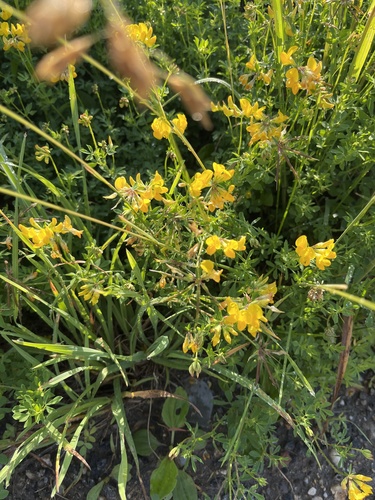
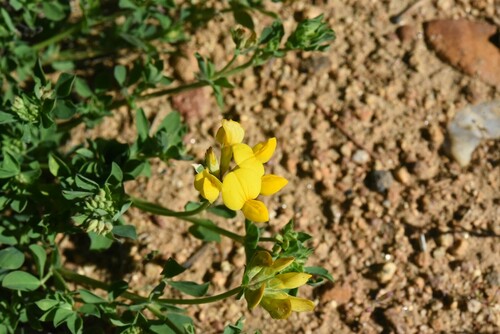
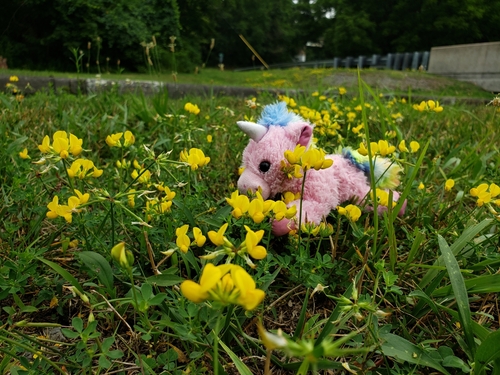
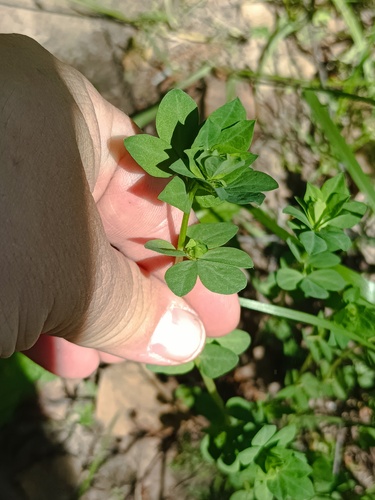
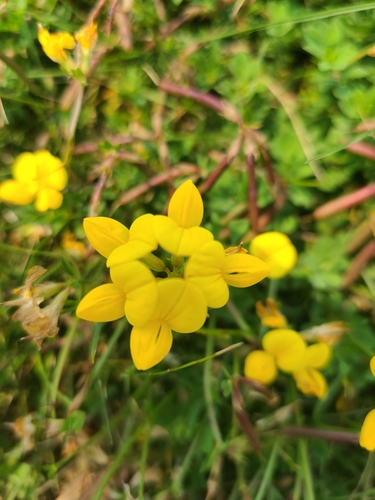
Lotus corniculatus L.

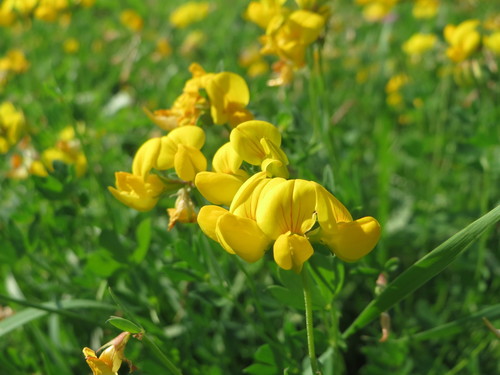
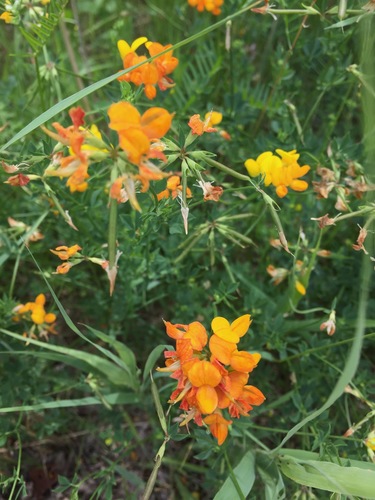
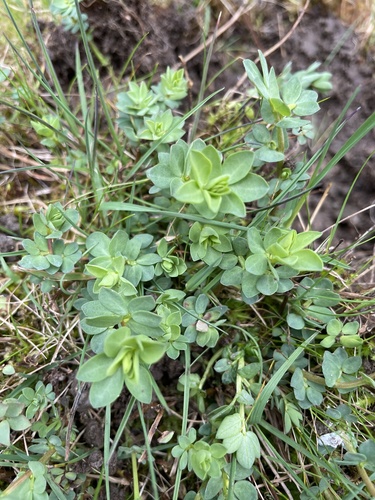
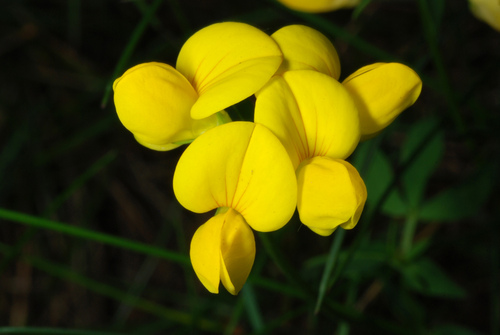
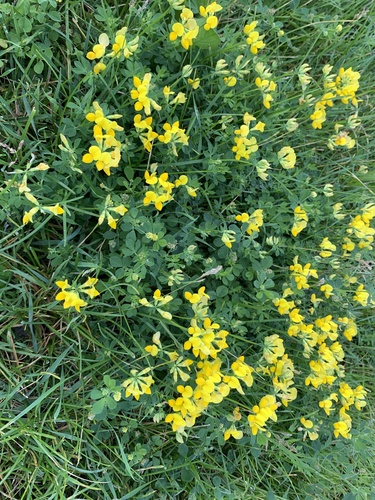
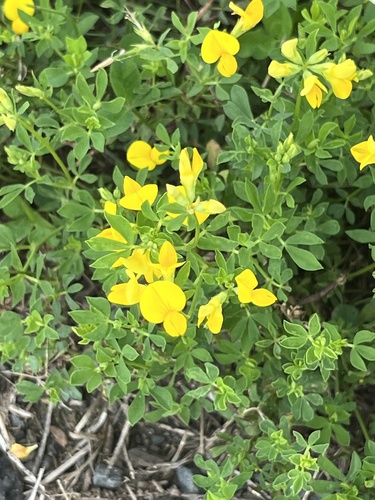
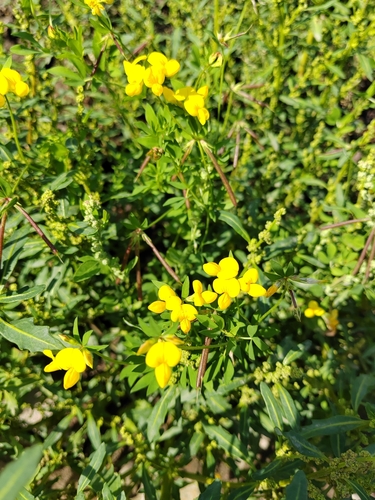
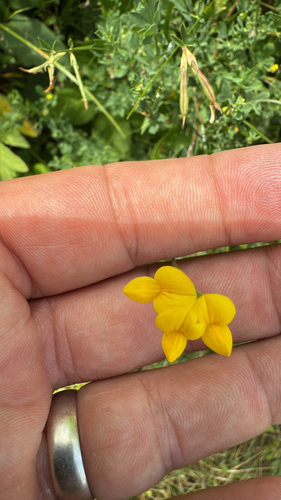
Lotus corniculatus is a flowering plant in the pea family Fabaceae. Common names include common bird's-foot trefoil, eggs and bacon, birdsfoot deervetch, and just bird's-foot trefoil. It has a wide distribution and is a favored forage for livestock.

Source: Wikipedia

Synonyms 49
Lotus alpicola, Lotus ambiguus, Lotus arvensis, Lotus balticus, Lotus barcinonensis, Lotus bracteatus, Lotus callunetorum, Lotus catalaunicus, Lotus caucasicus, Lotus colocensis, Lotus delortii, Lotus depressus, Lotus dvinensis, Lotus forsteri, Lotus gibbus, Lotus haeupleri, Lotus humifusus, Lotus juzepczukii, Lotus kabylicus, Lotus komarovii, Lotus norvegicus, Lotus olgae, Lotus orphanidis, Lotus pentaphyllos, Lotus preslii, Lotus riparius, Lotus rostellatus, Lotus ruprechtii, Lotus sativus, Lotus stenodon, Lotus suberectus, Lotus symmetricus, Lotus tauricus, Lotus tchihatchewii, Lotus versicolor, Lotus zhegulensis, Mullaghera communis, Lotus corniculatus subsp. ambiguus, Lotus corniculatus subsp. callunetorum, Lotus corniculatus subsp. crassifolius, Lotus corniculatus subsp. eu-corniculatus, Lotus corniculatus subsp. kabylicus, Lotus corniculatus subsp. komarovii, Lotus corniculatus subsp. latifolius, Lotus corniculatus subsp. minor, Lotus corniculatus subsp. ruprechtii, Lotus corniculatus subsp. slovacus, Lotus catalaunicus var. grandifolius, Lotus corniculatus var. alandicus
  • 1,277,560 GBIF occurrences
  • 158,388 iNaturalist observations
Conservation status code
LC
Conservation: status label
Least Concern
Conservation: population trend
Stable
Conservation: year assessed
2011
Habitats
IUCN: population narrative

This species is common and widespread throughout its range and its population appears to be stable. In the UK, according to Preston et al. (2002), this species’ distribution is stable.

IUCN: habitat narrative

In the UK it occurs on grasslands, such as well-drained meadows, chalk and limestone downs, hill pastures, montane rock ledges and coastal cliff tops, shingle and sand dunes (Preston et al. 2002). It is only unable to grow on the most acidic and infertile soils (Preston et al. 2002).

IUCN: threats narrative

This is a common species and there appears to be no major threats. It is found several habitats which are not threatened within its region.

IUCN: conservation narrative

This species is classified as Least Concern (LC) in Denmark (Den Danske Rødliste 2010). EURISCO reports 1,163 germplasm accessions held in European genebanks, 297 of which are reported to be of wild or weedy origin. Of the wild accessions, 213 originate from within Europe (EURISCO Catalogue 2010).

IUCN: rationale

European regional assessment: Least Concern (LC)EU 27 regional assessment: Least Concern (LC)Lotus corniculatus is a common, widespread species and there appears to be no major threats. It is found in several habitats which are not threatened within its region, populations appear to be stable therefore, therefore it is assessed as Least Concern.