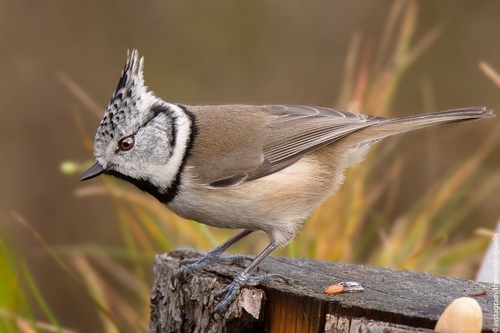
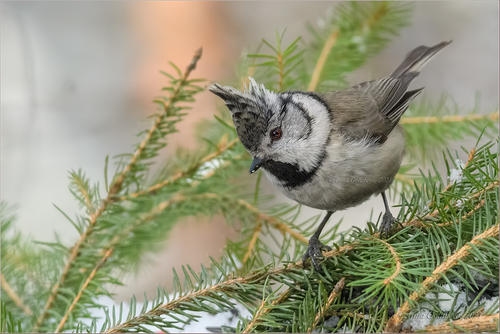
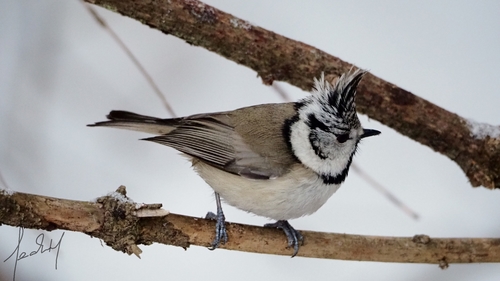
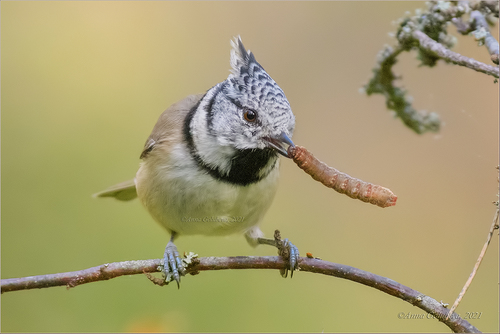
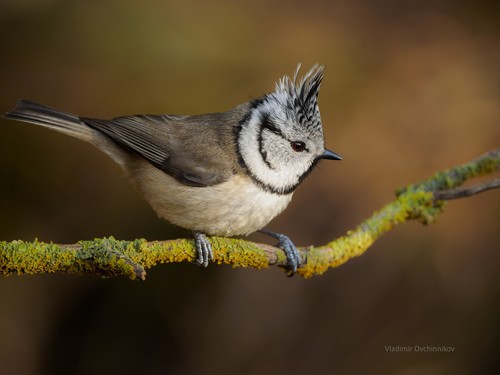
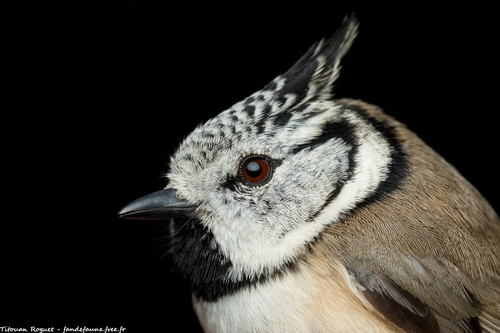
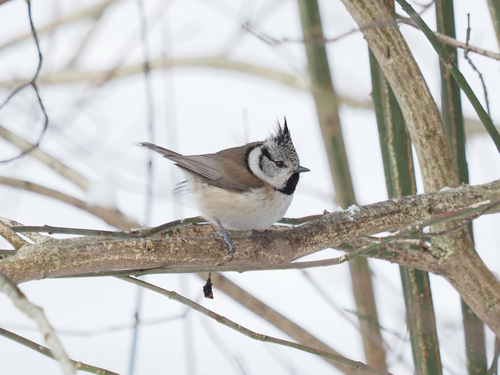
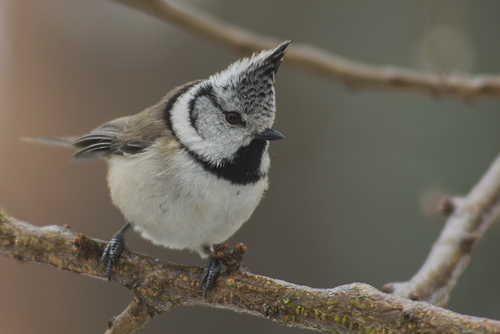
Lophophanes cristatus (Linnaeus, 1758)
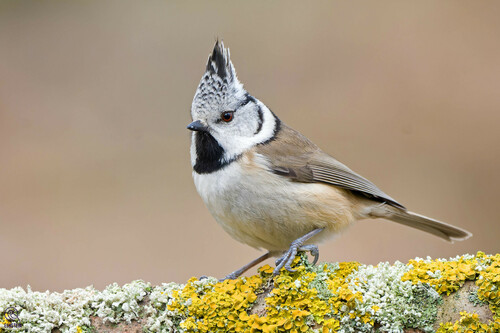
Source: Wikipedia
Synonyms 14
- 1,312,427 GBIF occurrences
- 17,582 iNaturalist observations
In Europe, the total population size is estimated at 9,230,000-16,500,000 mature individuals, with 4,610,000-8,220,000 breeding pairs (BirdLife International 2021), and comprises approximately 95% of the species' global range, so a very preliminary estimate of the global population size is between 9,700,000-17,400,000 mature individuals, although further validation of this estimate is desirable. The species' population in Europe is considered to have remained relatively stable over three generations (10 years) (BirdLife International 2021). As this region holds the vast majority of the species' global range, the global population size is considered to be stable over three generations. This species is considered to have a medium dependency on forest habitat, which is estimated to be declining at a slow rate within its mapped range (Global Forest Watch 2024).
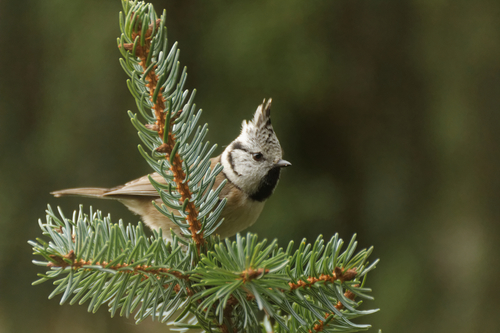
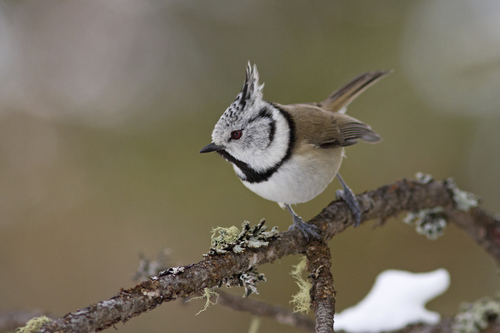
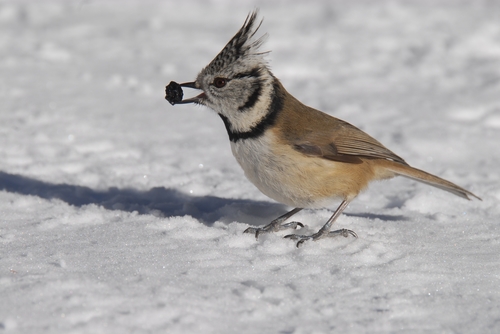
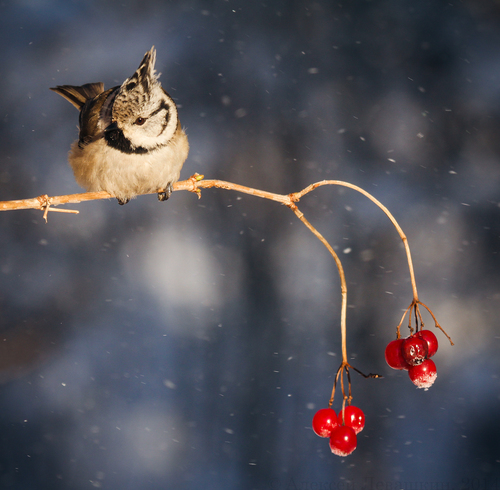
This species breeds predominately in coniferous woods. In Fennoscandia and western and central Europe it is found in forests of Scots Pine (Pinus sylvestris) or Norway Spruce (Picea abies). In southern Europe it uses mixed-conifer montane forests (Hagemeijer and Blair 1997). It breeds from March to June and is monogamous, forming a lifelong pair bond. The nest is a cup of moss, lichens, animal hair, wool, feathers and gossamer, in a hole in a dead or decaying tree trunk, branch or stump, occasionally in a living tree. Occasionally uses a hole in a fence post or in the ground and nestboxes are also regularly used. It usually lays five to eleven eggs. It feeds mainly on small invertebrates and their larvae and outside the breeding season it will also consume seeds and some fruits. The species is mostly resident but is nomadic in the winter (Gosler and Clement 2007).
Populations of this species fluctuate in response to severe winter weather. The modernization of forestry practices has resulted in declines in Sweden and Czech Republic. In Scotland it suffered during 18th century from the destruction of its native Caledonian pine forest (Gosler and Clement 2007). In central Europe, atmospheric pollution has also led to declines in this species (Hagemeijer and Blair 1997, Gosler and Clement 2007).
Conservation Actions UnderwayBern Convention Appendix II. There are currently no known conservation measures for this species within Europe.Conservation Actions ProposedThe species would benefit from a reduction in industrial permissions. Management practices for forestry should be encouraged to leave dead or dying trees. In addition, the erection of nest boxes in plantations may be beneficial to this species (Maı́cas and Haeger 2004).
This species has an extremely large range and the population size is extremely large, hence does not approach threatened thresholds for the range or population size criteria. The population trend appears to be stable, and hence the species does not approach the thresholds for Vulnerable under the population trend criterion. For these reasons the species is evaluated as Least Concern.
Gallery