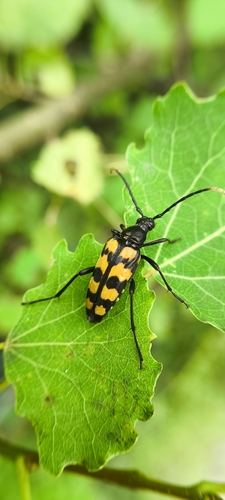
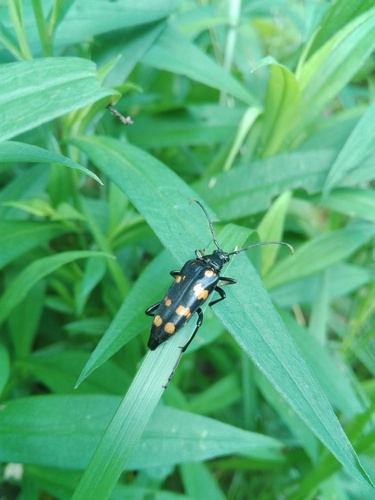
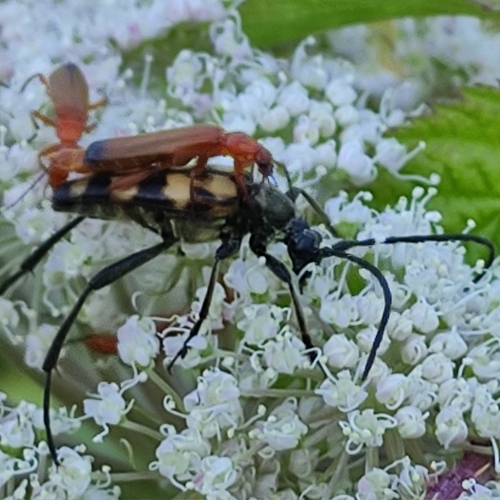
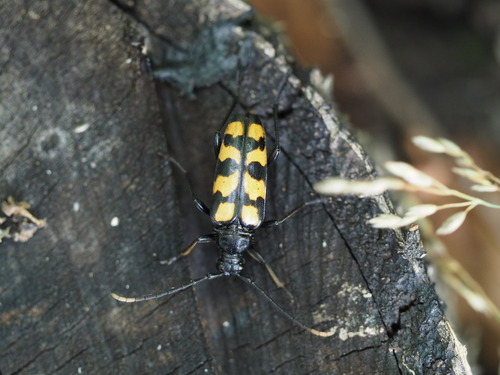
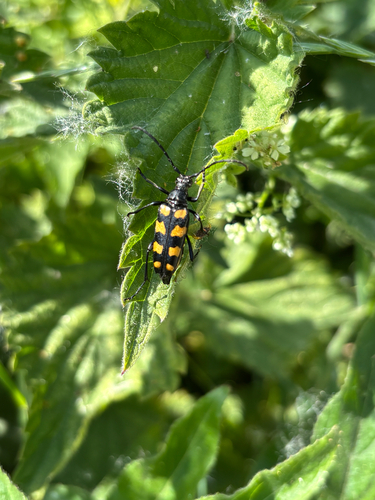
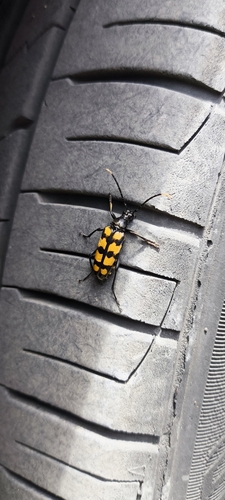
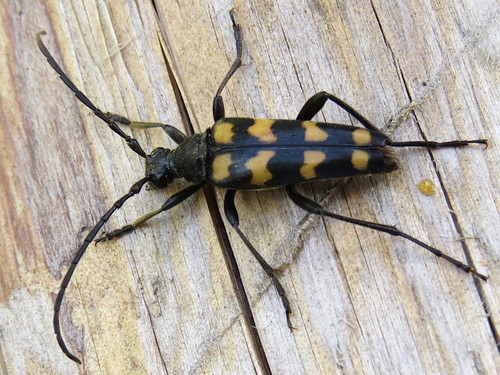
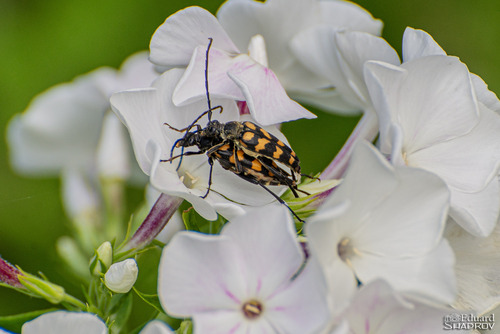
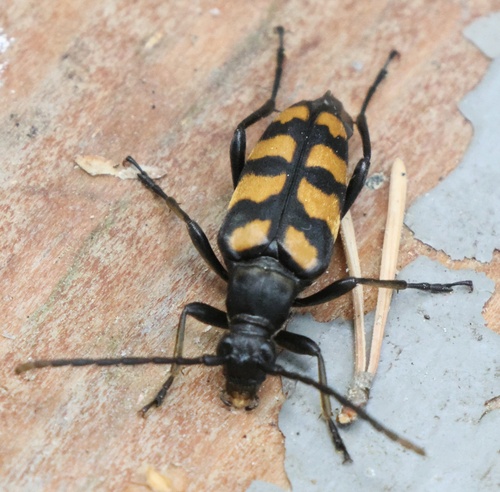
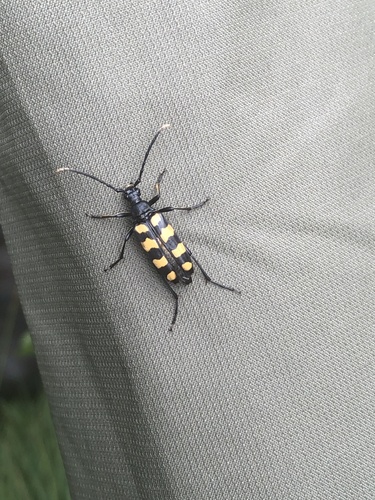
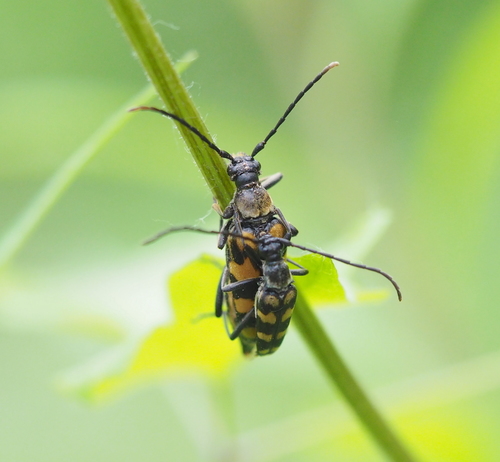
Leptura quadrifasciata Linné, 1758
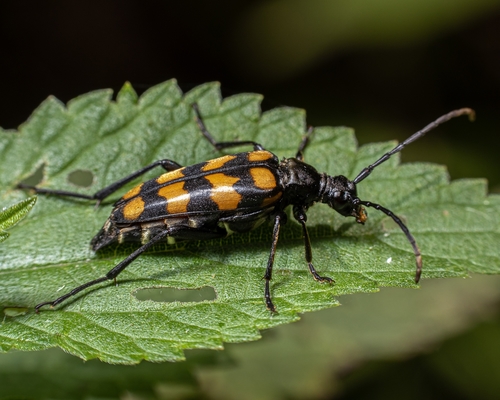
Source: Wikipedia
Synonyms 15
- 51,458 GBIF occurrences
- 12,408 iNaturalist observations
A majority of authors consider this species as uncommon and more or less localised. It is regularly observed and thereafter the population trend is considered stable.
This species is found in humid forests of broadleaf trees. After Alexander (2002) it develops in dead and decaying stumps, especially Betula, but also a wide range of other broadleaf trees: Populus, Salix, Alnus, Betula, Fagus, Quercus, Corylus (Bense 1995) (once reported from Picea). Larvae make meandering galleries deep in the sapwood. Wood dimensions utilised are down to 15 cm diameter, wet or dry, but dry dead wood is needed for pupation. The life cycle takes at least three years with pupation in the wood (Švácha and Danilevsky 1989). Adults visit flowers from June to August.
This species is widely distributed in Europe but is considered uncommon everywhere. It needs coarse woody debris of broadleaf trees and moist conditions. It is threatened by forestry activities, especially when the forest is cleared and the exploitation remnants are burned. Firewood extraction is also problematic for this species. In agricultural landscapes, the old host trees are vulnerable to both felling, due to tidiness, and collapsing through neglect, as well as not being replaced with new plantings.
This species is cited from the Bialowieza forest (Poland and Belarus) (Gutowski and Jaroszewicz 2001). B. Dodelin (pers. comm. 2016) found it in two strict Nature Reserves of the French Alps. In the UK it is known from Shapwick Heath National Nature Reserve in the Somerset Levels, the New Forest National Park, and many other protected sites (K.N.A. Alexander, pers. comm. 2016). The threats against this species are poorly known and further research is needed.
European regional assessment: Least Concern (LC)EU 28 regional assessment: Least Concern (LC)Leptura quadrifasciata is widely distributed from Europe to Japan. In Europe, this species is assessed as Least Concern since it is widespread, has a wide range of host trees and the population trend is considered to be stable. It is uncommon and localised everywhere but more frequent in the north. It needs coarse woody debris of various broadleaf trees and moist habitats.
Gallery