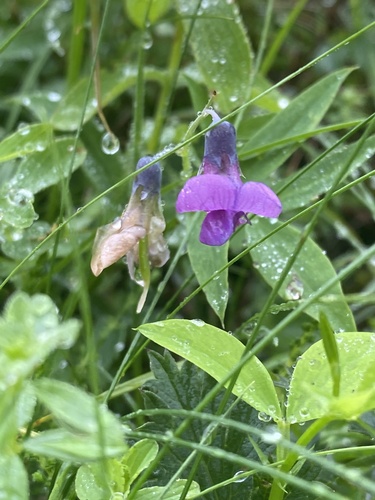
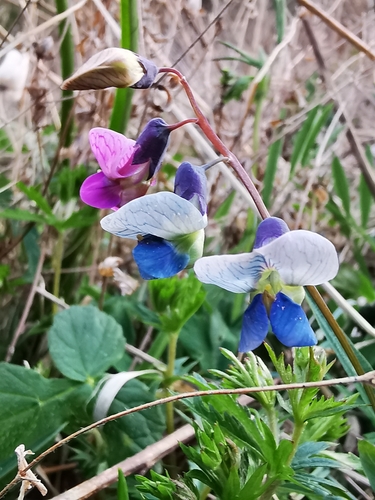
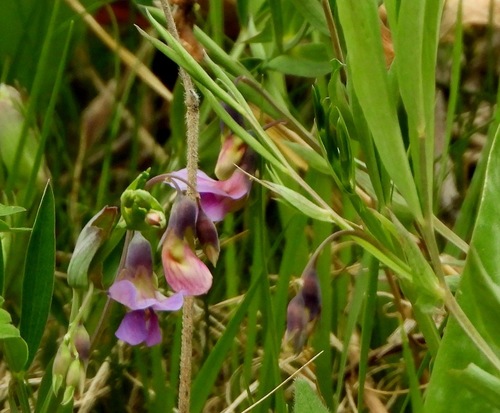
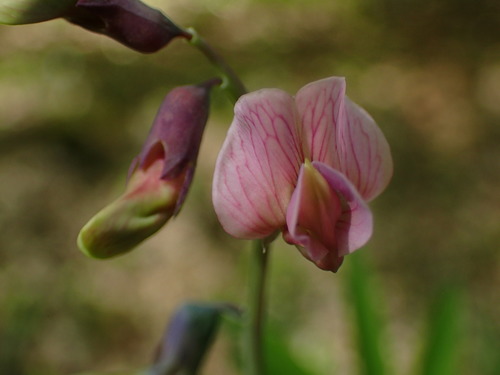
Lathyrus linifolius (Reichard) Bässler
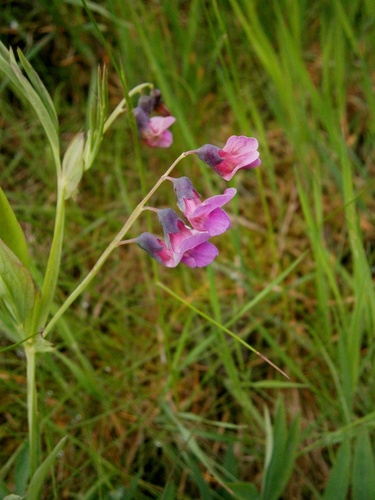
Source: Wikipedia
Synonyms 48
- 300,642 GBIF occurrences
- 7,938 iNaturalist observations
No population data is available for this species. However, many geographical data points were included in the calculation of the extent of occurrence and area of occupancy. Assuming that each of these refers to an individual plant, the species has an extremely large population.
The species occupies forests in the Mediterranean area (Shehadeh et al. in prep).
There is no information available on threats for this taxon.
The genus Lathyrus is listed in Annex I of the International Treaty on Plant Genetic Resources for Food and Agriculture as part of the Grass Pea gene pool.The species is fairly poorly represented in genebanks. Genesys report 16 accessions, of which seven are of wild origin. These accessions of wild origin are all from within the native distribution, all are backed up at a second institution, but none are duplicated and conserved in the Svalbard Seed Vault (Genesys Global Portal on Plant Genetic Resources 2017).According to the Botanic Gardens Conservation International (BGCI 2017), this species has living collections in 24 botanic gardens worldwide, as well as seven of the variety montanus, a synonym of L. linifolius. So in total the species has 31 living collections in botanic gardens, although the origin and locality of the collections are not detailed in this resource (garden locations are undisclosed to protect rare and valuable plant species).The species is likely to be passively conserved in situ in many existing protected areas throughout its range but as its sub-populations in these sites are not actively monitored they may be affected over time from factors such as climate change.The species has previously been assessed at both the global and regional levels. At the global level, an assessment found the species was not threatened (ILDIS 2010). Regional assessments in Luxembourg (Colling 2005) and Switzerland classified the species as Least Concern (Moser et al. 2002, OFEV 2016), in Hungary the species was listed as Near Threatened (Király 2007), in Czech Republic it was found to be Vulnerable (Grulich 2012), and in Bulgaria it was assessed as Endangered (Petrova and Vladimirov 2009, Bulgarian Academy of Sciences and Ministry of Environment and Water 2011).
The population of Lathyrus linifolius is distributed over a large geographic range, throughout Europe and in parts of north Africa and occupying a large area within this range. Due to its extensive range and large population, the species is assessed as Least Concern.
Gallery