
Lasioglossum rufitarse (Zetterstedt, 1838)
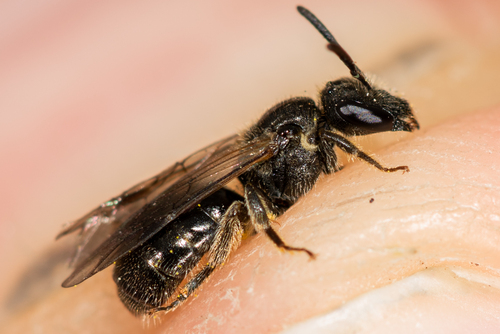
Source: Wikipedia
Synonyms 4
- 11,937 GBIF occurrences
- 12 iNaturalist observations
The species is common in northern and central Europe.
A boreo-alpine species found in alpine meadows, wooded areas in the mountains, woodland edges and clearings, and upland moorlands (Westrich 1989). In Charnwood Forest, UK, Spooner (1946) observed the species nesting in all sorts of earth exposures, including the soil attached to the roots of fallen trees. Gardner (1901) states that in Lancashire and Cheshire the nesting burrows are excavated gregariously, generally in banks at the sides of ditches. In Warwickshire, Morice (1889) also noted the species nesting in the side of a ditch. It is considered to be a solitary species (Knerer and Schwarz 1976). Lasioglossum rufitarse is a polylectic species, in that it prefers to forage upon a wide range of flowering plants species, ;and in Germany, pollen records are from the following species: Hieracium pilosella (Asteraceae); Vaccnium myrtillus, Vaccinium vitis-idaea (Ericaceae); Ranunculus acris (Ranunculaceae) and Rubus fruticosus (Rosaceae)(Westrich 1989). Ebmer (1971) additionally lists Solidago (Asteraceae). It is a univoltine species (it has one generation per year) with an extended flight period. The females fly from early April (later in the mountains of central Europe) to the beginning of October, and the males from mid-July to at least late August.
There are no major threats to the species at a continental scale.
This species is listed in the National Red List or Red Data Book of Ireland (Vulnerable; Fitzpatrick et al. 2006), Estonia (Least Concern; Soon 2020), the Netherlands (Least Concern; Reemer 2018) and Belgium (Near Threatened; Drossart et al. 2019). It occurs within protected areas. Further research should be conducted to determine the ecology of the species.
European regional assessment: Least Concern (LC)EU 27 regional assessment: Least Concern (LC)Listed as Least Concern as the species is widespread, the populations are large and stable in northern and central Europe, and there are no major threats to the species at a continental scale.