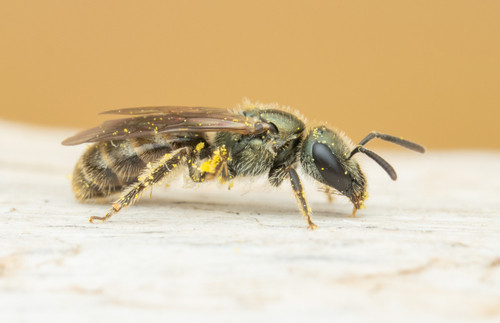
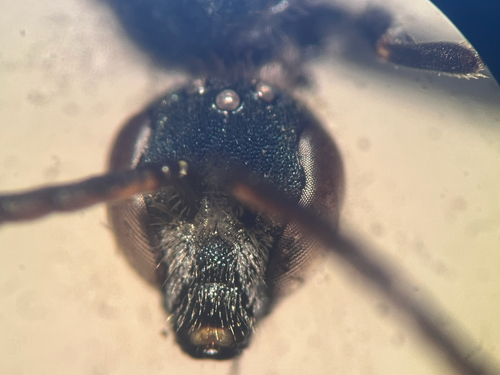
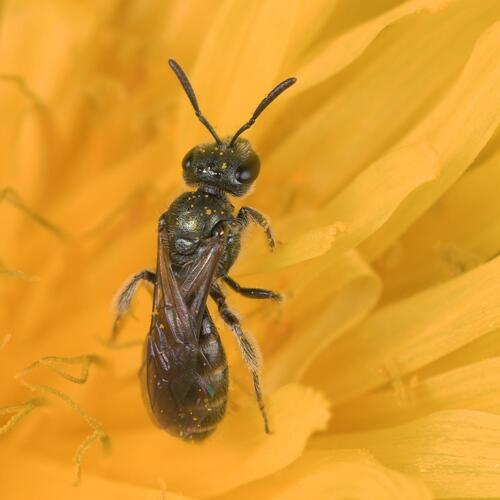
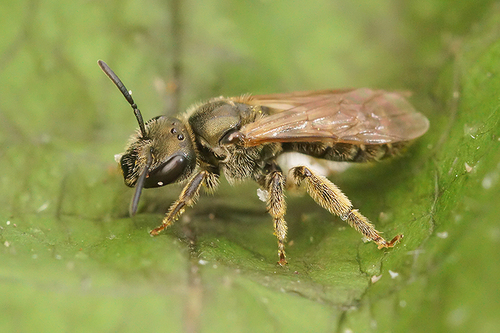
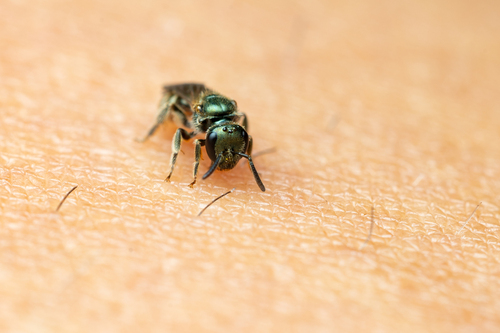
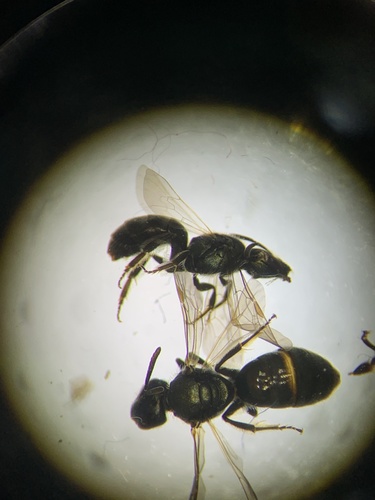
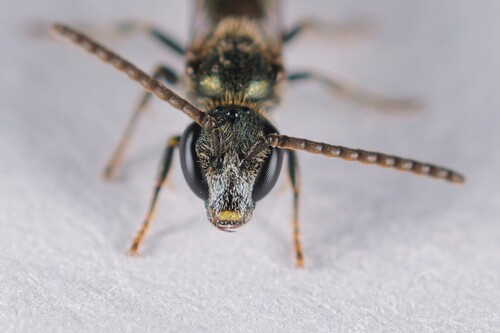
Lasioglossum morio (Fabricius, 1793)

Source: Wikipedia
Synonyms 5
- 62,931 GBIF occurrences
- 351 iNaturalist observations
A very common species throughout Europe. The population is believed to be stable.
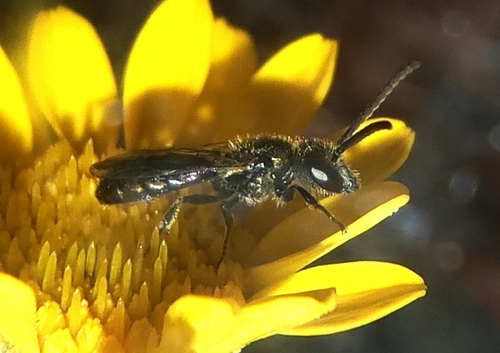
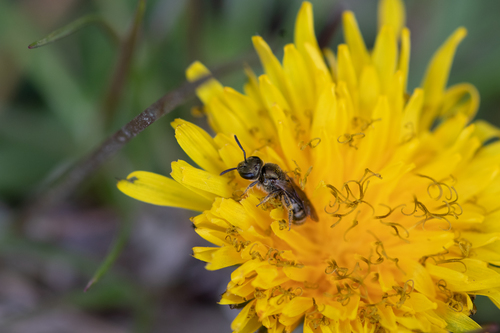
The species is ubiquitous and its habitats include anthropogenic places such as town parks and gardens, roadside verges, limestone grassland, chalk grassland, town parks and gardens, and disturbed waste ground (Westrich 1989). A gregarious species sometimes nesting in large aggregations. Chambers (1949) reported that in a Bedfordshire site the females were so numerous that the air was strongly pervaded by their scent for a distance of several feet from the bank in which they nested. The species is presumably eusocial with a summer brood of workers (Knerer 1968, 1969). The species is broadly polylectic, in that it prefers to forage upon a wide range of flowering plants species. In Germany, Westrich (1989) lists the following species as pollen sources: Leucanthemum vulgare, Bellis perennis, Achillea millefolium, Taraxacum officinale, Hieracium pilosella (Asteraceae); Echium vulgare (Boraginaceae); Brassica napus, Brassica oleracea, Sinapis alba, Lobularia maritima, Berteroa incana (Brassicaceae); Jasione montana, Phyteuma nigrum, Campanula rotundifolia (Campanulaceae); Silene dioica (Caryophyllaceae); Convolvulus arvensis (Convolvulaceae); Hypericum perforatum (Hypericaceae); Lythrum salicaria (Lythraceae); Ranunculus acris, Pulsatilla vulgaris (Ranunculaceae); Potentilla verna, Potentilla reptans and Malus domestica (Rosaceae). The females fly from late March to the end of October, while the males fly from late June to late October (and rarely in early November). The species may occasionally be bivoltine (it has two generations per year) as R.C.L. Perkins (G.M. Spooner pers. comm. 1989) reported "a colony in a Paignton [Devon] garden produced males and females in June: these females paired and provisioned cells, and gave a second brood in August". G.H.L. Dicker (in. litt. 1985) has observed the bee, Sphecodes niger, around the nests of this species in Kent, and S.P.M. Roberts (pers. comm 2014) made similar observations in Middlesex, Wiltshire and in Oxfordshire. In Germany, Westrich (1989) records Sphecodes geoffrellus, S. niger, and Nomada furva as possible cleptoparasites of this species, or in other words bees that parasitise the nests of other bee species. Alfken (1913) additionally lists S. miniatus.
There are no major threats to the species at the continental scale.
This species is listed in the National Red List or Red Data Book of Finland (Critically Endangered; Rassi et al. 2001 - Vulnerable; Hyvärinen et al. 2019), Estonia (Least Concern; Soon 2020), Belgium (Least Concern; Drossart et al. 2019) and Netherlands (Least Concern; Reemer 2018). Further research should be conducted to determine the population trends of the species in the future. The species occurs in many protected areas.
European regional assessment: Least Concern (LC)EU 27 regional assessment: Least Concern (LC)Listed as Least Concern as the species is widespread, the species is very common and there are no major threats at the continental scale. However, research should be conducted to determine the population trends of species in the future.
Gallery