Larix decidua (L.) Mill.
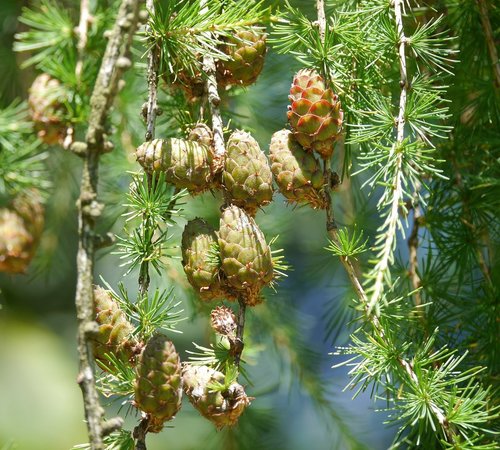
Source: Wikipedia
Synonyms 29
- 248,711 GBIF occurrences
- 22,836 iNaturalist observations
The overall population is thought to be stable.
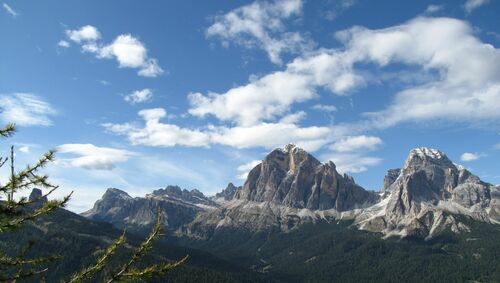
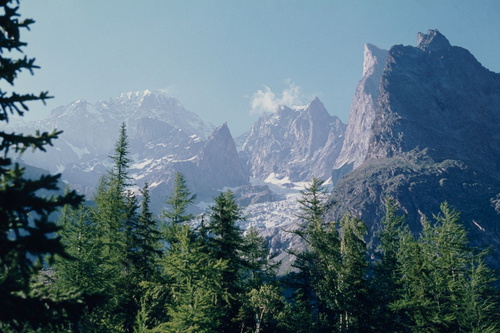
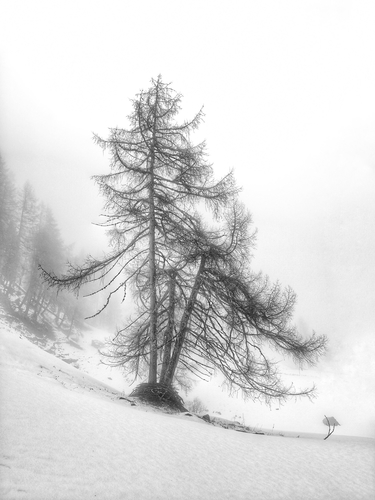
The species occurs in the high mountains of central Europe, at altitudes between 180 to 2,200(2,500) m asl (De Ronch et al. 2016); in the central Alps, it usually forms the tree limit. It grows on neutral to acidic soils, mostly on granitic rock in climates with cool, moist summers and cold, snowy winters (De Ronch et al. 2016) but where annual precipitation rarely exceeds 1,000 mm. Pure stands are uncommon; more often it is mixed with Pinus cembra in the Alps, below 1,800 m, also with Picea abies.
No major threats have been identified for this species.
The species is present in numerous protected areas throughout its range, such as the Ojców National Park, southern Poland (Skrzypczyńska 2004). It is conserved ex situ, for example in Kostrzyca Forest Gene Bank, Poland (ENSCO 2014) and reported to occur in more than 100 botanic gardens worldwide (BCGI 2013).The variety polonica from Poland was assessed as Endangered (Farjon 2013), whilst the other two varieties are both considered Least Concern but have not been formally assessed.
Global and European regional assessment: Least Concern (LC)EU 27 regional assessment: Least Concern (LC)European Larch (Larix decidua) is widespread and common to abundant in much of its range, and is considered Least Concern at both the global and the EU27 Member States levels. The European Larch is in fact expanding (northwards) with the abandonment of alpine cattle grazing in many parts of high altitude Europe. Larix decidua var. polonica has been assessed separately as it is Endangered. As this variety represents only a very small part of the European population and range, that assessment does not affect the overall assessment of the species.
Gallery