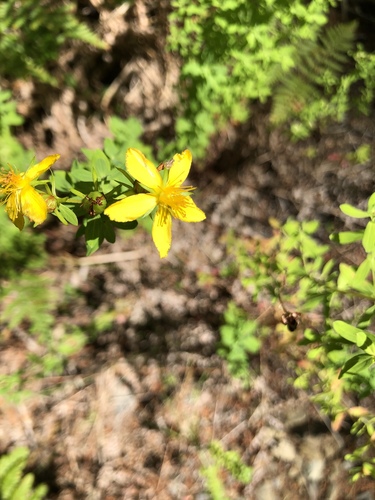
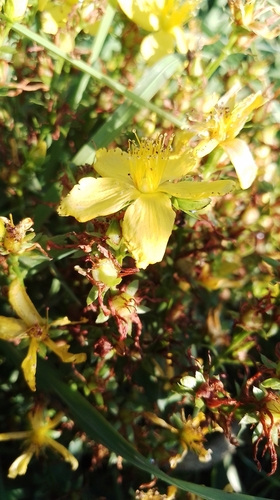
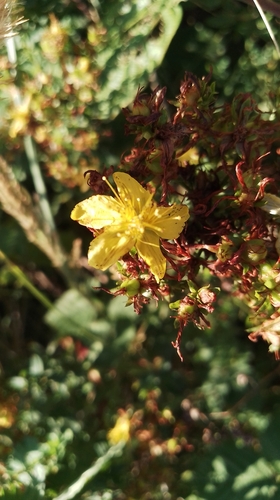
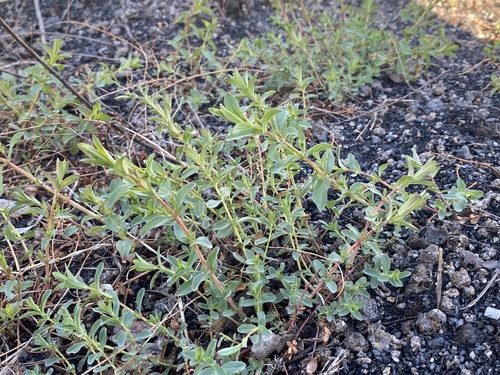
Hypericum perforatum L.
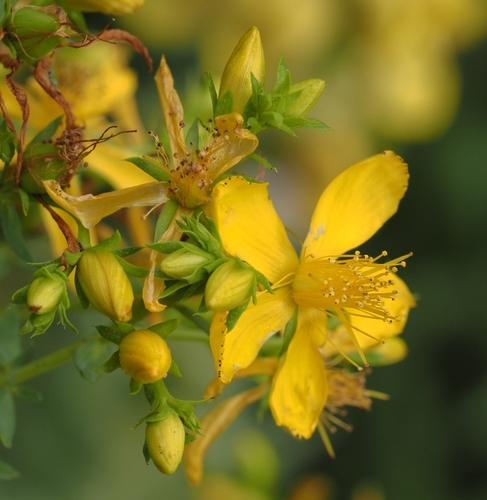
Source: Wikipedia
Synonyms 41
- 920,504 GBIF occurrences
- 134,480 iNaturalist observations
This species is often considered a weed and is widely distributed across the majority of Europe. There has been little change in the distribution of this species, although its suitable habitats may be less common in the northern parts of Europe. It is still widespread and common along roadsides and railway banks throughout its distribution (Botanical Society of Britain and Ireland 2024).
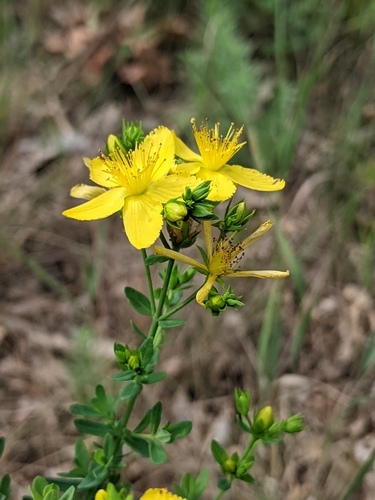
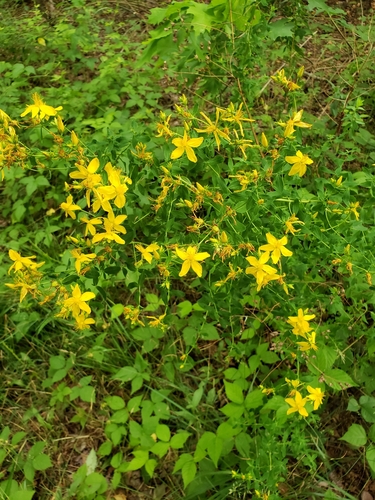
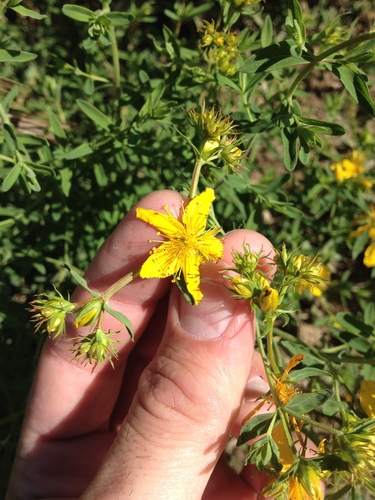
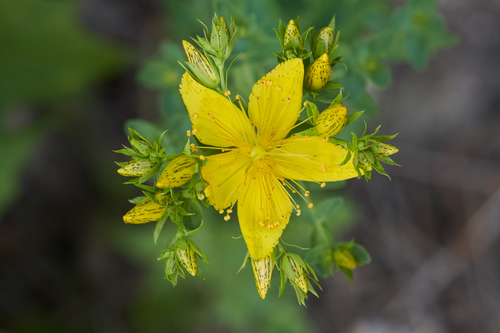
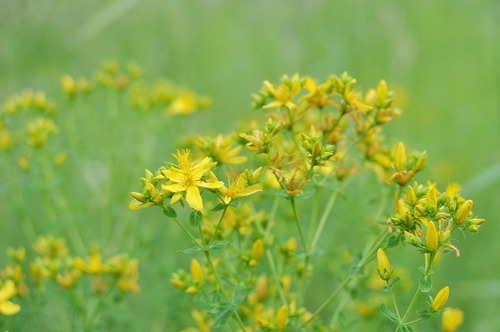
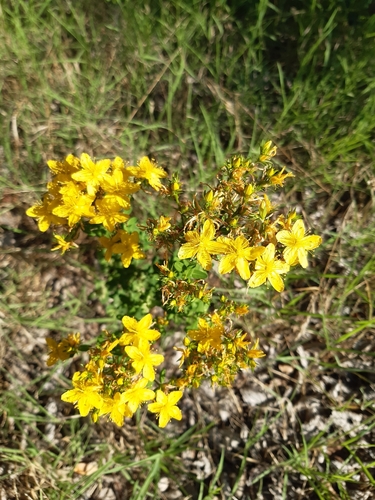
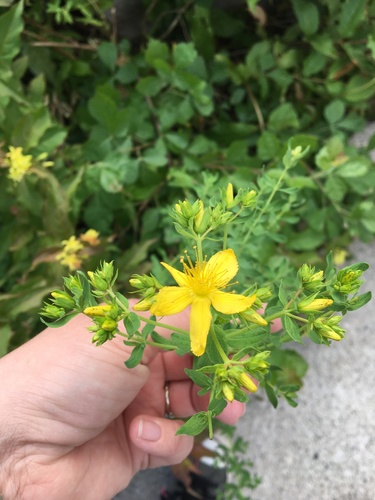
A short to tall hairless aromatic herbaceous perennial with extensive creeping rhizomes found in dry fields, woods and scrub, pastures, rough grassland, road verges and hedgebanks, meadows and railway banks on neutral or calcareous soils. The flowers do not produce nectar and are sometimes apomictic. It reproduces by seed and also sometimes by root buds (Blamey and Grey-Wilson 2003, World Health Organization 2010, Botanical Society of Britain and Ireland 2024, Castroviejo et al. 1993). The species is highly morphologically variable, and numerous subtaxa have been described (Robson 2002).
No threats which are likely to significantly impact the regional population are known at this time. The species grows in a variety of habitats and has a weedy habit making habitat losses unlikely.
There are no conservation measures in place or needed.This species is listed as Least Concern in Denmark (NERI 2007), Estonia (eElurikkus 2024), Germany (Ludwig and Schnittler 1996, Metzing et al. 2018), Luxembourg (Colling 2005), Switzerland (Moser et al. 2002, Bornand et al. 2016) and the United Kingdom (Cheffings and Farrell 2005).The species is represented by 770 germplasm accessions held at European institutions (EURISCO 2024), and is included in the living collection of at least 194 botanical gardens (BGCI 2024). It occurs in many protected areas, including Natura 2000 sites (UNEP-WCMC and IUCN 2024).
European regional assessment: Least Concern (LC) EU 27 regional assessment: Least Concern (LC)This species is classified as Least Concern due to its widespread distribution, stable populations and no major threats.
Gallery