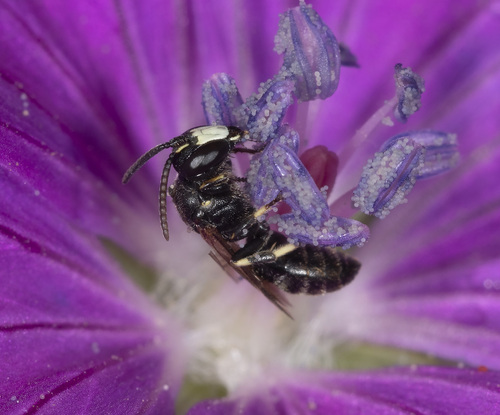
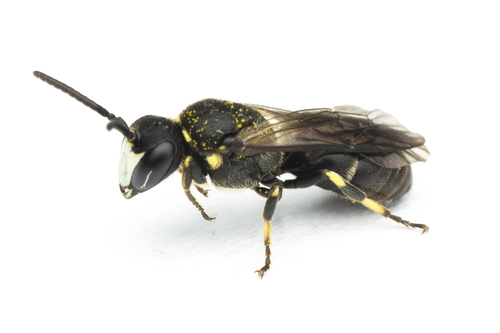
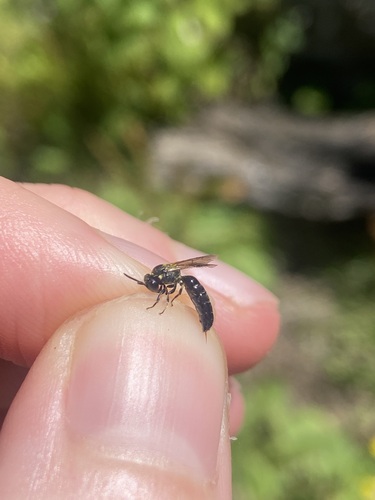
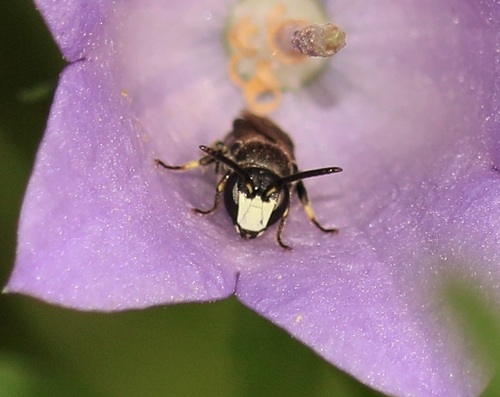
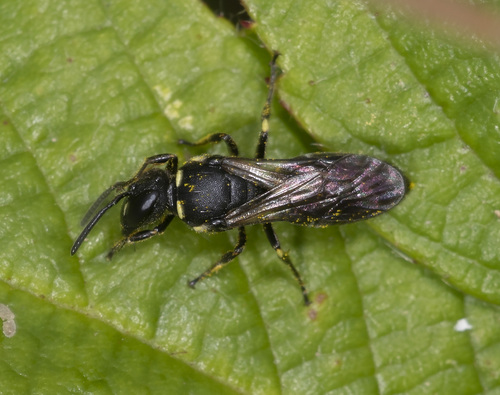
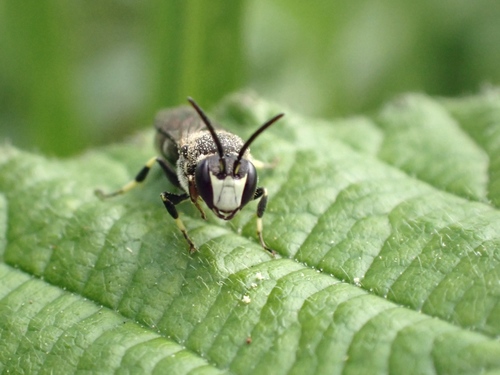
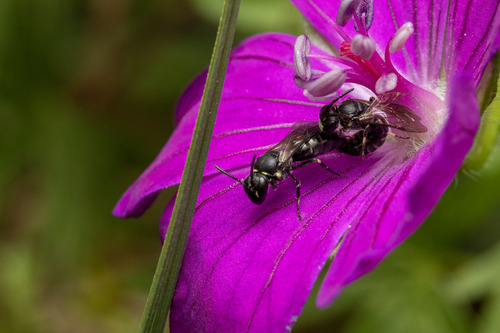
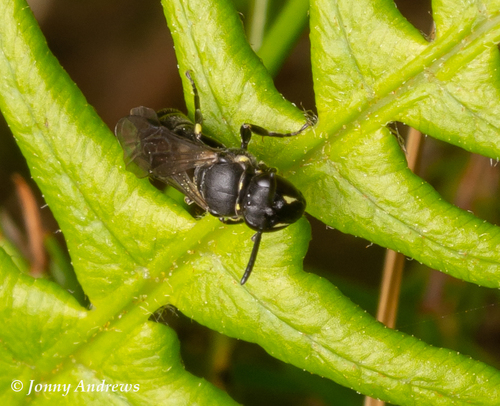
Hylaeus confusus Nylander, 1852
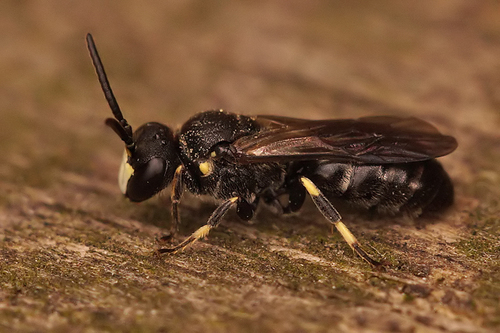
Source: Wikipedia
- 22,159 GBIF occurrences
- 128 iNaturalist observations
A very common species in the west Palearctic, but less abundant in the east. The populations are large, but there is no information available on the population trend of this species.
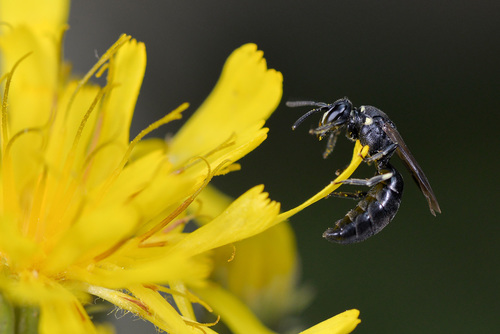
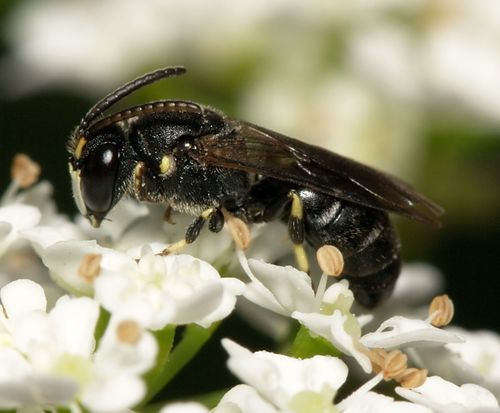
Hylaeus confusus exploits a wide range of habitats including woodland edge, open areas, river levees, sandy heathland, sand- and gravel pits, vineyards and waste ground (Westrich 1989). It builts its nest in plant stems or uses pre-existing galleries in hollow plant stems or other cavities in wood and galls. The nests have been found in reed (Phragmites) straws, the pith of several other plant stems, the dead wood of trees and shrubs such as willow (Salix), lilac (Syringa) (Janvier 2012). The species is polylectic (Müller 2023) and is found at flowers of Apiaceae, Campanulaceae, Resedaceae and Rosaceae.
There appear to be no major threats affecting the species. The species is often found in collections and is therefore presumably not threatened.
Hylaeus confusus is listed in the National Red List or Red Data Book of Germany (Least Concern; Westrich et al. 1998, 2011), Estonia (Least concern; Soon 2020), Finland (Least Concern; Hyvärinen et al. 2019), Netherlands (Least concern; Reemer 2018), Norway (Least Concern; Artsdatabanken 2021), and Ireland (Least Concern; Fitzpatrick et al. 2006). The species is not subject to any targeted conservation action. This species occurs in protected areas.
European regional assessment: Least Concern (LC)EU 27 regional assessment: Least Concern (LC)Listed as Least Concern in view of its wide distribution, presumed large overall population, and no major threats.
Gallery