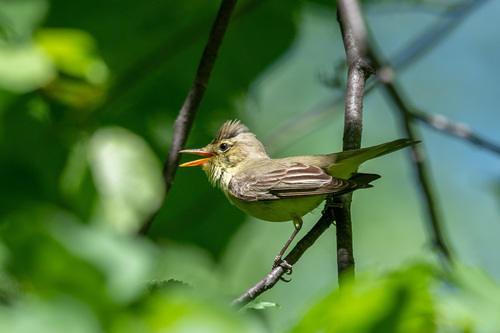
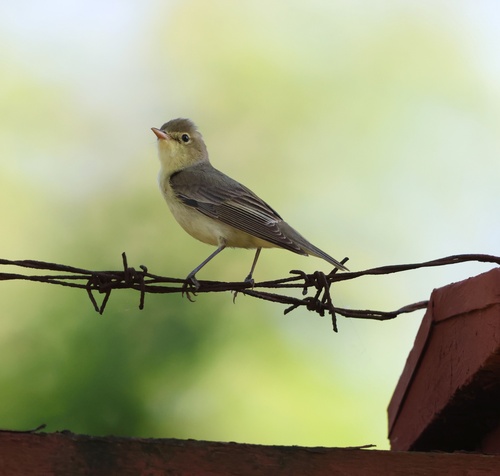
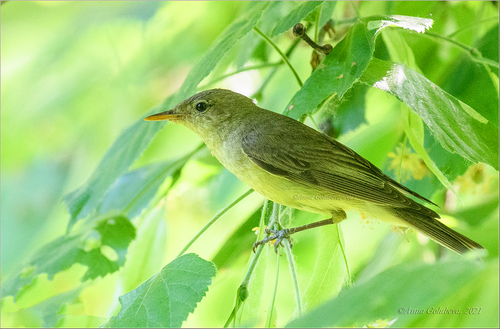
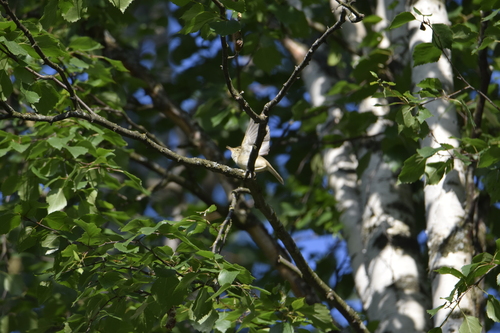
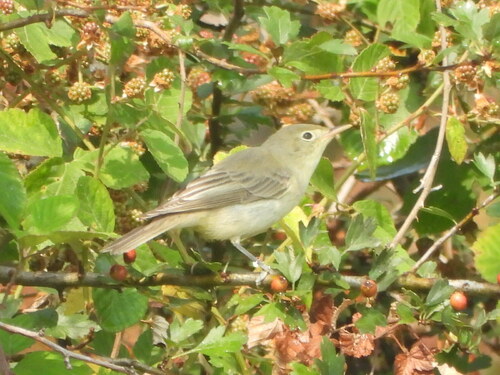
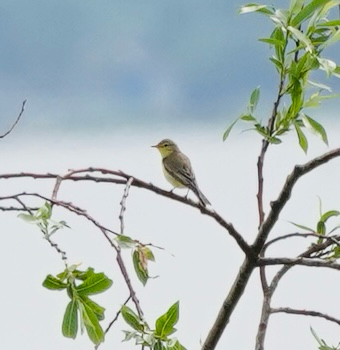
Hippolais icterina (Vieillot, 1817)
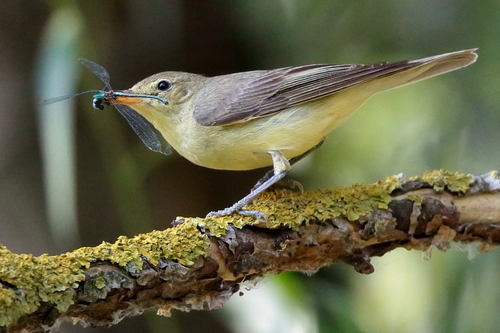
Source: Wikipedia
- 527,448 GBIF occurrences
- 5,715 iNaturalist observations
In Europe, the total population size is estimated at 4,720,000-8,430,000 mature individuals (BirdLife International 2021). Europe comprises around 85% of the species' global range, so a preliminary estimate of the global population size is 5,500,000-9,900,000 mature individuals.
This species inhabits tall-grown woods of oak (Quercus), birch (Betula), beech (Fagus sylvatica), alder (Alnus) and other deciduous trees, but it is also found in larger parks and gardens, and in stands of young pines (Pinus) if mixed with broadleaf trees. It favours open forest, or dense woods with intermixed glades and undergrowth. Breeding occurs from the end of May to July and clutches are four to five. The nest is a strong cup of grasses, plant stems, moss and soft twigs, often covered with pieces of birch bark, lichens, flowers and similar, partly attached with cobwebs and lined with fine fibres, roots, fur and similar soft material. It is placed in the fork of a tree branch. The diet is mostly insects and other invertebrates but in the summer it also takes fruits and berries. The species is migratory, wintering in Africa, south of the equator (Svensson 2015).
Decreases in the west and south-west of it range may be in part due to competition from Hippolais polyglotta, which has spread north and east to become marginally sympatric (Svensson 2015).
Conservation Actions UnderwayCMS Appendix II. Bern Convention Appendix II. There are currently no known conservation measures for this species within Europe.Conservation Actions ProposedNo conservation measures are currently needed for this species within its European range.
This species has an extremely large range, and hence does not approach the thresholds for Vulnerable under the range size criterion (extent of occurrence under 20,000 km² combined with a declining or fluctuating range size, habitat extent/quality, or population size and a small number of locations or severe fragmentation). The population size is extremely large, and hence does not approach the thresholds for Vulnerable under the population size criterion (under 10,000 mature individuals with a continuing decline estimated to be over 10% in ten years or three generations, or with a specified population structure). Despite the fact that the population trend appears to be decreasing, the decline is not believed to be sufficiently rapid to approach the thresholds for Vulnerable under the population trend criterion (over 30% decline over ten years or three generations). For these reasons the species is evaluated as Least Concern.
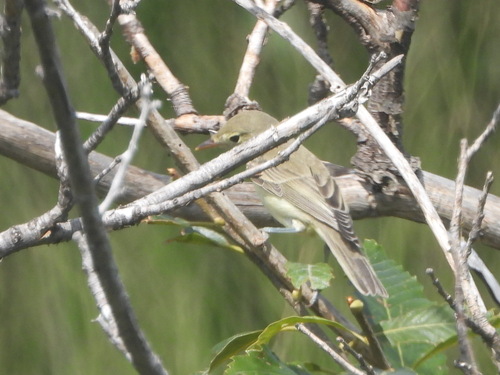
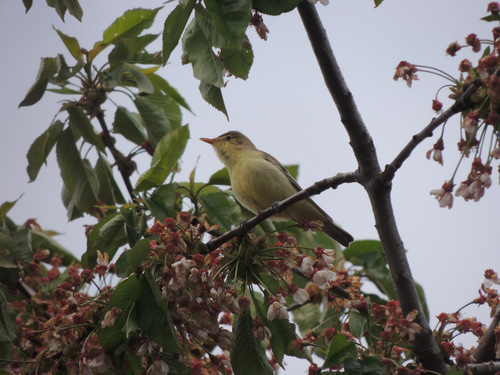
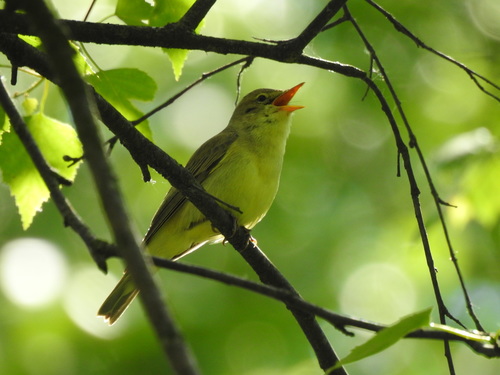
Gallery