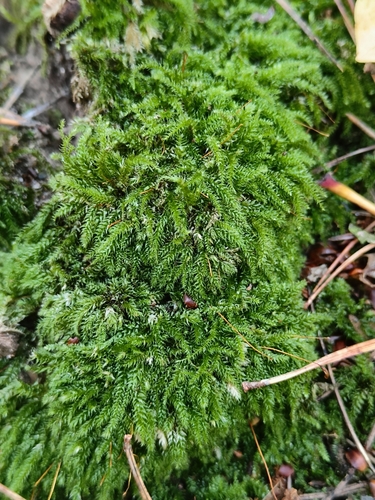
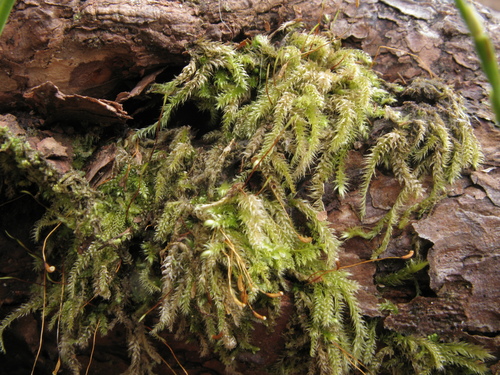
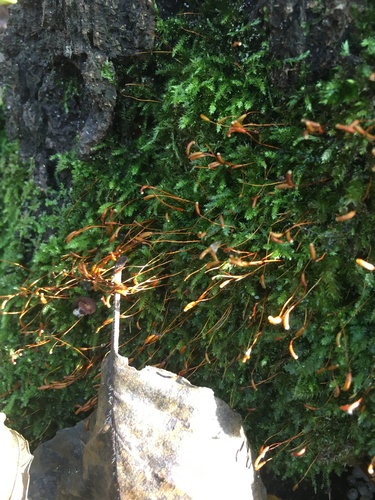
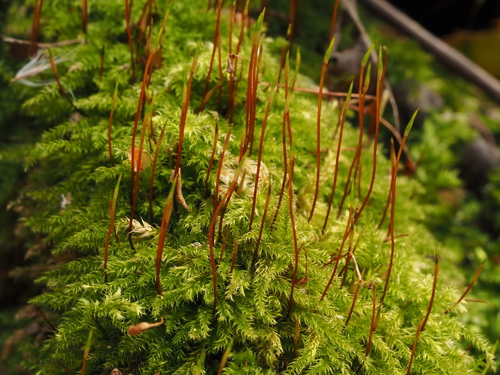
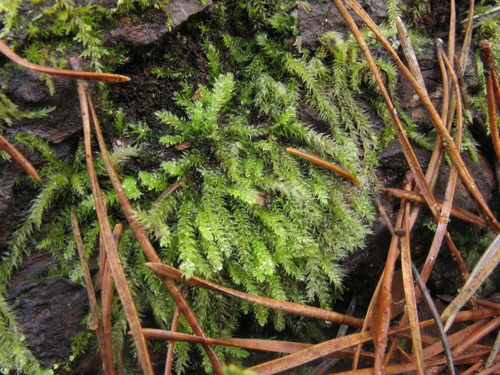
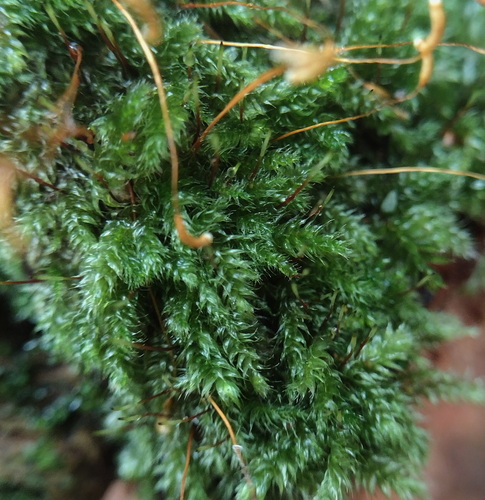
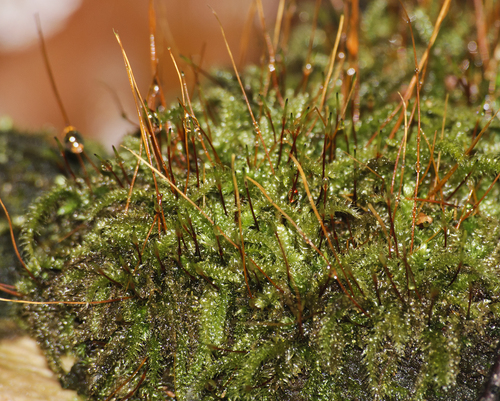
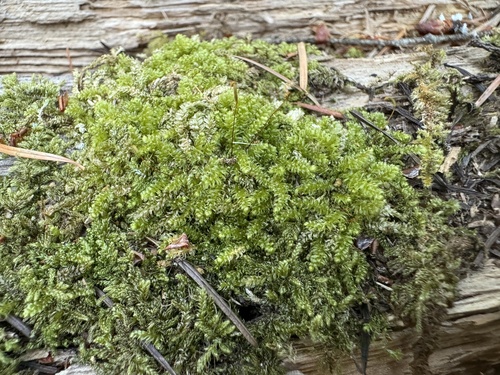
Herzogiella seligeri (Brid.) Z. Iwats.
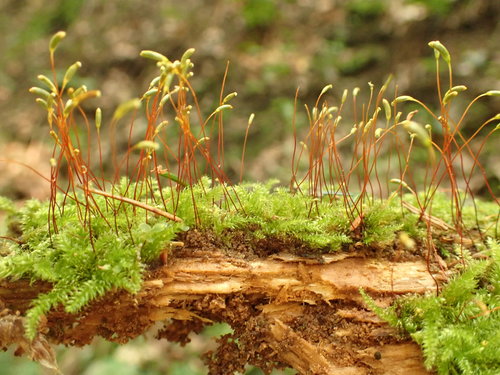
Synonyms 22
- 22,371 GBIF occurrences
- 1,011 iNaturalist observations
This species is widely distributed in Scandinavia, central Europe, the Balkan countries and Ukraine. In the EU 28, this forest species is widely distributed in Sweden, Finland, Germany and other EU 28 countries in central, east and southeast Europe. Numerous subpopulations of this species are known. The species is frequently fertile. The population trend seems to be stable in both Europe and the EU 28.
This species grows in shaded habitats with relatively high humidity in the boreal, dark coniferous-broadleaved and broadleaved forests, and more rarely, in fens. Usually this species does not forms patches but grows between other bryophytes on decaying wood, tree stumps and roots, bases of birch and dark-coniferous trees, soil-covered silicate rocks, peaty soil and raw humus of the forest floor in coniferous forests (NISM 2017, Grims 1999, Ignatov and Ignatova 2004, Meinunger and Schröder 2007, Blockeel et al. 2014).
Near the eastern border of European range of this species, the subpopulations are vulnerable and the possible threats may be timber harvesting, removing and burning of felling waste, forest fires and grazing in the forests (Mirkin 2011, Sereda and Fedyaeva 2014).
This species is included in the Red Lists of Rostov Province (3 - rare species) and the Republic of Bashkortostan (3) (Sereda and Fedyaeva 2014, Mirkin 2011). A lot of the subpopulations have been found within protected areas. No conservation measures are required at present.
European regional assessment: Least Concern (LC) EU 28 regional assessment: Least Concern (LC)The Silesian Feather-moss (Herzogiella seligeri) is known from many localities and widely distributed in Scandinavia, central Europe, the Balkan countries and Ukraine. In the EU 28, this forest species is widely distributed in Sweden, Finland, Germany and other EU 28 countries in central, east and southeast Europe. In Europe, this species has large range, with an extent of occurrence (EOO) estimated to be greater than 6.8 million km2. The current population trend appears to be stable in both Europe and the EU 28. This species is therefore assessed as Least Concern in both Europe and the EU 28.However, near the eastern border of European range of this species, the subpopulations are vulnerable and the possible threats may be timber harvesting, removing and burning of felling waste, forest fires and grazing in the forest. Even so, no conservation measures are required at present.
Gallery